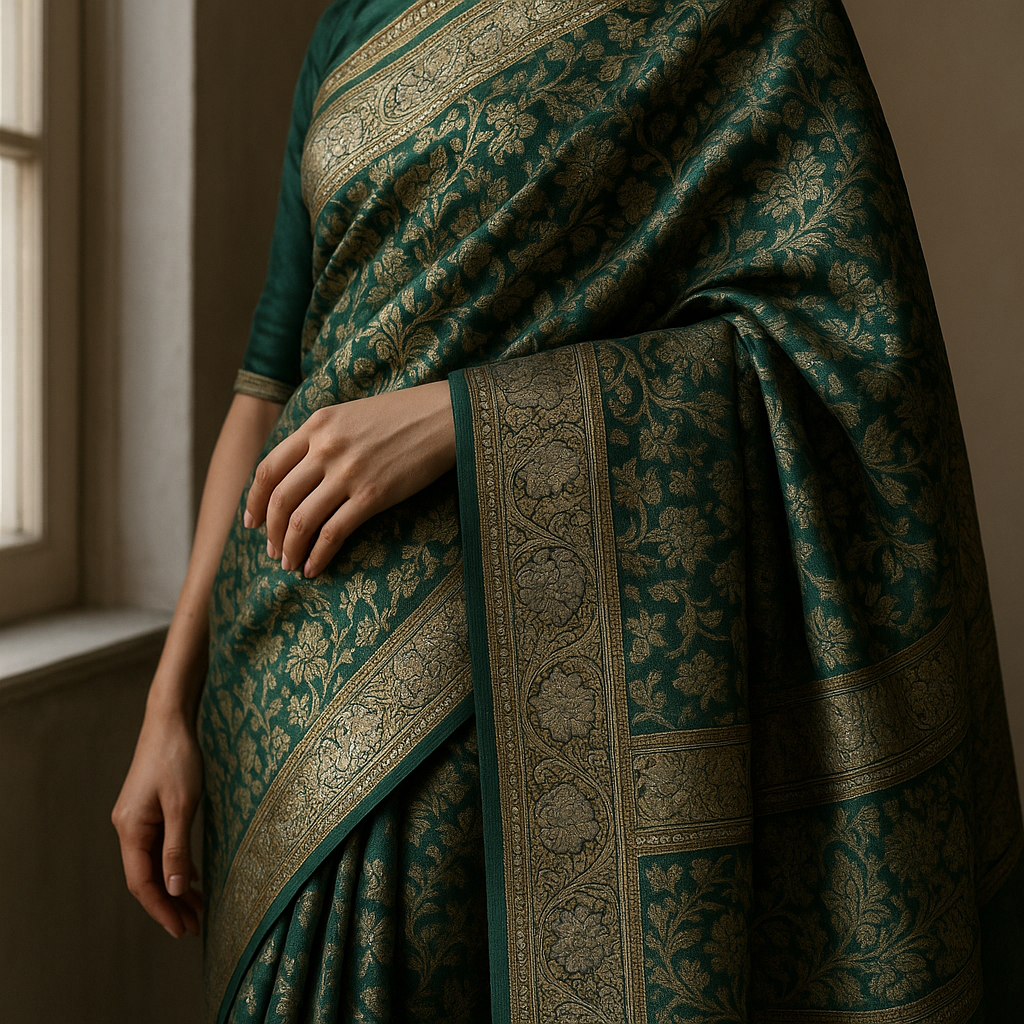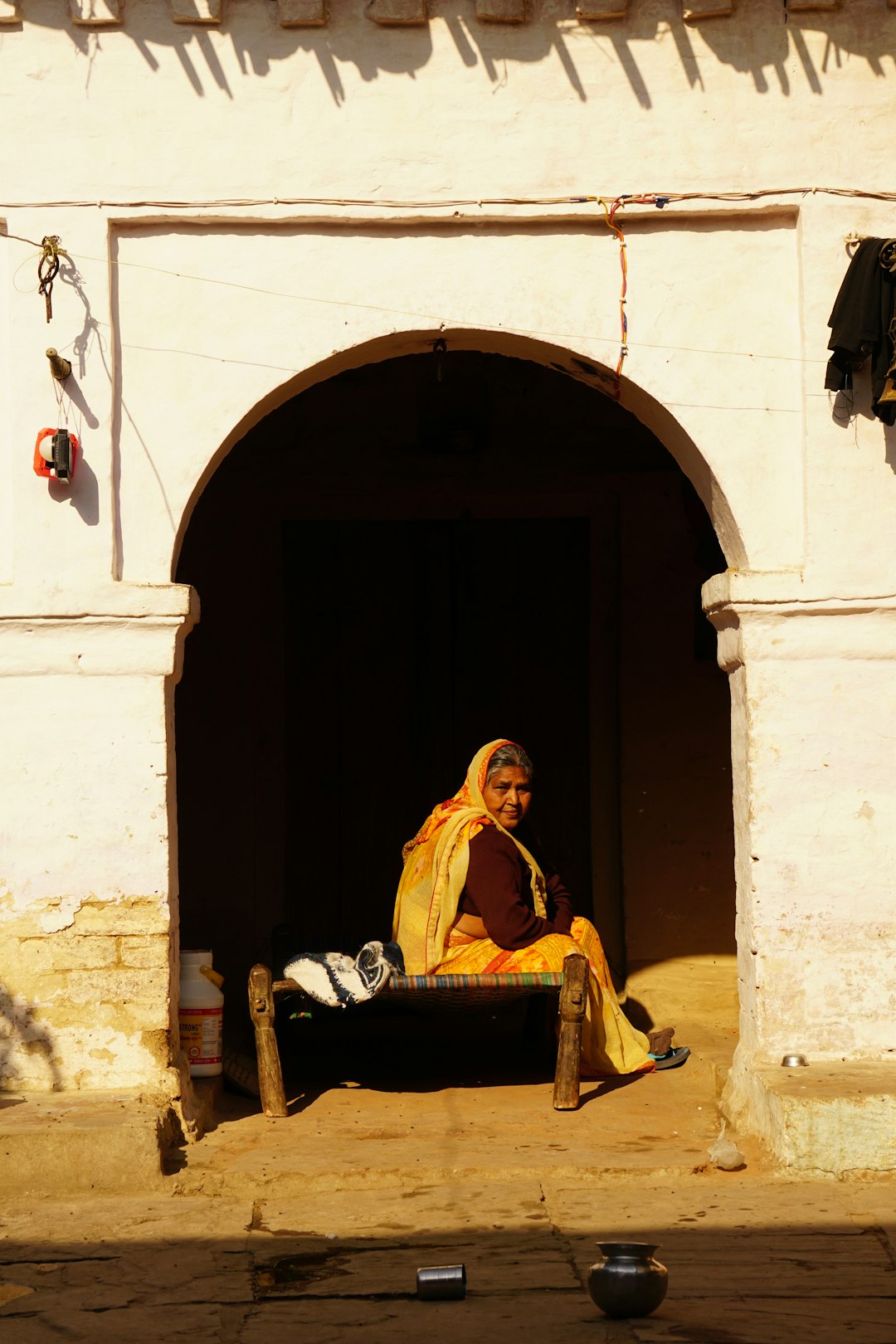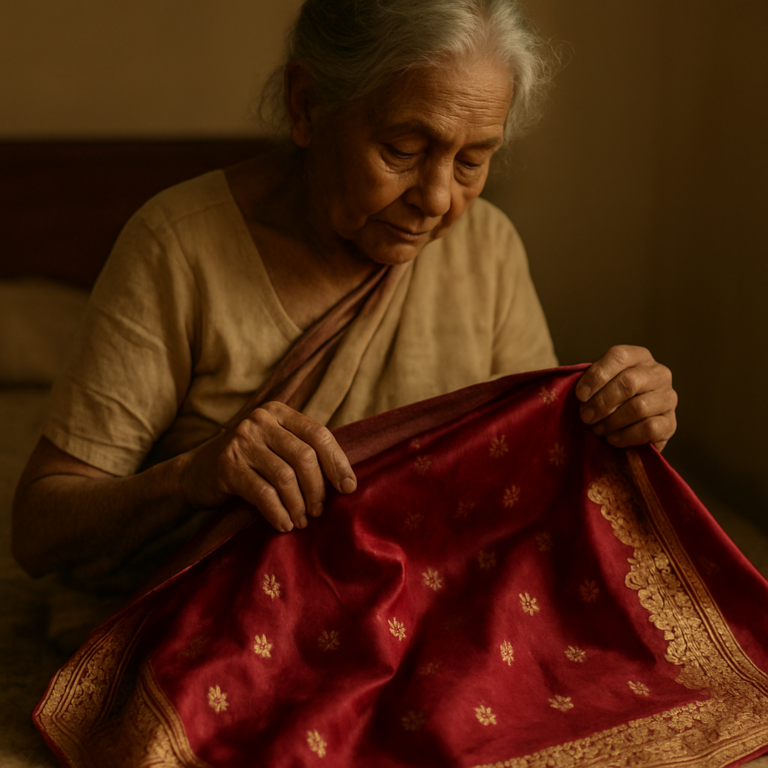
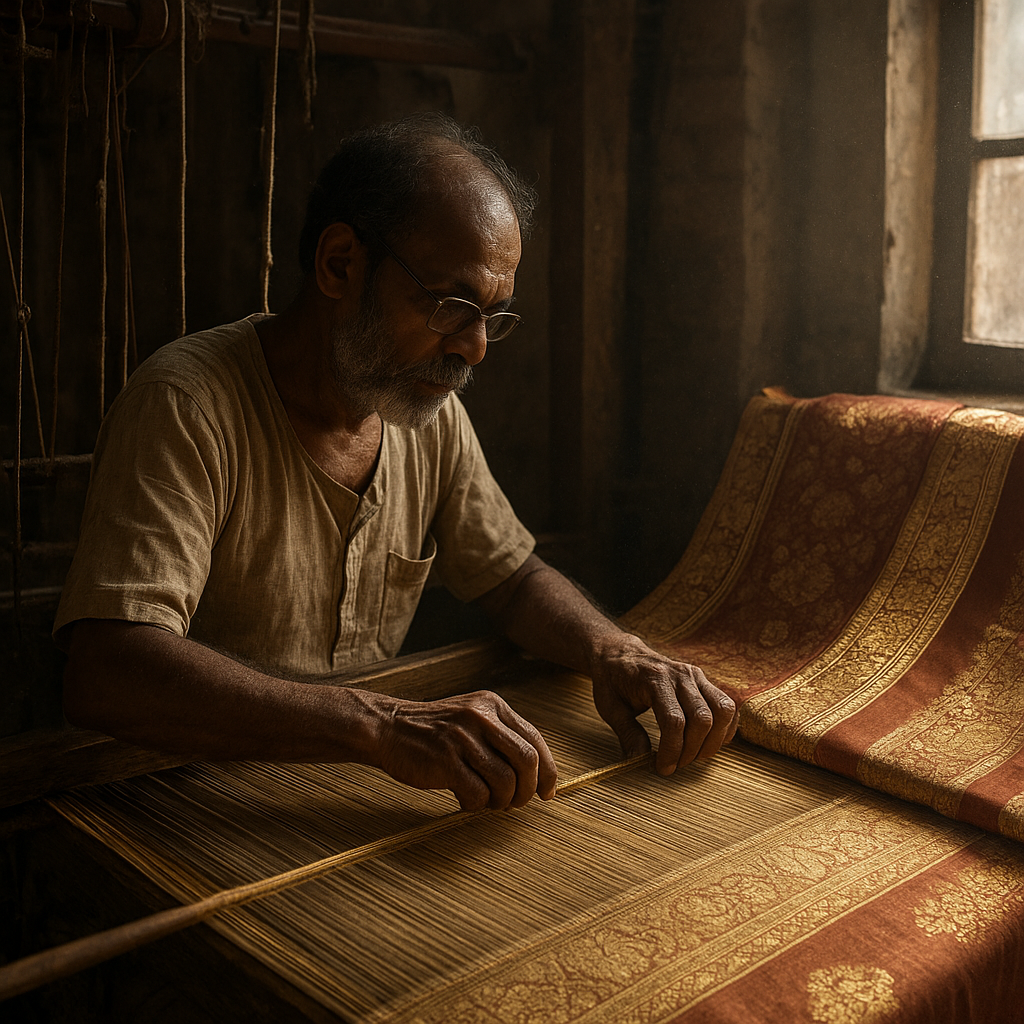
In a narrow lane in Madanpura, Varanasi, a handloom clicks in a rhythm that has not changed in four hundred years. The weaver sitting at it has calluses on his palms that map the geography of silk. His name is Mohammad Yusuf, and he has been weaving Banarasi sarees for thirty-seven years.
He did not choose this work. It chose him, the way it chose his father, and his father before him. In the weaver communities of Varanasi, the loom is not a machine. It is an inheritance. A responsibility. A way of speaking without words.
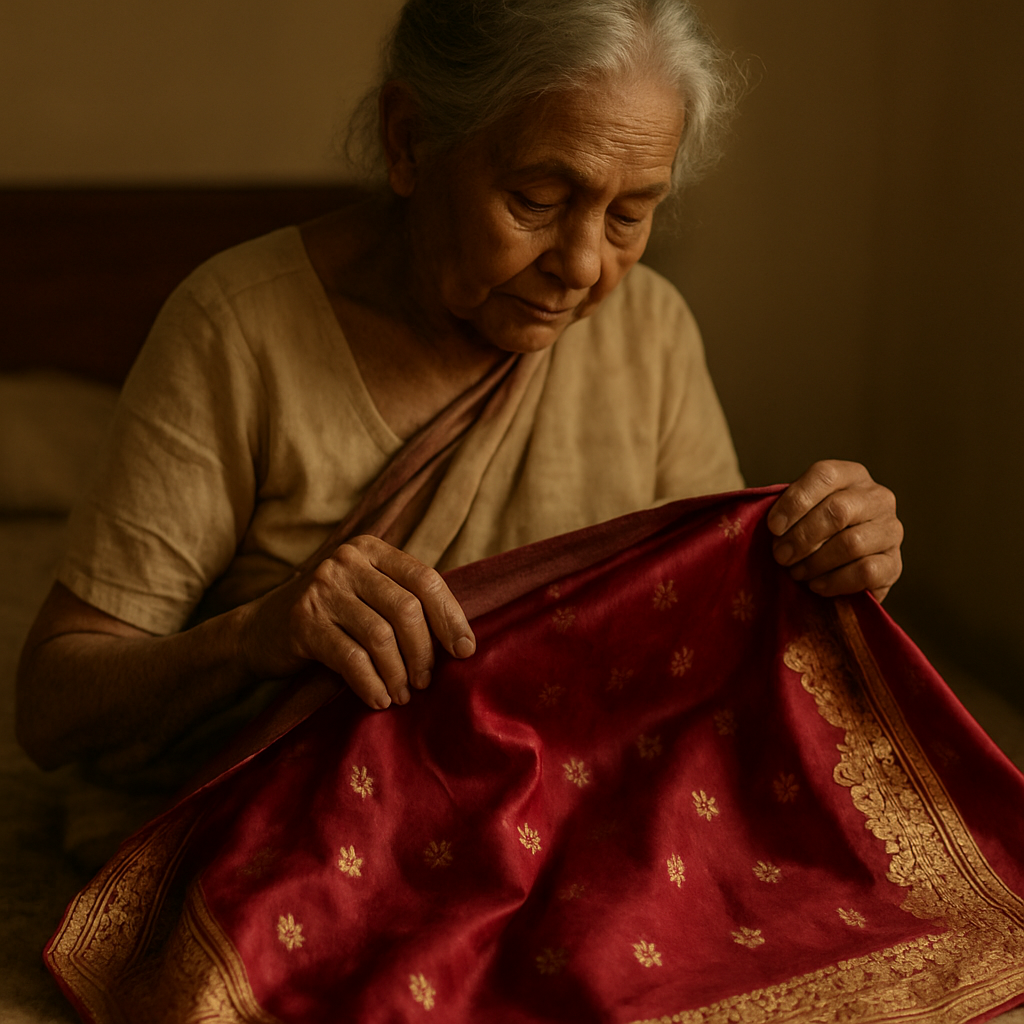
The Anatomy of a Loom
A Banarasi handloom is not something you buy at a hardware store. It is built by a loom-maker (called a karigar) who specializes in constructing the wooden frame, stringing the warp threads, and setting the heddles. The loom itself takes two weeks to build and costs between Rs 15,000 and Rs 25,000. A weaver typically owns one loom, sometimes two, and works on it six days a week.
The loom is always in the weaver’s home. Not in a factory. Not in a workshop. In the room where his children do their homework, where his wife rolls rotis, where the radio plays old Kishore Kumar songs at low volume. The loom is furniture. The loom is family.
How Long Does a Saree Take?
This is the question every buyer asks, and the answer surprises them.
| Saree Type | Weaving Time | Daily Output |
|---|---|---|
| Simple butta work | 3 to 5 days | 12 to 15 inches |
| Mid-range katan with zari border | 7 to 14 days | 8 to 10 inches |
| Full jall work with real zari | 18 to 30 days | 4 to 6 inches |
| Bridal premium with meena | 30 to 60 days | 3 to 5 inches |
| Museum-grade commissioned piece | 60 to 90 days | 2 to 3 inches |
Two to three inches a day. That is what a master weaver produces on a complex piece. Each inch contains between 300 and 500 silk threads, depending on the density. The zari thread — real silver wire electroplated with gold — is woven in by hand, one motif at a time.
The Wage Problem
Here is the uncomfortable truth about the Banarasi silk industry: the weaver who makes a Rs 5,000 saree earns about Rs 800 to Rs 1,200 for his labour. The silk yarn costs Rs 400 to Rs 600. The zari costs Rs 300 to Rs 800. The rest — Rs 2,400 to Rs 3,500 — goes to the middleman, the wholesaler, the retailer, and the brand.
The weaver never sees the retail price. He is paid per piece, at rates that have barely increased in fifteen years. In 2010, a weaver earned Rs 600 for a simple butta saree. In 2026, he earns Rs 800 for the same piece. That is a 33% increase over sixteen years — well below inflation.
This is why the number of active handloom weavers in Varanasi has dropped from an estimated 120,000 in the 1990s to fewer than 35,000 today. The younger generation does not want to sit at a loom for twelve hours a day to earn Rs 800. They drive autos. They work in call centers. They move to Surat or Mumbai.
What Direct-to-Weaver Means
At Nisa Silk Fab, we work differently. We do not buy from wholesalers. We do not buy from middlemen. We work directly with forty weaver families in Madanpura and Alaipura, and we pay them differently:
- Per-piece rate that is 2.5x the market average (Rs 2,000 to Rs 3,000 for a simple saree, Rs 5,000+ for complex work)
- Advance payment of 50% when the order is placed, so the weaver does not have to finance the raw materials himself
- Health insurance for the weaver and his immediate family (eye care is critical — the work destroys eyesight)
- Loom maintenance — we pay for repairs and replacement parts
This means our sarees cost slightly more than the factory alternatives. A Rs 4,200 saree at Nisa Silk Fab might be available for Rs 3,200 elsewhere. But the difference is not markup. It is weaver wage. When you pay Rs 4,200, the weaver who made it earned Rs 2,200 instead of Rs 800. That is the only difference.
Meet Yusuf
Mohammad Yusuf is fifty-three years old. He learned to weave at fourteen, sitting beside his father on the same loom he uses today. His father learned from his grandfather. The loom is eighty years old — the wood has been replaced twice, but the frame is original.
His eyesight is failing. After thirty-seven years of focusing on silk threads the thickness of human hair, he needs reading glasses for everything except the loom. At the loom, his fingers still know the thread count without looking. Muscle memory that outlasts the eyes.
His son, Rashid, is twenty-two. He studied commerce at a local college and works part-time at a mobile phone shop. He does not want to weave. Yusuf does not blame him. But he hopes that the direct-to-weaver model — the one Nisa Silk Fab has been practicing for the last three years — might change the economics enough that Rashid’s children, if not Rashid himself, might consider coming back to the loom.
The loom is not just a machine. It is a conversation between the weaver and the thread. When you buy a handloom saree, you are not buying a product. You are buying a piece of someone’s life.
How to Support the Craft
If you care about whether Banarasi handloom weaving survives the next twenty years, here is what you can do:
- Buy from brands that name their weavers. If a seller cannot tell you who made the saree, they probably do not know — which means they bought it from a middleman who also did not know.
- Pay the real price. A genuine handloom Banarasi saree with real zari cannot cost less than Rs 2,000. If it costs Rs 899, it is power-loom or art silk. Accept the difference and pay for the real thing.
- Ask for Silk Mark certification. The Silk Mark Organisation of India (under the Central Silk Board) certifies pure silk. If the seller does not have it, ask why.
- Visit Varanasi. Go to Madanpura. Walk the lanes. Listen for the click of the looms. Buy directly from a weaver if you can. The experience will change how you think about every saree you own.
Frequently Asked Questions
How many weavers are left in Varanasi?
Fewer than 35,000 active handloom weavers as of 2026, down from 120,000 in the 1990s. The decline is driven by low wages, competition from power-looms, and younger generations choosing other professions.
How much does a Banarasi weaver earn?
The industry average is Rs 800 to Rs 1,200 per saree for simple work, and Rs 2,000 to Rs 4,000 for complex pieces. Weavers who work with direct-to-consumer brands like Nisa Silk Fab earn 2 to 2.5x more.
Can I visit a weaver in Varanasi?
Yes. The weaver lanes of Madanpura and Alaipura are open to visitors. Some weavers will show you their work. The best time to visit is October to March, when the weather is pleasant and demand is high.
Why are handloom sarees more expensive than power-loom?
A handloom saree takes 3 to 60 days of human labour. A power-loom saree takes 2 to 3 hours of machine time. The price difference reflects the weaver’s wage, not the seller’s profit.
This article is part of our Heritage series at Nisa Silk Fab. We work directly with master weaver families in Varanasi and Surat. Read our full story or browse our handloom collection.