Our Heritage: The Soul of Varanasi in Every Thread
Every Banarasi saree holds something impossible to manufacture in a factory. Tucked between its gold threads and silk folds is a secret — the whisper of a grandfather teaching his grandson how to read the loom. The smell of old wood and diesel. The quiet determination of hands that have spent decades perfecting what others call a “skill” but is really just love, made visible.
We don’t sell fabric. We are the bridge between you and five hundred years of living memory.
The Song of the Loom
Close your eyes for a moment. Can you hear it?
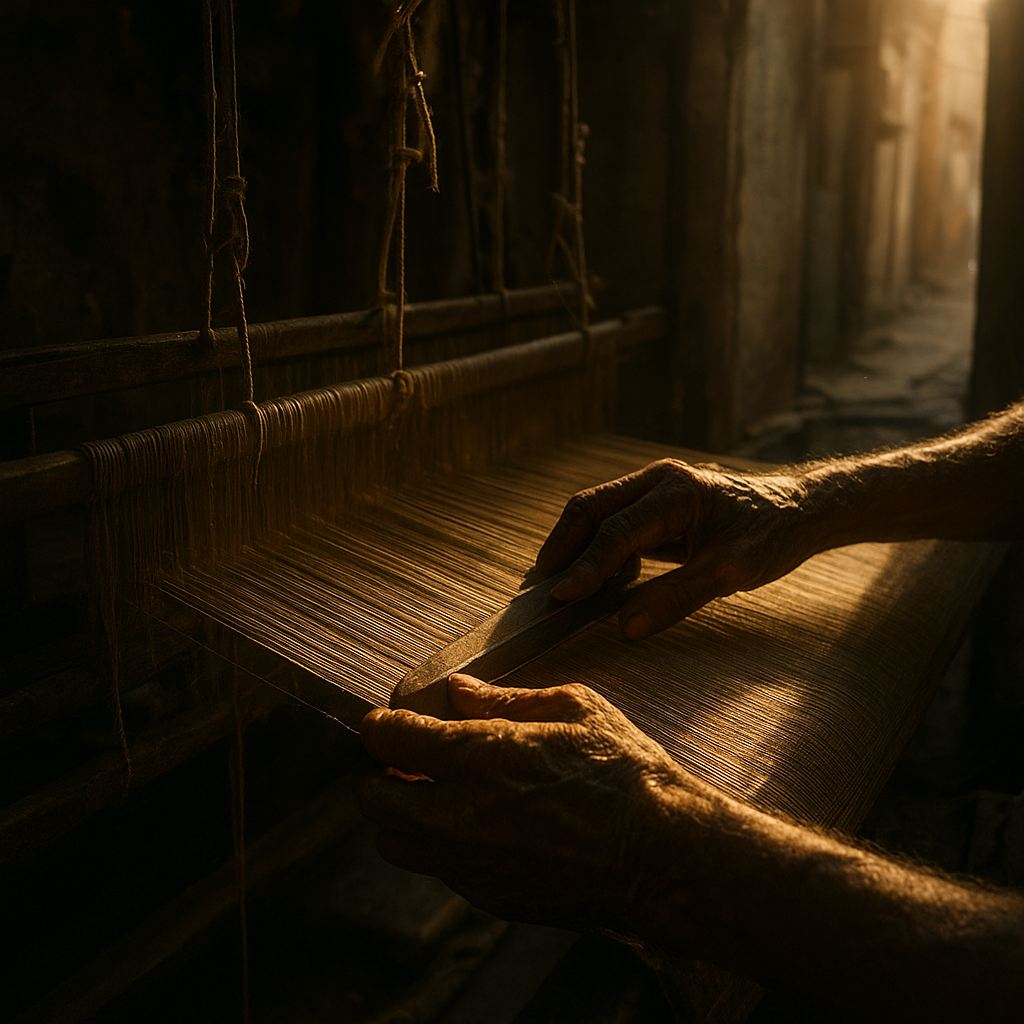
That rhythmic click-tap, click-tap — like a slow heartbeat echoing through the bylanes of Varanasi. Generations of weavers have fallen asleep to this sound. It is not machinery. It is music. It is the pulse of Kashi itself.
This is where we come from. This is the air we breathe.
When you hold a Nisa Silk Fab saree, you are not holding a product. You are holding the accumulated patience of an entire community — the Julaha families whose ancestors wove for Mughal courts, whose hands remember techniques no textbook has ever properly captured.
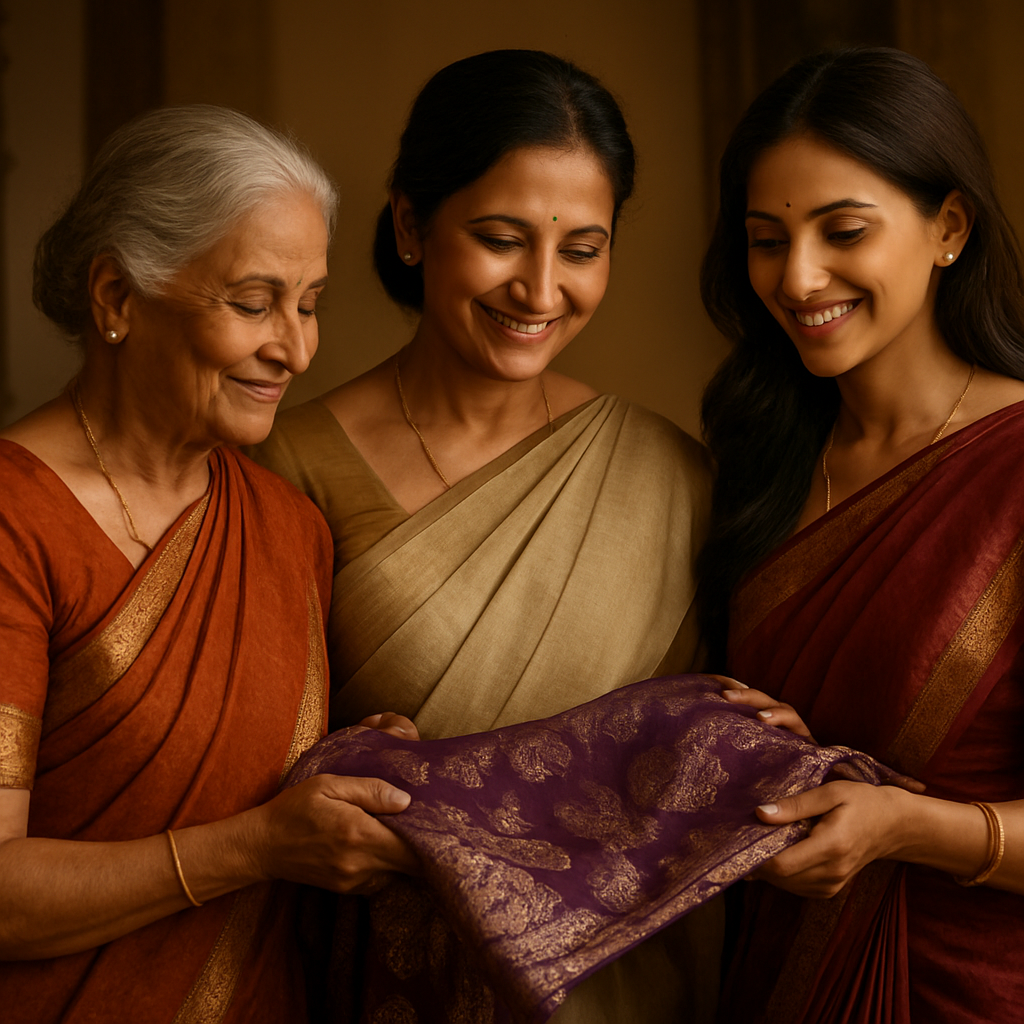
We were born in the heart of this city. We were raised in the shadow of the Ganges, where the sacred and the artistic have always danced together. And we believe that every woman who wraps herself in Banarasi silk deserves to feel that inheritance — not as a burden, but as a gift.
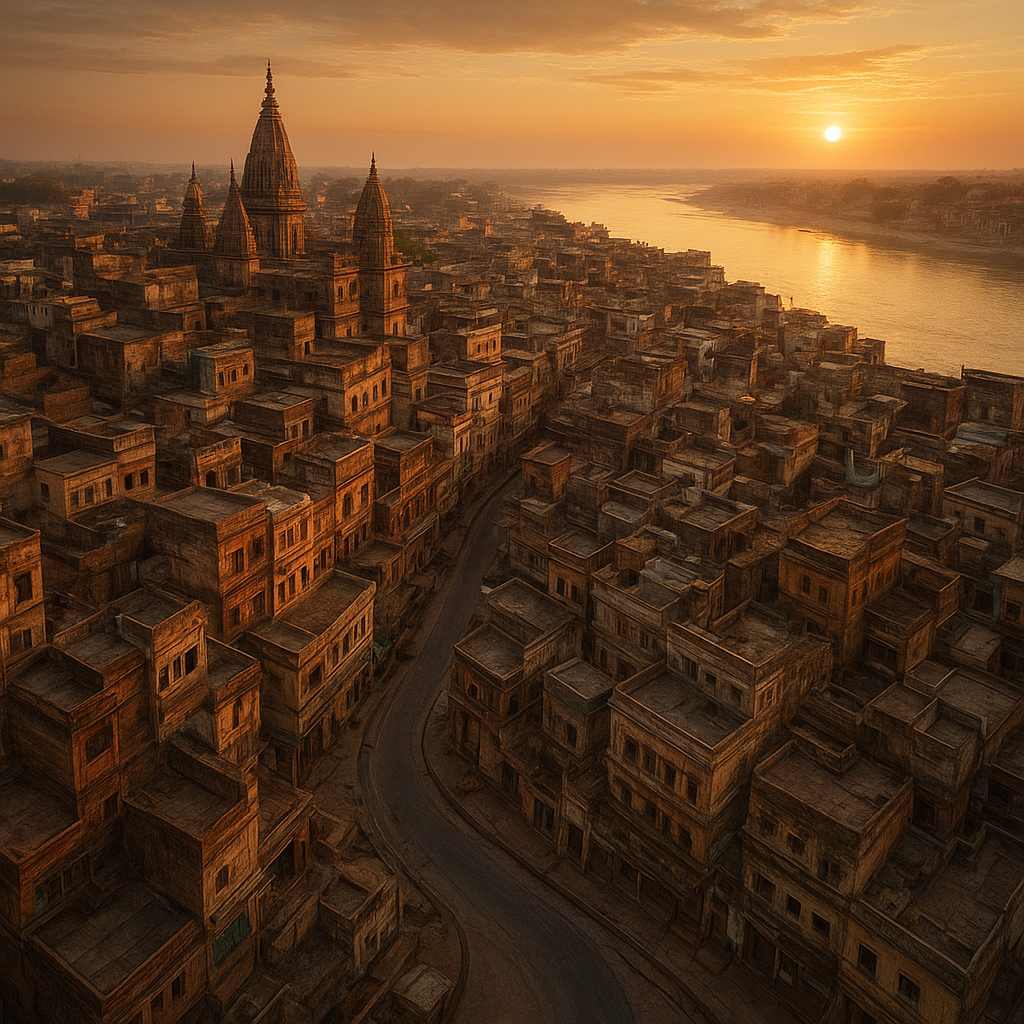
Kashi: Where Spirit Meets Silk
There is a reason why Varanasi — Kashi, the “City of Light” — birthed something as extraordinary as Banarasi silk.
It is a city where spirituality is not separate from daily life; it is daily life. Where temple bells and loom clicks share the same soundtrack. Where a weaver might begin his day with a prayer and end it with the same hands dipped in indigo, having woven something that will outlast empires.
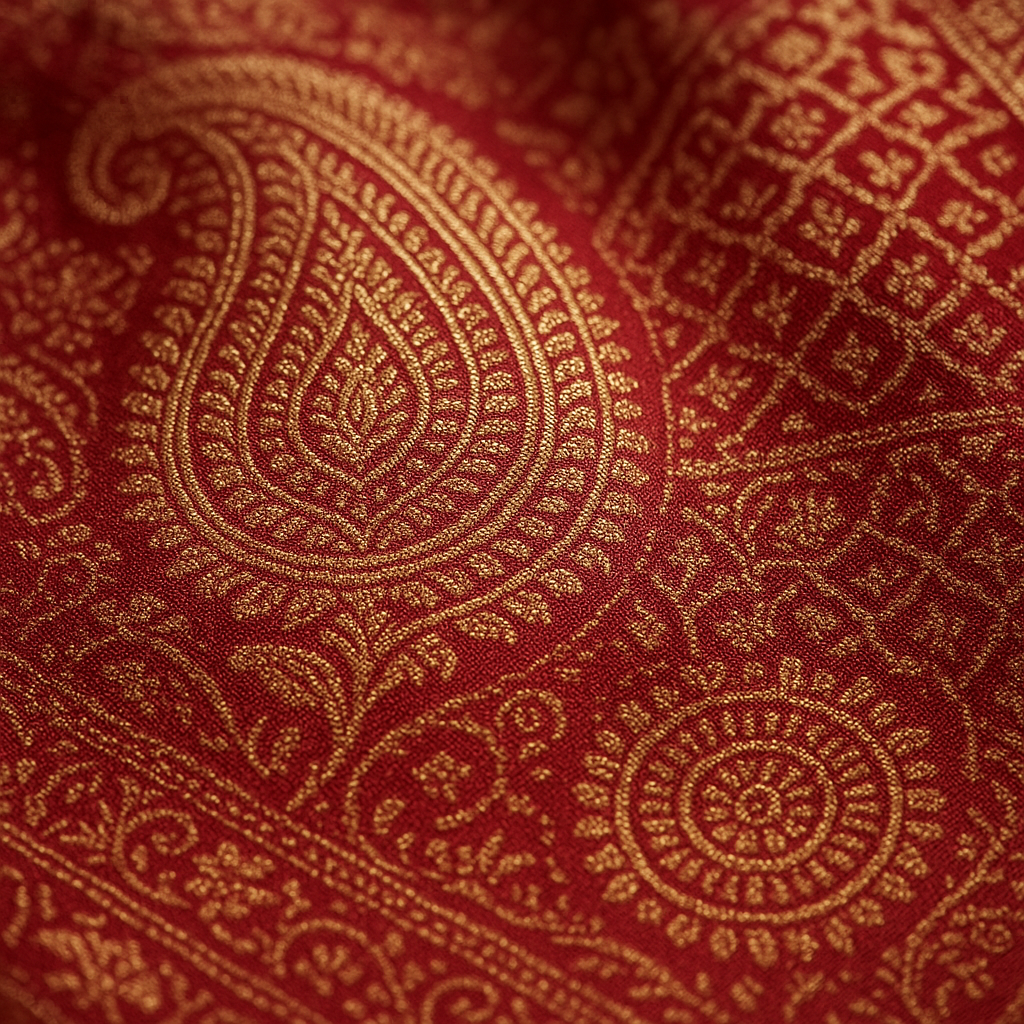
The motifs you see in our sarees — the paisley that echoes fertility, the jali patterns that mirror the marble screens of Mughal palaces, the kalash that blesses every new beginning — they are not decorative choices. They are our language. They are how we speak to you across centuries.
When the Mughals arrived and married their Persian artistry with the indigenous skills of the Julaha weavers, something magical happened. A new art form was born — one that wore the grandeur of empires lightly but carried the warmth of Indian soil deeply.
That fusion lives in every Nisa Silk Fab piece. We did not invent this. We are simply its guardians now.
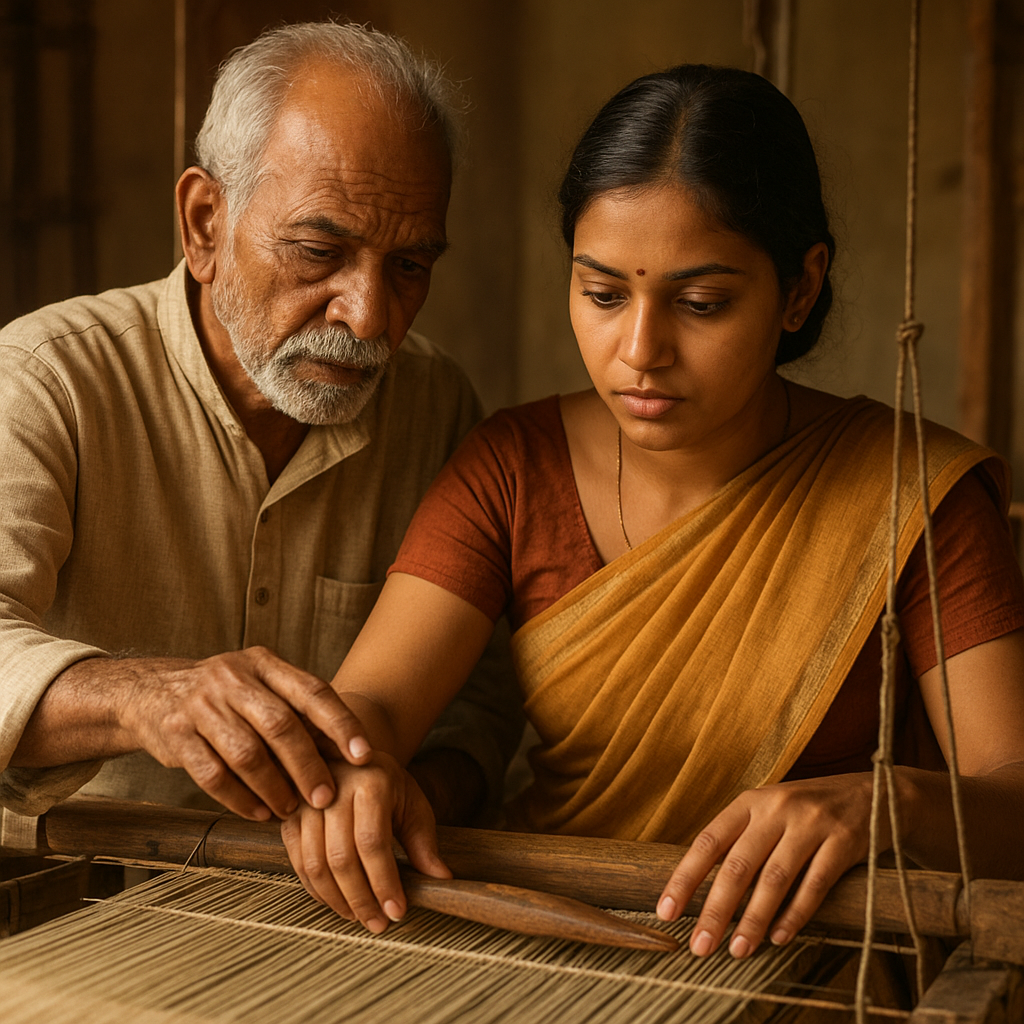
The Master Weaver: An Unsung Hero
Let us tell you about Rafiq.
No — let us tell you about the thousands of Rafiqs. Men and women who learned the loom before they learned to read. Who can tell you the exact quality of silk just by running it across their fingertips. Who spend weeks — sometimes months — on a single saree, knowing that somewhere, someone will wear their work on the most important day of her life.
The Julaha community has been weaving Banarasi silk for over five centuries. Their knowledge lives in muscle memory, in the way their fingers instinctively know where each thread belongs. This is not automation. This is not repetition. This is generational magic — passed down through quiet whispers, through watching and being watched, through failures and corrections and the slow mastery that only time grants.
A factory can produce a saree in hours. Our weavers produce one in months. And the difference — you can feel it in the weight, in the drape, in the way the zari catches the light like a whispered prayer.
We do not call them workers. They are artists. And their art deserves to be valued.
Our Promise: Authenticity You Can Feel
We know that choosing an authentic Banarasi silk saree can feel overwhelming. The market is flooded with cheap look-alikes — machine-made copies that look perfect but carry nothing inside them. They are cold. They have no story.
But you — you are not looking for cold. You are looking for soul.
Here is our promise to you:
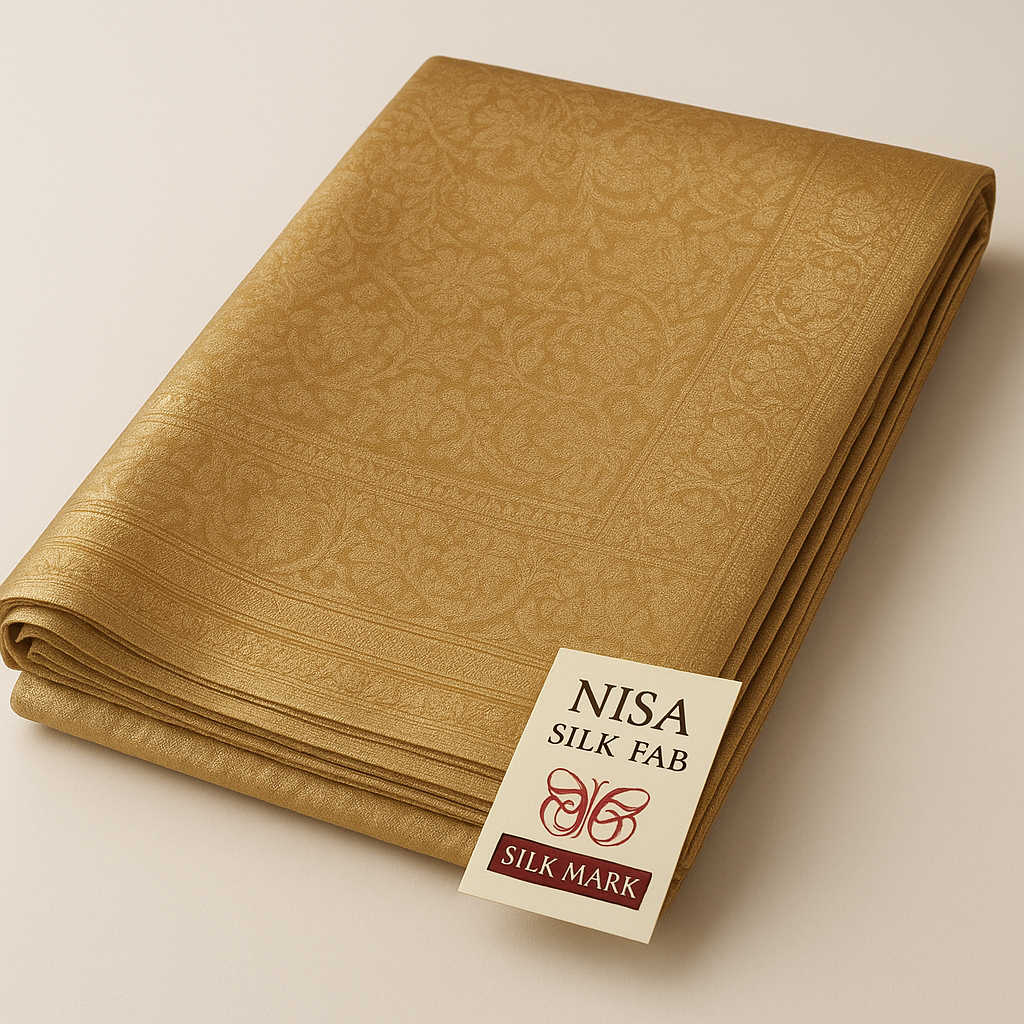
Silk Mark Certified. Every piece we sell carries the Silk Mark certification, your assurance that the silk is pure, the zari is real, and the craft is honored. We would not have it any other way.
Fair Wages, Always. When you purchase from Nisa Silk Fab, you are not just buying a saree. You are putting food on the table of a weaver’s family. You are ensuring that a grandmother’s knowledge gets passed to her granddaughter. You are keeping the song of the loom alive for another generation.
No Compromises. We will never sell you something we would not wear ourselves. If it does not meet our standard — the standard set by five centuries of craft — it does not leave our door.
Every saree you purchase is a vote for the handmade, for the human hand, for the quiet heroism of people who chose to spend their lives making beauty.
Thank you for being part of this story. Thank you for choosing slow. Thank you for choosing soul.