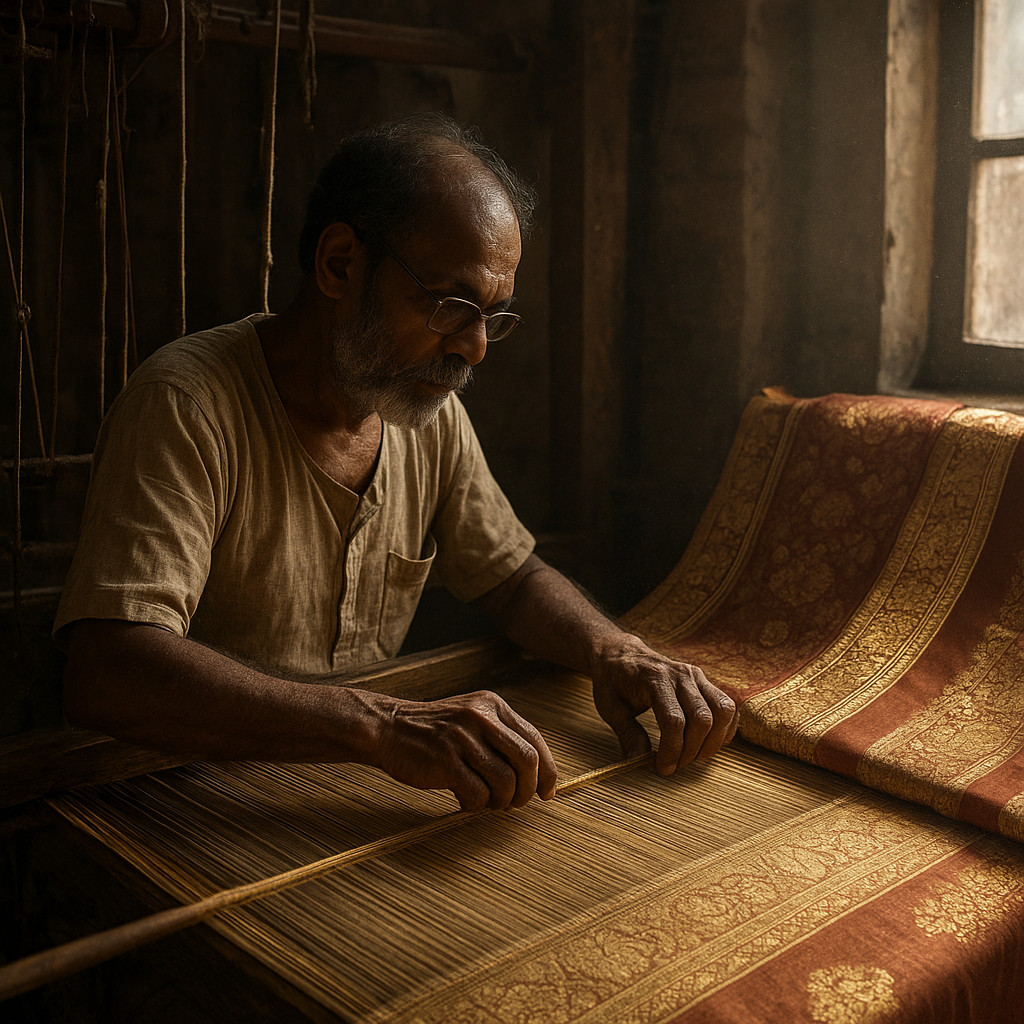
The lane in Madanpura wakes before the city. At half past four, the first looms begin their click-clack rhythm, a sound older than the street itself. Silk threads hang in damp hanks from doorways, catching the grey light. Somewhere down the alley, a weaver sits cross-legged at a pit loom, his feet working the treadles while his hands guide the shuttle through the warp. The air smells of boiled rice starch, of mulberry silk, of metal.
This is where a Banarasi begins. Not in a showroom, not in a photograph, but in the slow conversation between hand, thread, and pattern. A single saree can take two weeks, sometimes longer, depending on whether the body carries scattered butis or a full jangla creeper. The zari, traditionally a silver or gold wire wrapped around a silk core, catches the light differently from anything machine-made. You can hear the difference, too: the beat of the loom, the soft thud of the shuttle, the absence of electric hum.
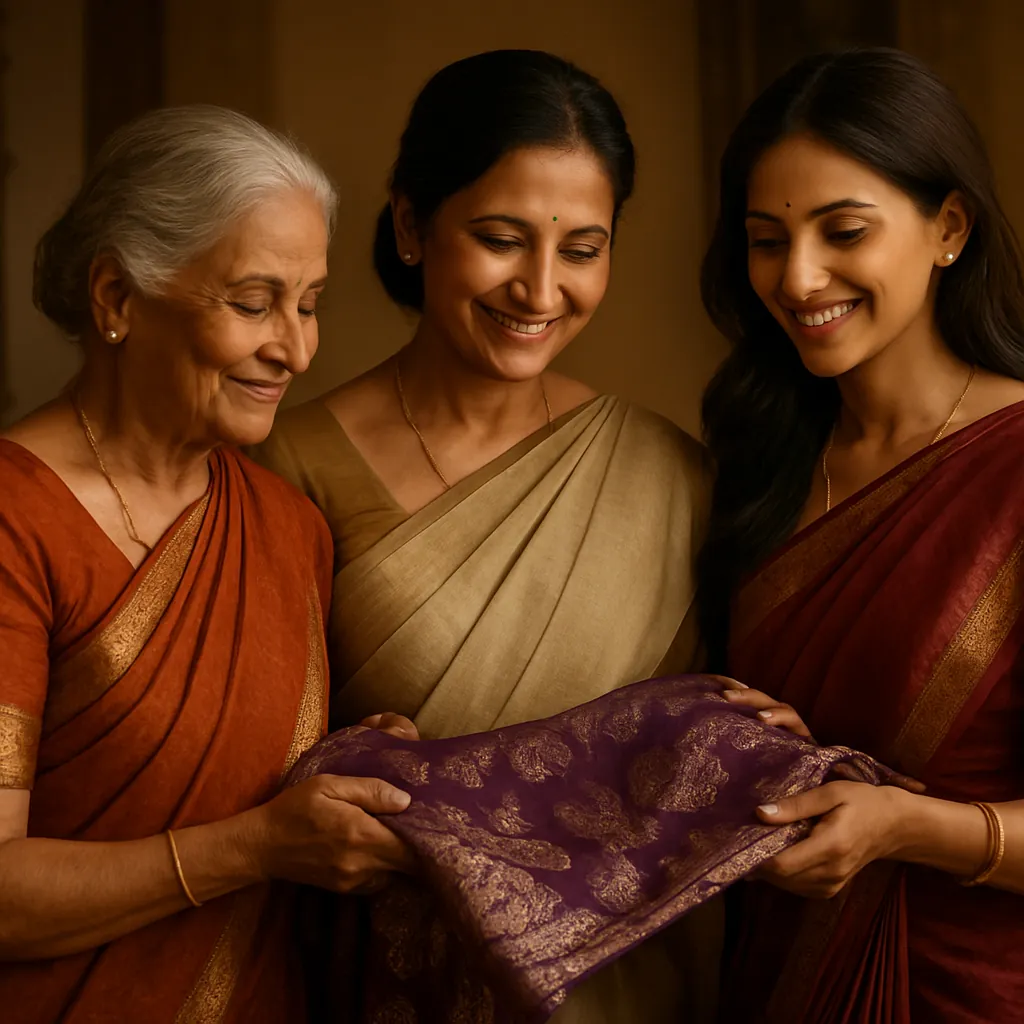
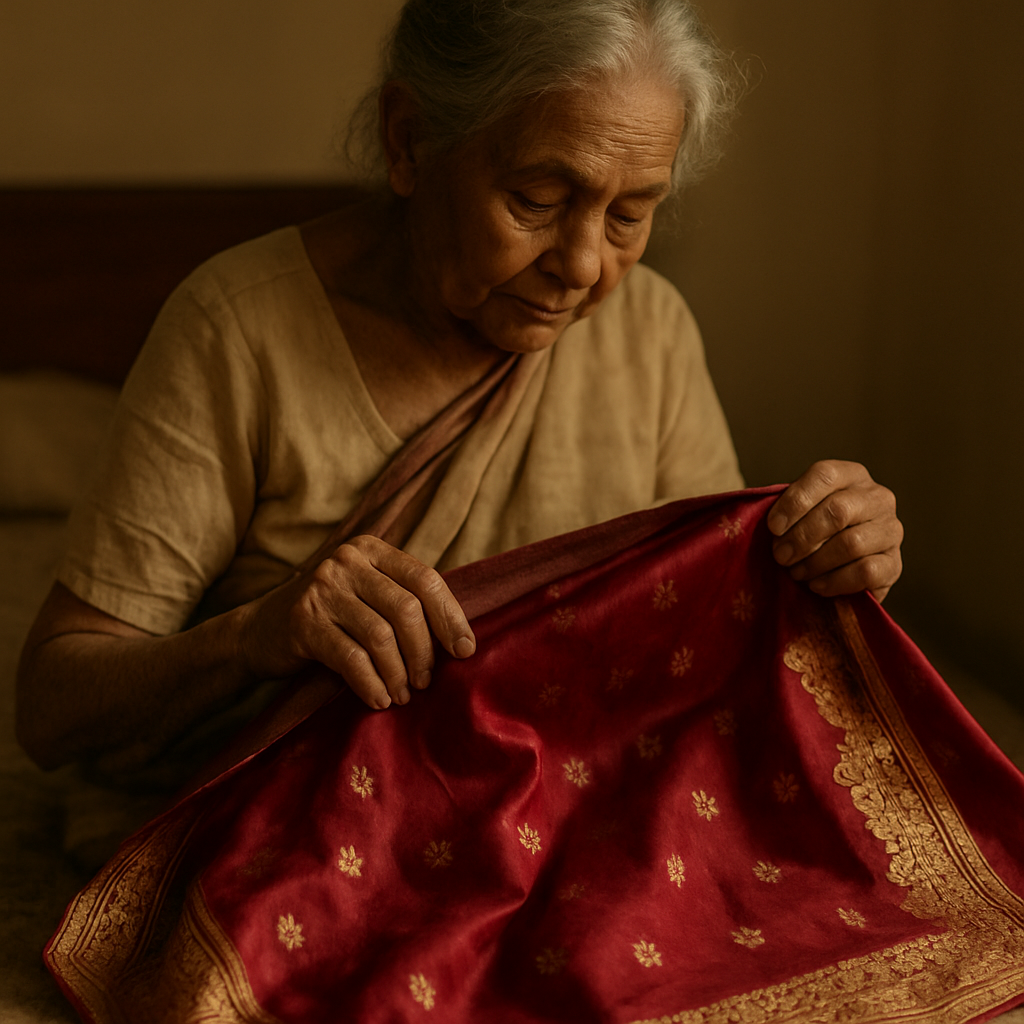
Back in Ahmedabad, a mother stands in her daughter’s bedroom on the morning of the wedding. She holds a folded parcel of silk. The question is not whether to give a Banarasi. It is which one. A saree for a bride carries different weight than one for a sister, or a mother-in-law, or a friend traveling from another city. The weave must match the person, the occasion, and the hours she will spend wearing it.
That is the task this season.
The Language of the Weave
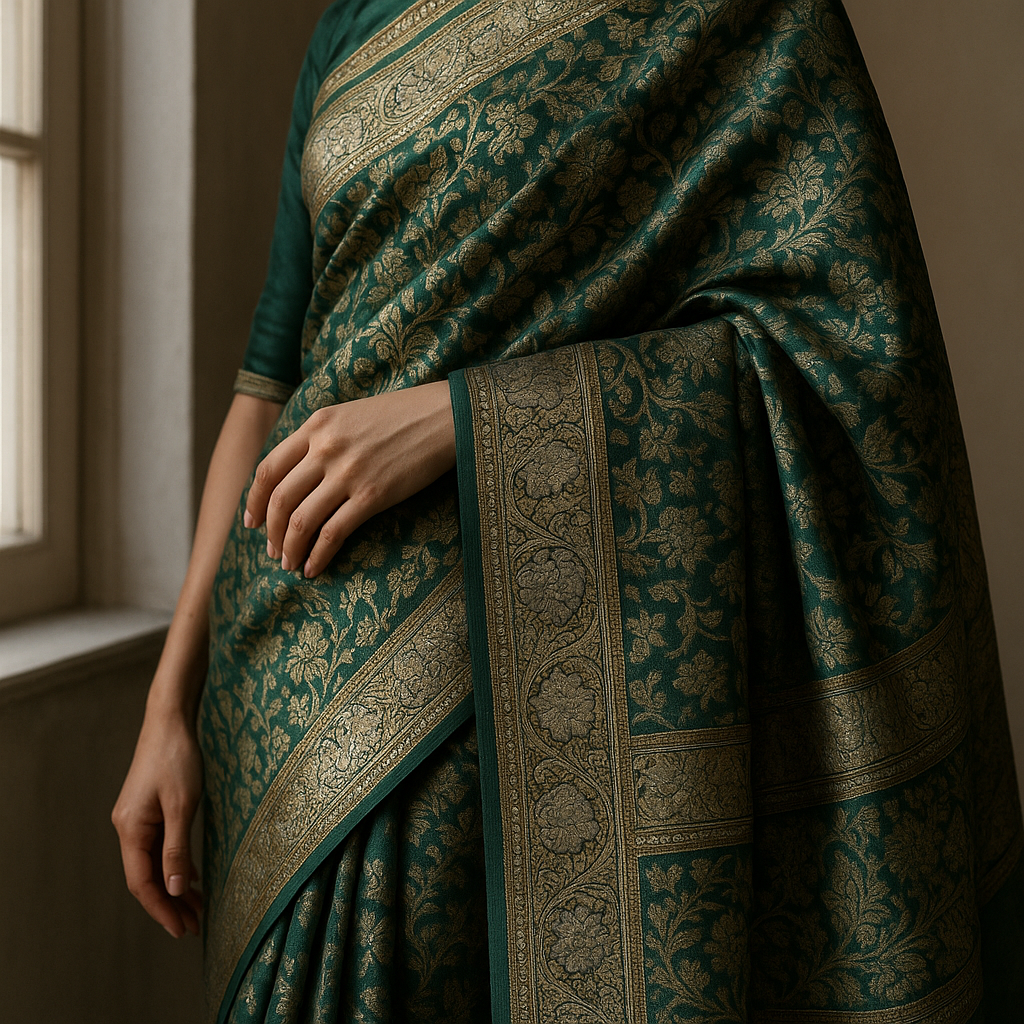
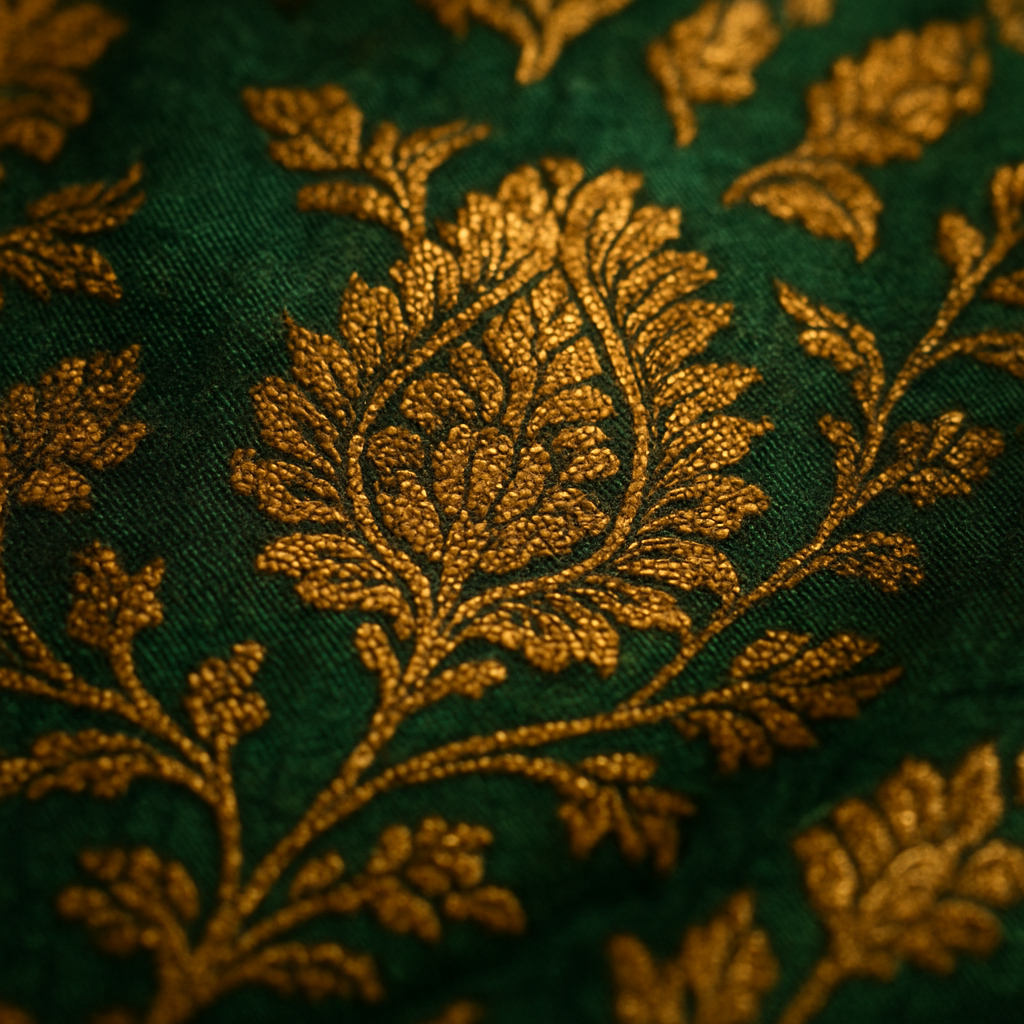
Banaras, or Varanasi, has woven silk for centuries. The motifs travelled with Mughal courts and settled into the loom: the buti, a small flowering spray repeated across the field; the jangla, a dense jungle of vegetation that climbs the pallu; the bel, a twisting vine; the kalka, the teardrop shape known elsewhere as paisley. Each motif asks for a different density of thread, a different rhythm of the shuttle.
A Banarasi is not one fabric. The body may be katan, a plain weave of pure silk threads twisted together, giving the saree a firm, cool hand. It may be organza, light and crisp, or georgette, soft and fluid. The weight changes how the saree sits on the shoulder, how it moves when the wearer walks, how it feels after six hours of ceremonies. A heavier katan holds its shape and carries bold zari well. A lighter weave drapes close to the body and suits a woman who wants to move without restriction.
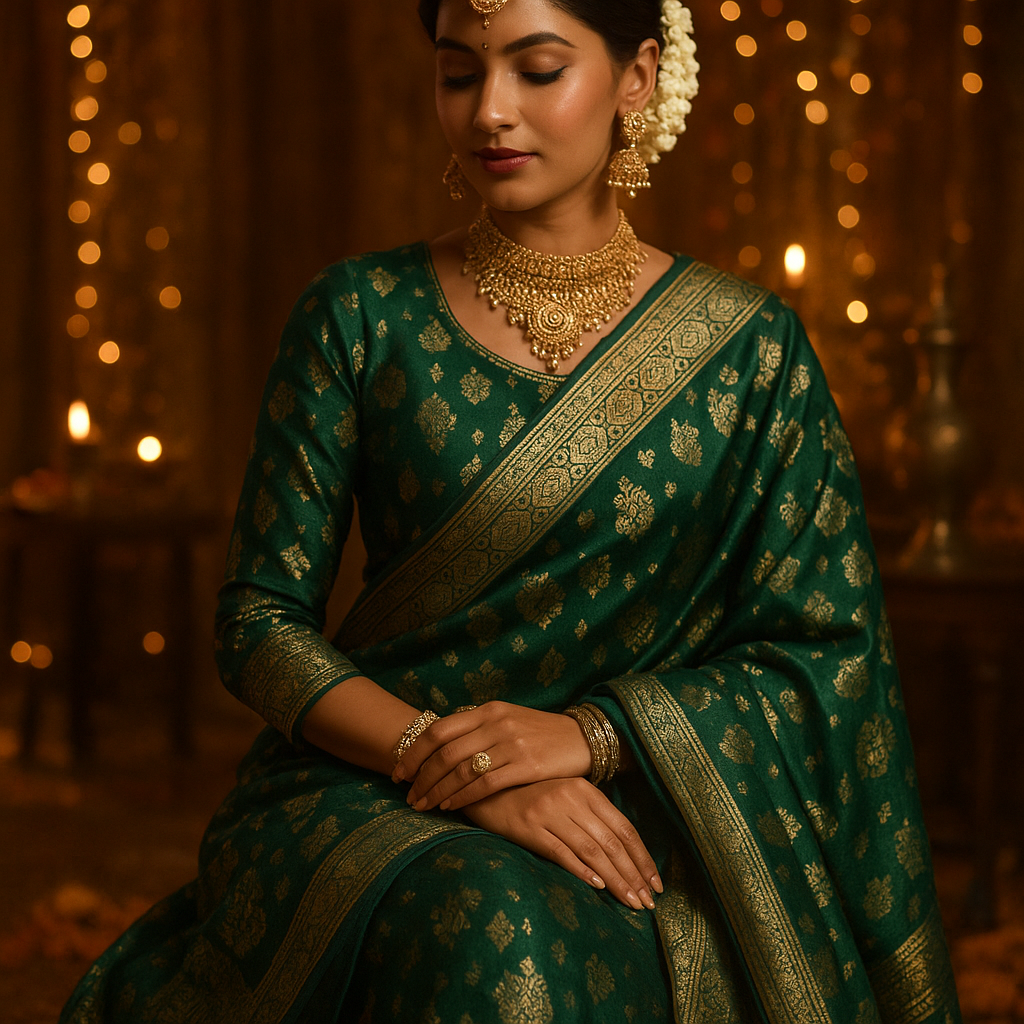
Colour is part of the language too. Deep reds and maroons have long marked the bride. Greens and golds speak of prosperity. Muted pinks, ivories, and sage tones suit a woman who wants elegance without announcement. The gift should respect the woman’s own taste as much as the occasion’s tradition.
Choosing for the Woman, Not Just the Occasion
Wedding season in India runs from November to February. The air is cool, the ceremonies are long, and a saree must carry a woman through rituals, photographs, and receptions. Matching the weave to the recipient is the difference between a gift she wears once and a gift she remembers.
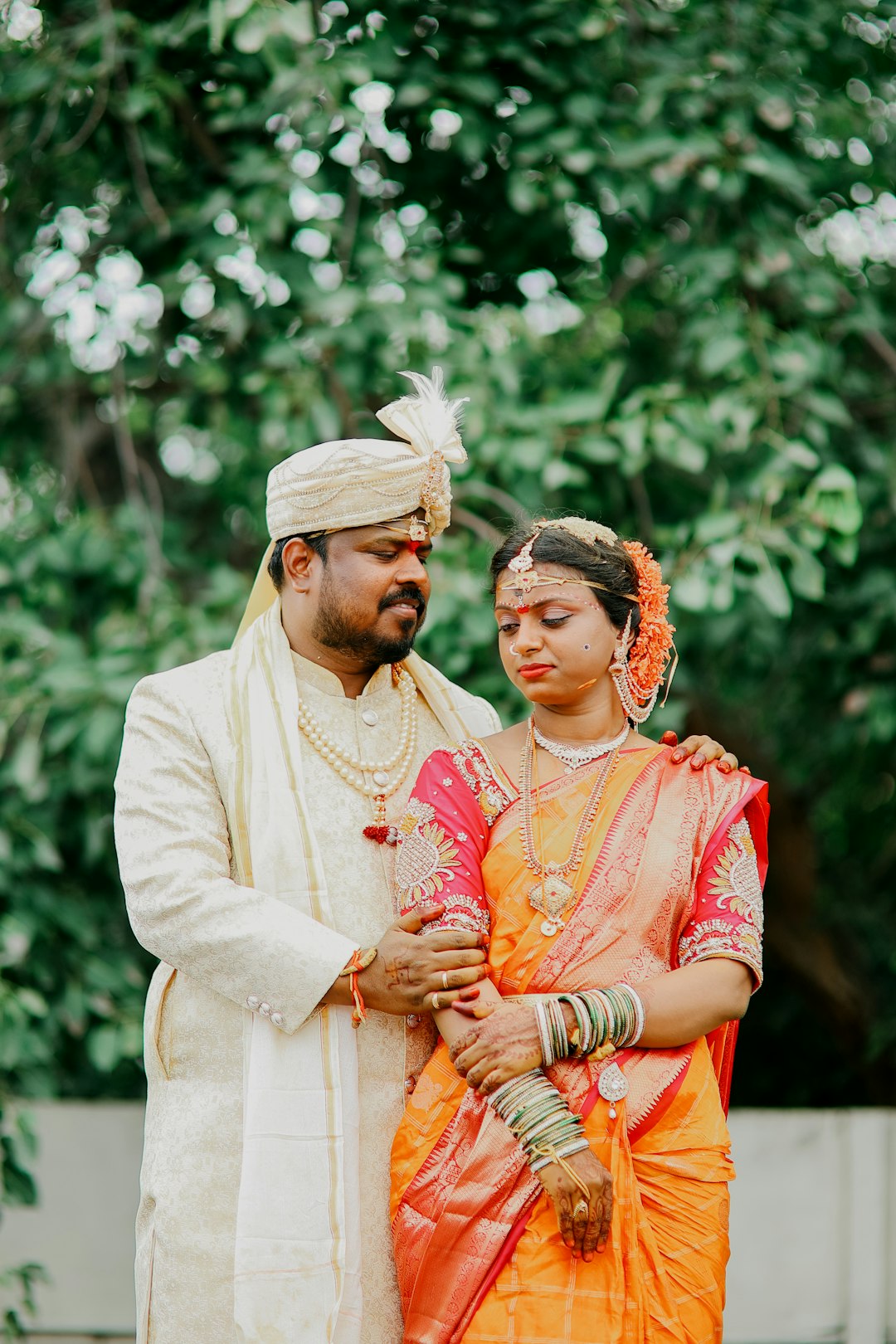
For the bride, the saree is often the centrepiece. A heavier pure silk Banarasi in katan, with a substantial jangla or kalka border, carries the visual weight of the main ceremony. Colours in the red, maroon, or deep gold family are traditional, though a bride may prefer ivory with a gold pallu. The saree should feel substantial in the hand, with a clear rustle when folded, and a pallu that drapes without slipping.
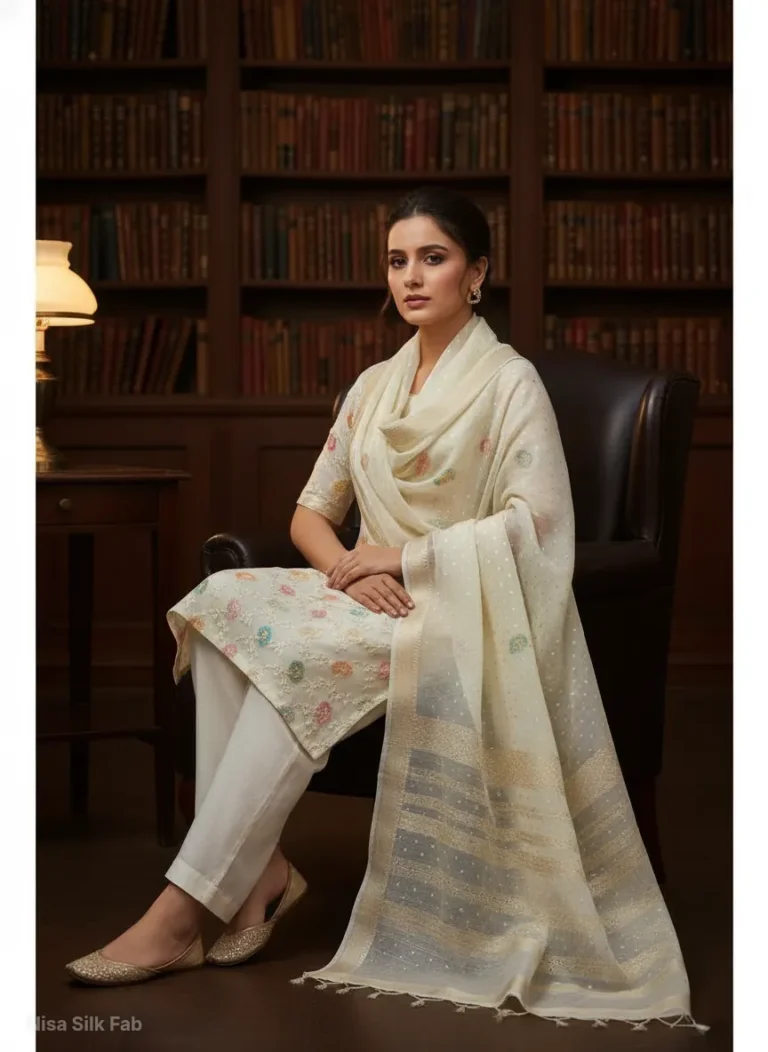
For the mother of the bride or groom, the role is one of quiet dignity. A lighter pure silk, perhaps organza or a fine katan, in a muted colour—sage, dusty rose, charcoal, or cream—allows her to stand beside the bride without competing. Buti work across the body, rather than a heavy all-over jangla, keeps the saree graceful for long hours of greeting guests. The saree should not drag or catch on chairs; it should move with her.
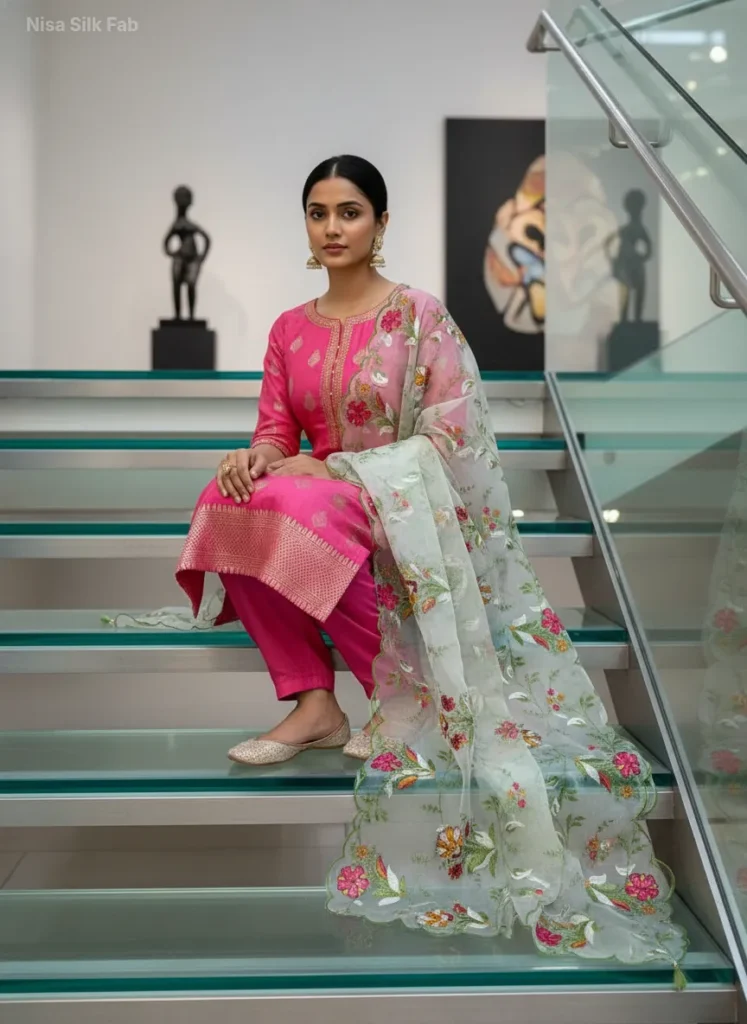
For a sister, the gift can be bolder. A vibrant colour that does not clash with the bridal palette—a royal blue, an emerald, a fuchsia—celebrates her place in the wedding party. A georgette or lighter silk Banarasi is easier to manage during pre-wedding functions, when she may be running between ceremonies. The weave should be festive but not so heavy that it tires her by evening.
For a friend, think of reuse. A lightweight Banarasi in a colour she would choose for herself—perhaps a soft grey, a peach, or a navy—means she will wear it again at other weddings and gatherings. Avoid the heaviest zari if she is not accustomed to pure silk; a finer thread count feels kinder to the skin and packs easily for travel.
For a mother-in-law, tradition carries respect. A classic Banarasi with a clear buti pattern and a defined border, in a dignified colour such as deep green, maroon, or gold, acknowledges her position. The weight should be comfortable for her age and preference; many older women prefer a saree that is not too stiff and not too clingy.
In every case, ask how she drapes. Some women prefer the saree to fall in soft folds; others like it crisp. The gift should suit her body, her comfort, and the way she moves.

How to Spot the Real One
A gift loses its meaning if the silk is not pure. The market is full of powerloom copies and art silk imitations that look convincing at a glance. These checks will help you confirm what you are buying.
Silk Mark is the first marker. A genuine Silk Mark label carries a unique number that can be verified online. It certifies that the fabric is pure silk. It does not, by itself, certify that the saree is handloom. A powerloom saree can carry Silk Mark if the yarn is pure silk. Look for the number, and check it.
Turn the saree over. On the reverse of a handloom Banarasi, you will often see floating threads where the zari motif does not fully interlace, or slight cutwork where the design ends. A machine-made reverse is usually too clean, too uniform, with no loose ends or irregularities.
Examine the zari. Real zari traditionally has a silk core wrapped with silver or gold-plated wire. Scrape a small, hidden area gently with a needle. Real zari tends to reveal a silver or reddish silk core beneath the plating. Fake zari usually shows a uniform white or plastic layer beneath the coating, and often looks too bright, too uniform, and stiff.
Feel the weight. Pure silk has a particular density. It is cool to the touch, slightly slippery, and heavier than art silk of the same size. If the saree feels unusually light for its dimensions, or if it has a harsh, papery crispness, it may not be pure silk.
The burn test is the most definitive, and it must be done with care, and only on a spare thread — never on the main body of the saree. Pull a few threads from the pallu edge or a blouse piece and hold them with tweezers over a small flame on a fireproof surface, such as a ceramic plate, with water nearby and away from curtains, children, or flammable materials. Pure silk burns slowly, smells like burnt hair, and leaves a black ash that crushes easily between your fingers. Art silk or polyester melts, smells like chemicals, and forms a hard bead.
Handloom irregularities are a sign of honesty, not a flaw. A powerloom saree can be too perfect, with every motif identical and every pick exactly aligned. A handloom Banarasi will show tiny variations in tension, slight shifts in the buti placement, and the human signature of the weaver.
The GI tag protects the origin of Banarasi brocade. It means the saree was woven in the defined Banaras region. Ask for it, but remember that a GI tag speaks to place, not necessarily to the purity of the silk or the loom type.
Price can offer a general clue. A genuine handloom Banarasi in pure silk with real zari involves weeks of labour and costly materials. If the price seems far below what that labour would command, ask questions. But price alone is not proof; combine it with the checks above.
For a fuller walkthrough, see our earlier guide on identifying an original Banarasi saree.


What to Avoid When Gifting
Do not buy for the label alone. A saree that looks impressive in a photograph may feel stiff, heavy, or unsuitable for the woman who receives it. Consider her height, her complexion, and her comfort with pure silk.
Do not ignore the wedding palette. A bright neon saree may clash with the bride’s lehenga or the event’s theme. When in doubt, choose a colour that complements rather than competes.
Do not order at the last minute. Wedding season is November to February. Handloom sarees take time to weave, and standard delivery is 7–14 business days. Because all sales are final and there are no returns, ordering early gives you time to check the saree on arrival and ask us any questions before the ceremony.
Do not assume Silk Mark means handloom. It certifies pure silk, not the loom. If you want a handloom Banarasi, ask specifically about the weave and look for the irregularities described above.
Do not forget the blouse. A mismatched blouse fabric can pull attention away from the saree. Choose a blouse in a complementary silk or cotton, and leave the stitching to someone who understands how Banarasi drapes.
FAQ
Which Banarasi is best for a bride?
A heavier pure silk katan Banarasi with a substantial border or jangla work, in a traditional colour such as red, maroon, or gold, suits the main ceremony best.
How do I know if a Banarasi is pure silk?
Check the Silk Mark number, feel the weight and coolness of the fabric, inspect the zari core, and look for handloom irregularities. A burn test on a spare thread can confirm pure silk.
Does Silk Mark guarantee the saree is handloom?
No. Silk Mark certifies that the fabric is pure silk. It does not certify that it was woven on a handloom.
Can I return a saree if it does not suit?
No. All sales are final and there are no returns. We offer flat ₹100 shipping across India with standard delivery in 7–14 business days.
When should I order for wedding season?
Order as early as possible. Handloom sarees need weaving time, and delivery takes 7–14 business days. We cannot promise arrival by a specific date, so plan ahead for November to February weddings.
At Nisa Silk Fab
At Nisa Silk Fab, our wedding-season edit is chosen for exactly these occasions — pieces made to be kept, re-worn and handed down. A gift should carry the weight of the maker's hand as much as the occasion it marks.
Browse our range of Banarasi sarees, or learn how pure silk differs from art silk. We ship across India for a flat ₹100, with standard delivery in 7–14 business days. All sales are final. If you need help choosing the right weave for a bride, a mother, or a sister, call us at +91 98259 85765, +91 99789 85765.