A wedding trousseau is not a shopping list. It is a decision about what you will wear in the photographs your grandchildren will see. Every piece you choose now will be in your family’s visual history for the next fifty years. This guide walks through every function of a modern Indian wedding and tells you exactly which Banarasi silk to wear, why, and what to budget.
The Modern Wedding Calendar
An Indian wedding in 2026 is not one event. It is a series of functions, each with its own dress code, mood, and photographic requirements. Here is the complete breakdown:
| Function | Duration | Vibe | Banarasi Fabric | Budget |
|---|---|---|---|---|
| Mehndi | 3 to 4 hours | Casual, colorful, daytime | Siffone khadi or cotton silk | Rs 1,500 to 3,000 |
| Haldi | 2 hours | Playful, messy, yellow | Cotton silk (disposable feel) | Rs 1,200 to 2,000 |
| Sangeet | 4 to 6 hours | Glamorous, dance-heavy | Organza or crushed tissue | Rs 3,500 to 7,000 |
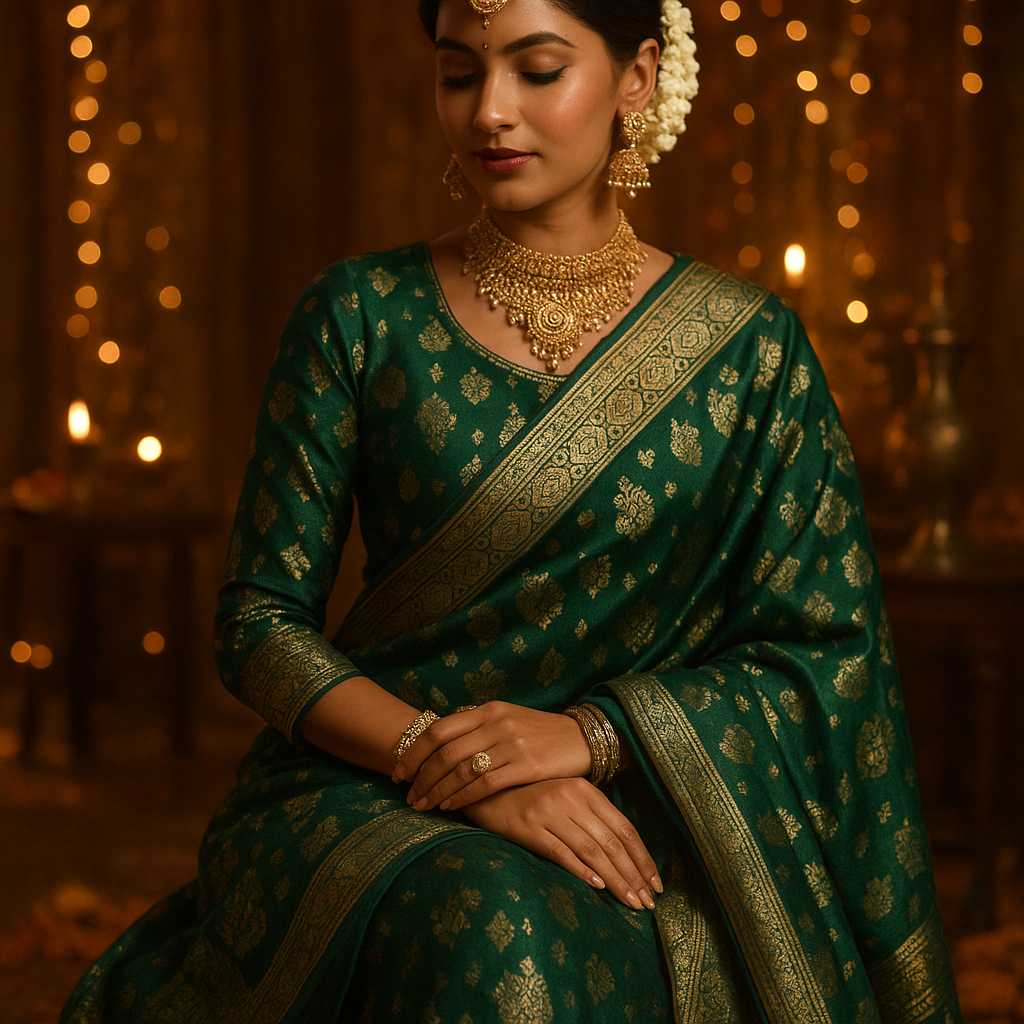
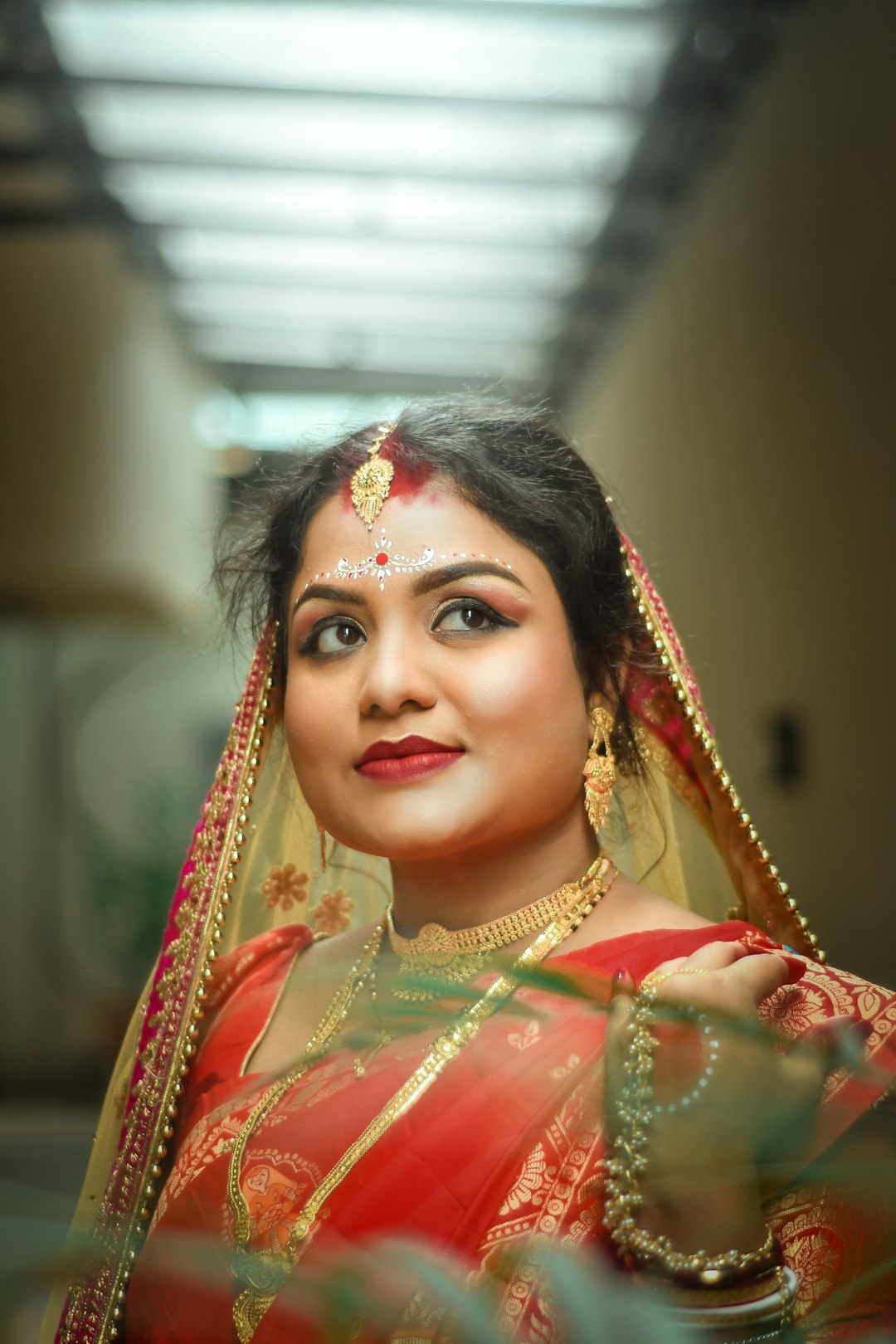
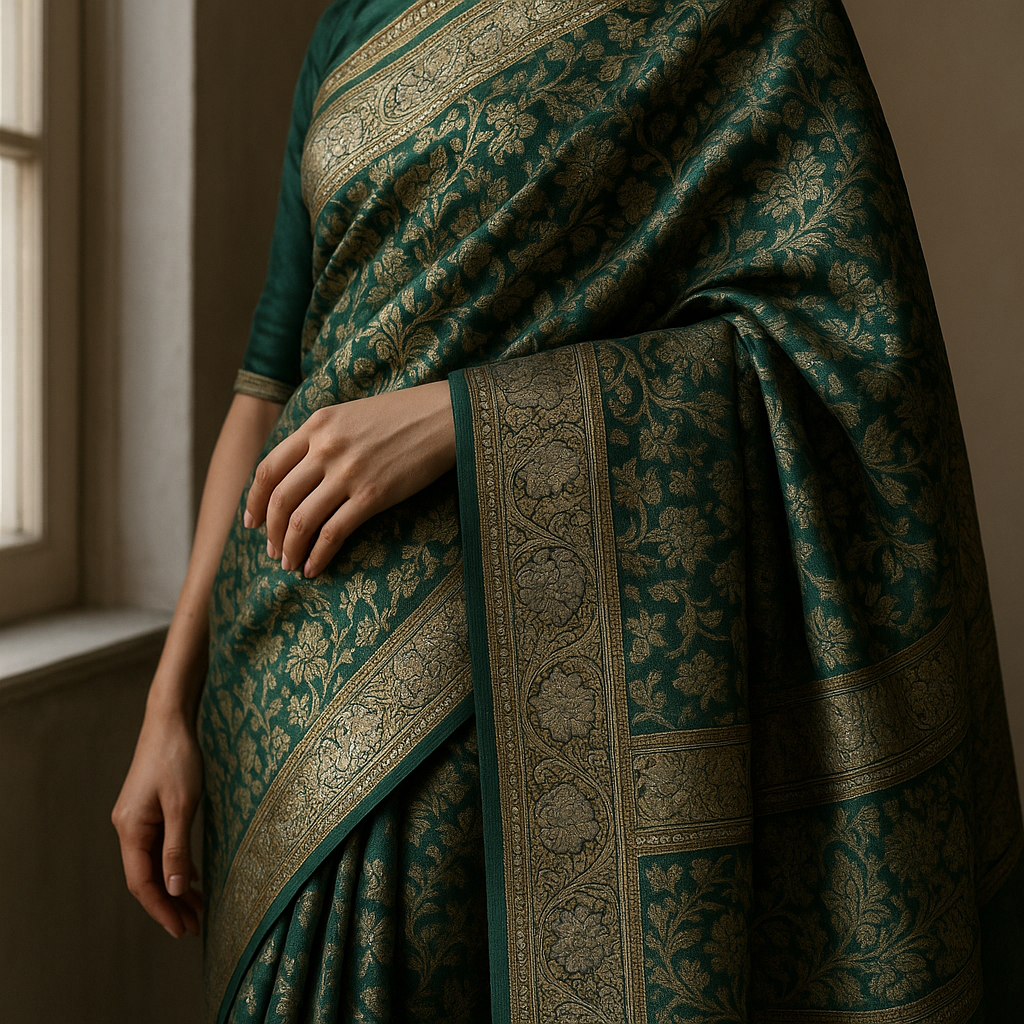
| Pheras (main ceremony) | 2 to 4 hours | Sacred, formal, photographed | Katan silk with heavy zari | Rs 8,000 to 25,000 |
| Reception | 3 to 5 hours | Contemporary, elegant, evening | Tissue or organza, modern color | Rs 4,000 to 10,000 |
The Main Ceremony: Katan Silk
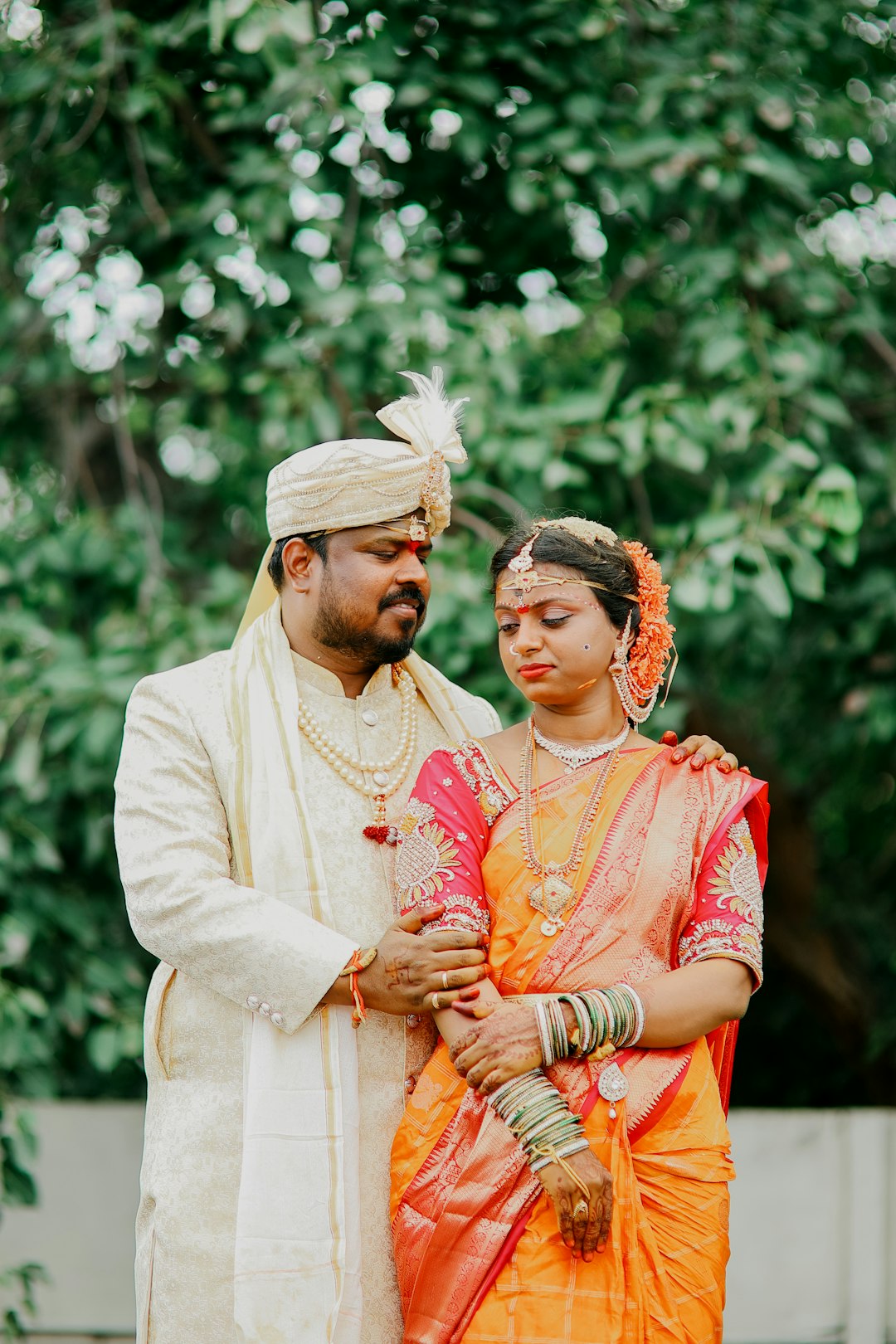
For the pheras — the actual wedding ceremony — katan silk is still the undisputed choice. Nothing else carries the weight, the gravity, the sense of occasion. Here is how to choose:
Color by Season
- Winter (Nov to Feb): Deep maroon, ruby red, emerald green, royal blue. These colors photograph rich in cool light and complement the heavy gold zari.
- Summer (Mar to Jun): Coral, peach, dusty rose, ivory. Lighter colors feel seasonally appropriate and do not absorb heat during outdoor ceremonies.
- Monsoon (Jul to Sep): Magenta, deep orange, turquoise. Saturated colors that pop against grey skies and look vibrant in soft light.
Zari Weight
The biggest mistake brides make is choosing the heaviest possible zari. Full jall work (all-over intricate pattern) looks breathtaking in person but photographs as a flat gold mass under wedding lights. What photographs better:
- Butta work (small scattered motifs) — patterns stay visible even in flash photography
- Border-heavy design — rich pallu and border with a relatively plain body, creating contrast
- Half jall — jall on the pallu only, butta on the body — the best of both worlds
The Sangeet: Organza
The sangeet is where you dance. A 700-gram katan saree that restricts movement is the wrong choice. Organza (250 to 400 grams) is the answer — light enough to move in, sheer enough to catch stage lighting beautifully, and modern enough to match the sangeet’s cocktail-party energy.
Colors: Jewel tones (emerald, sapphire, wine) for evening sangeets. Pastels (mint, dusty rose, lavender) for daytime.
Blouse: Three-quarter sleeves, contrast color, heavy embellishment. The blouse is the sangeet’s statement piece — it does the heavy lifting while the organza stays light.
The Mehndi: Siffone Khadi
The mehndi function is three to four hours of sitting. You will have mehndi on your hands and feet. You will be photographed from above (showing the mehndi). You need a fabric that is:
- Comfortable: You are sitting for hours. No heavy zari digging into your skin.
- Breathable: Mehndi functions are often outdoors in warm weather.
- Colorful: The mehndi is the star. Your outfit should complement, not compete.
Siffone khadi (silk-cotton blend) is perfect. Rs 1,500 to 3,000. Bright colors — yellow, orange, green, pink — that match the festive mood.
The Reception: Tissue or Organza
The reception is your public debut as a married couple. It is the most photographed event after the pheras. The dress code is contemporary elegance — you want to look like a bride, not like you are at your own wedding ceremony.
Tissue silk with a modern cut (flowy silhouette, contemporary blouse, statement jewellery) is the 2026 standard. Champagne, ivory, dusty rose, and charcoal are the dominant colors.
Budget: Rs 4,000 to 10,000. This is not the place to splunge on heavy zari — the reception is about styling, not about the saree itself.
The Blouse Strategy
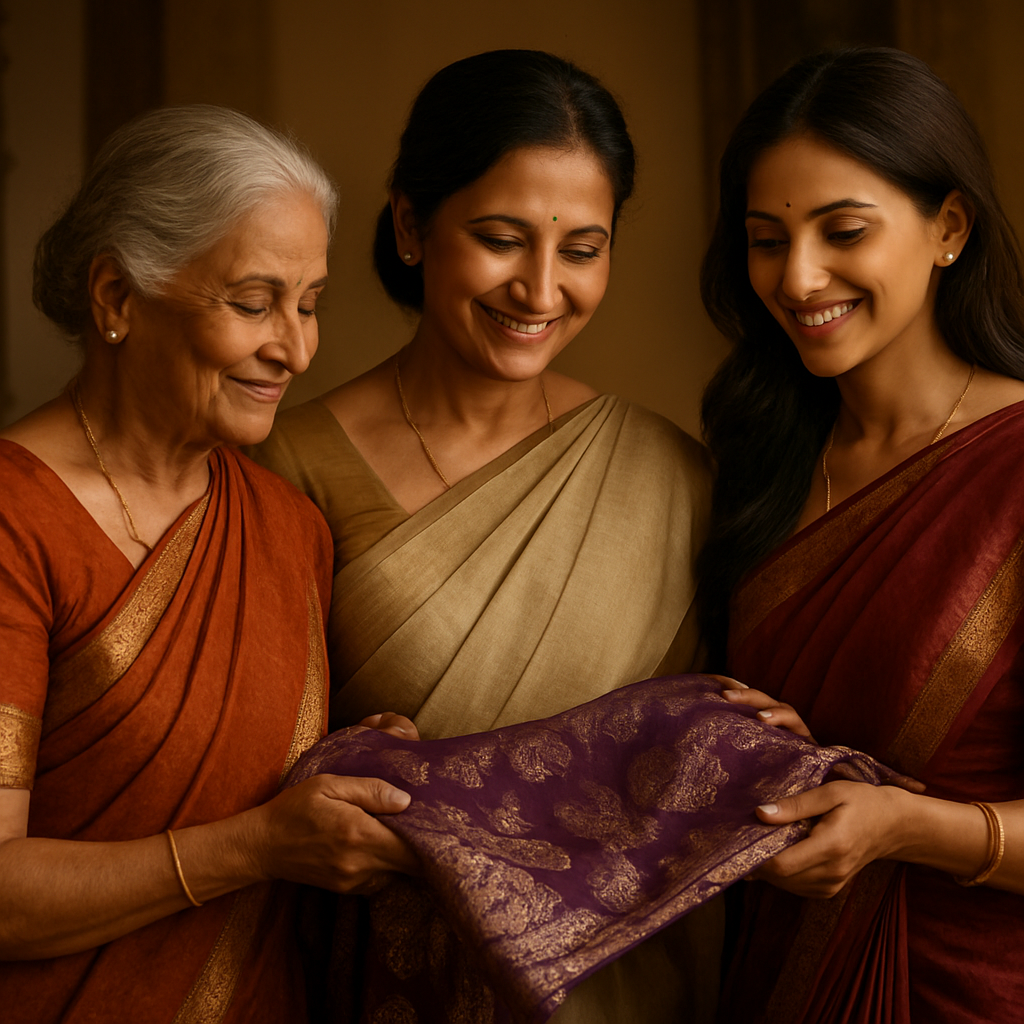
The blouse can make or break a Banarasi saree. Three rules:
- Contrast, not match. A red Banarasi with a red blouse looks flat. A red Banarasi with a gold, contrast-pink, or contrasting-weave blouse looks designed.
- Match the blouse weight to the saree weight. Heavy katan needs a heavy blouse (raw silk, brocade). Light organza needs a light blouse (silk cotton, organza).
- Three-quarter sleeves photograph best. Full sleeves look traditional; sleeveless looks modern but unforgiving in close-up photos.
Most brides buy the blouse fabric from the same weaver as the saree — this guarantees color and texture match. Our unstitched suit pieces come with matching blouse fabric; ask when ordering.
Budget Reality Check
Here is what a complete Banarasi trousseau costs in 2026:
| Function | Minimum | Recommended | Premium |
|---|---|---|---|
| Mehndi | Rs 1,500 | Rs 2,500 | Rs 4,000 |
| Haldi | Rs 1,200 | Rs 1,800 | Rs 2,500 |
| Sangeet | Rs 3,500 | Rs 5,500 | Rs 8,000 |
| Pheras | Rs 8,000 | Rs 14,000 | Rs 25,000+ |
| Reception | Rs 4,000 | Rs 7,000 | Rs 12,000 |
| Total | Rs 18,200 | Rs 30,800 | Rs 51,500+ |
The sweet spot for most brides is Rs 25,000 to 35,000 total. This gives you genuine handloom pieces for every function without overspending on the non-ceremony events.
When to Buy
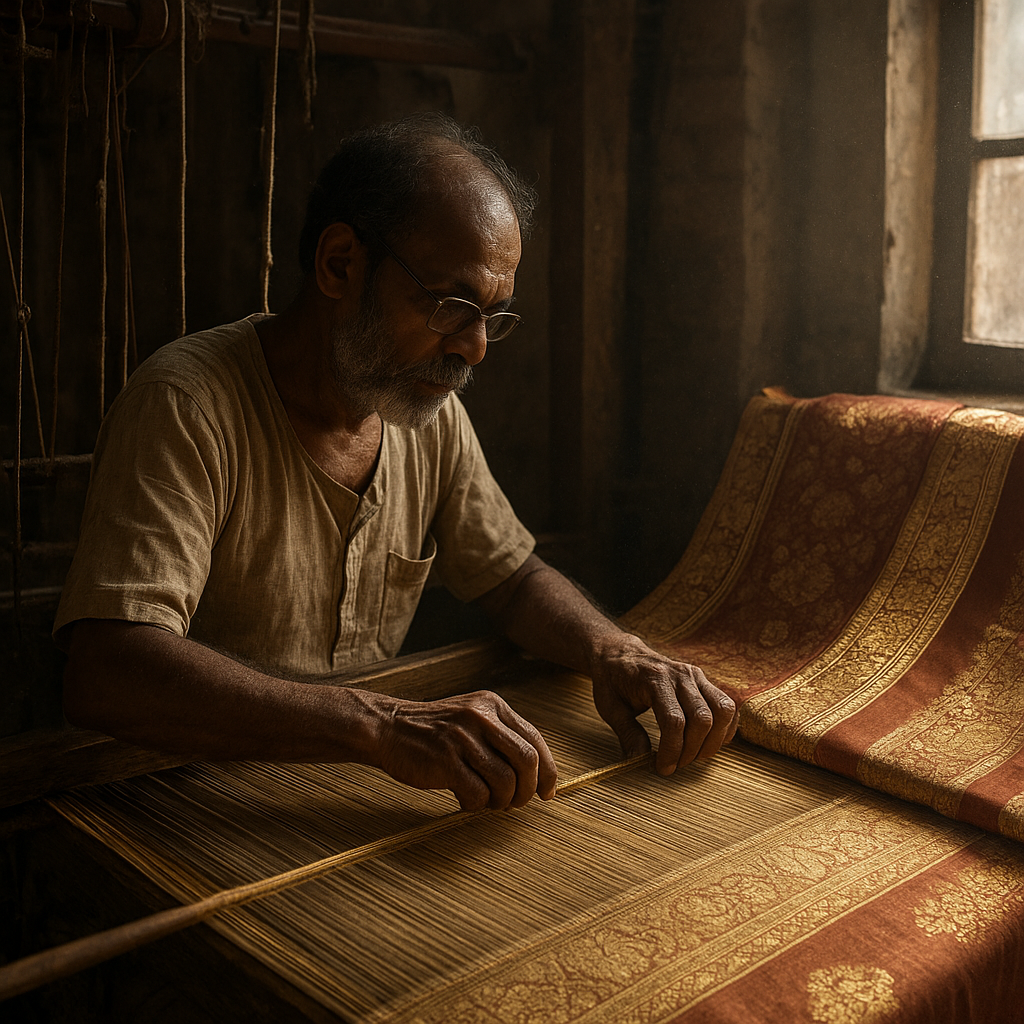
Start shopping three to four months before the wedding. Custom pieces take 30 to 60 days to weave. You need time for fall-pick, picot, blouse stitching, and two rounds of alterations. Buying under two months leaves you with ready-stock options only — which limits your choice significantly.
Frequently Asked Questions
Can I wear the same Banarasi for two functions?
You can, but you should not. Each function has a different mood, different lighting, and different photographic context. Wearing the same saree twice in the same wedding week looks like you are recycling. If budget is tight, spend less on each saree rather than reusing one.
Should the bride’s Banarasi match the groom’s outfit?
Coordinated, not matched. If the bride wears deep maroon, the groom can wear ivory or cream with maroon accents. Identical colors look odd in photographs — contrast photographs better.
How do I store my bridal Banarasi after the wedding?
Muslin cloth bag (not plastic). Neem leaves or camphor for pest prevention. Cool, dry storage. Refold every three months to prevent permanent creases. Never hang a heavy Banarasi — the zari will stretch. Full care guide here.
Where can I buy a complete bridal trousseau?
Our saree collection includes bridal-grade katan for the ceremony, organza for the sangeet, and tissue for the reception. Contact us with your wedding date and budget — we will curate a trousseau package for you.
Getting married in 2026 or 2027? Send us your wedding date and budget — we will recommend pieces for every function. No pressure, no sales script.