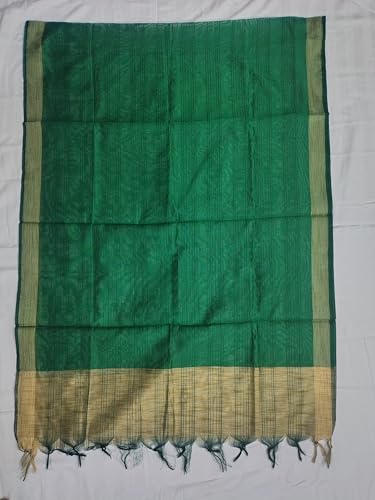
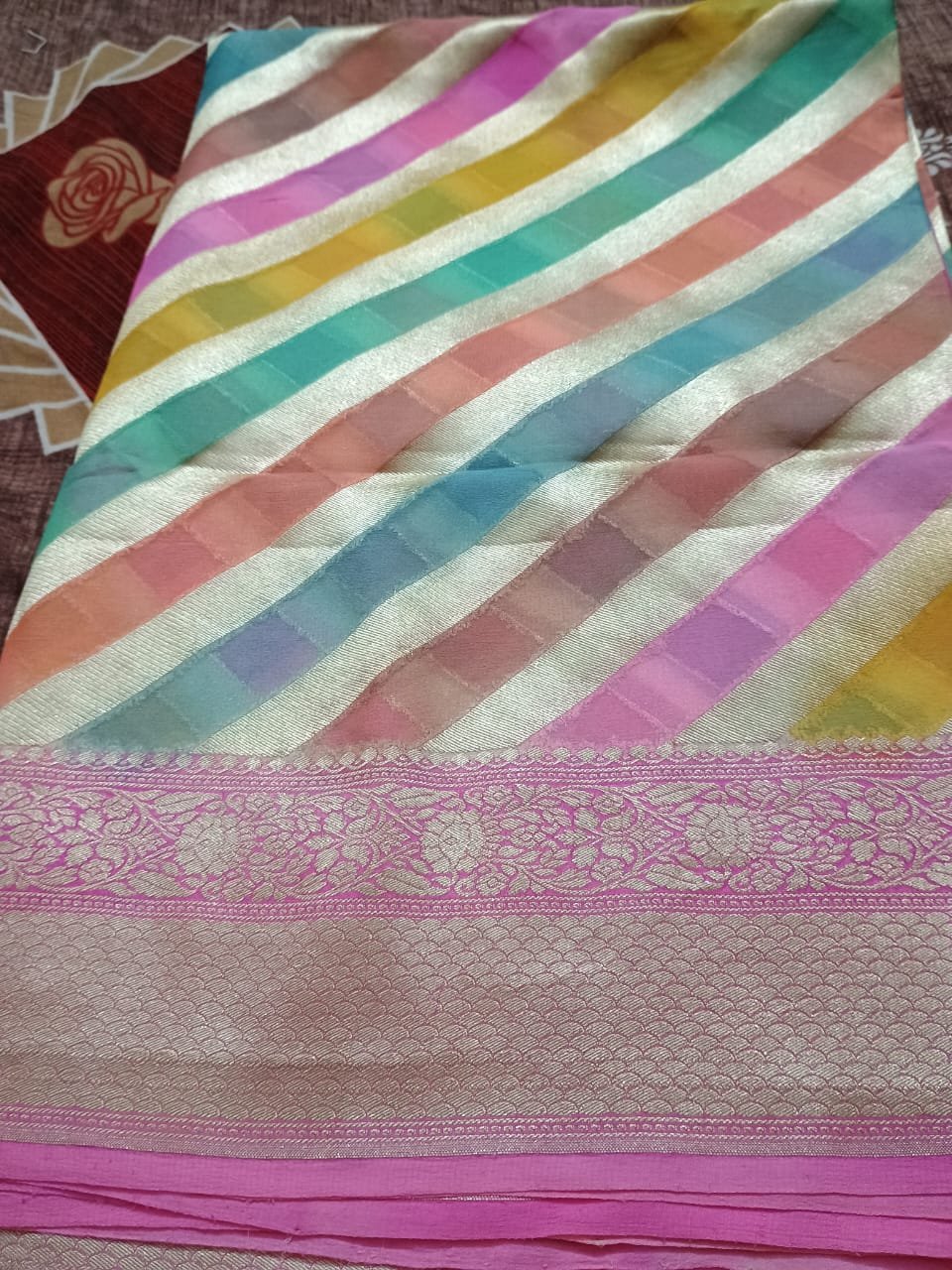
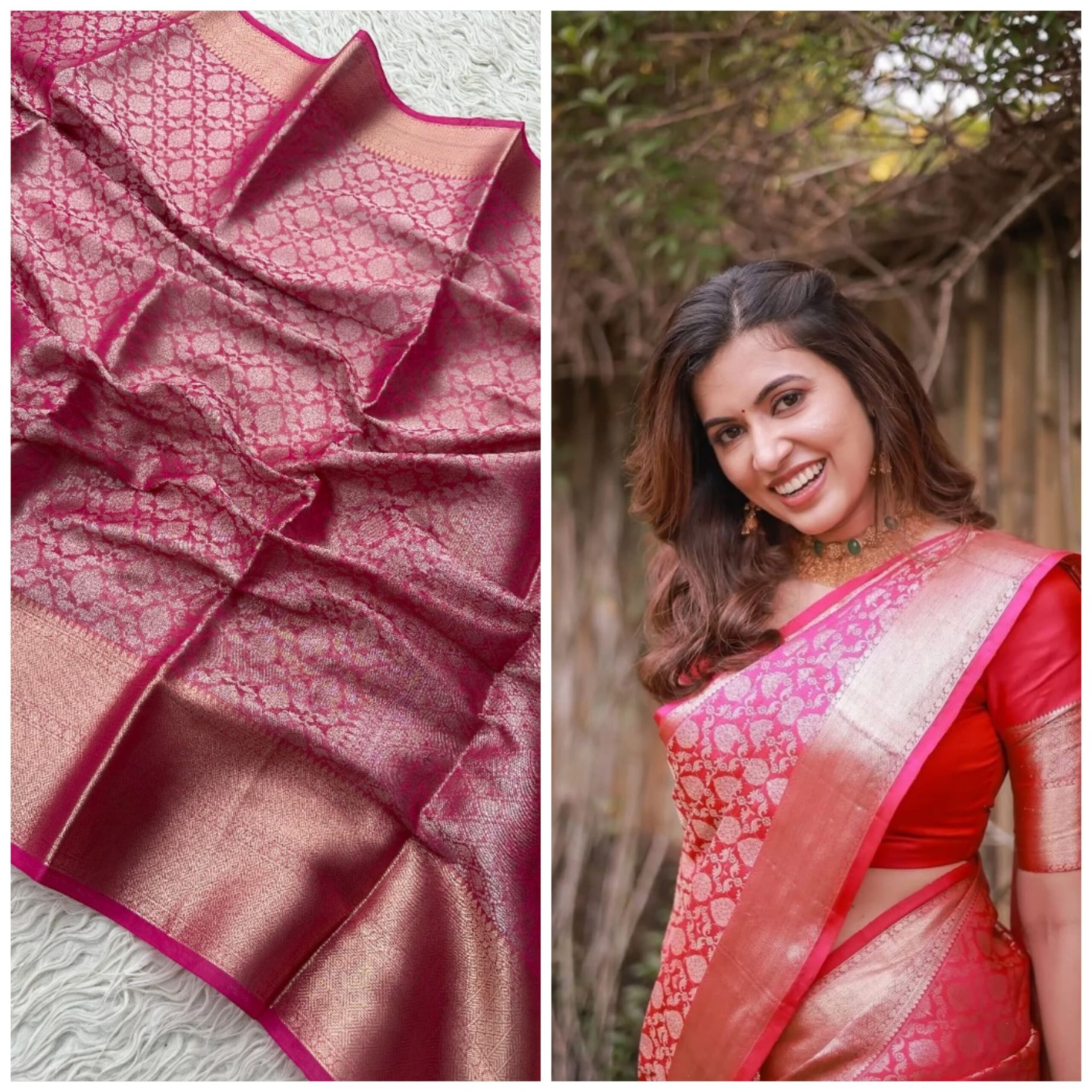
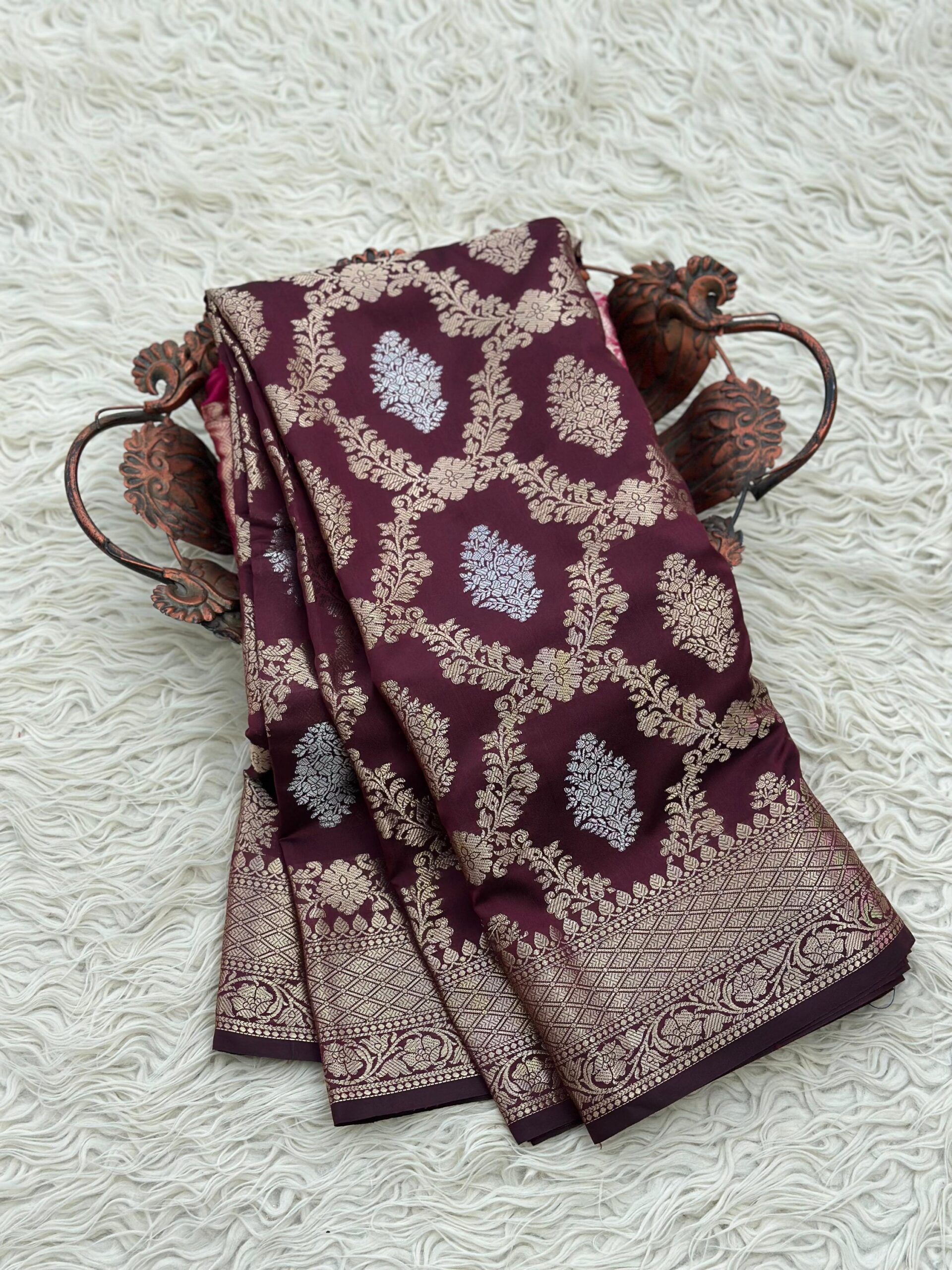
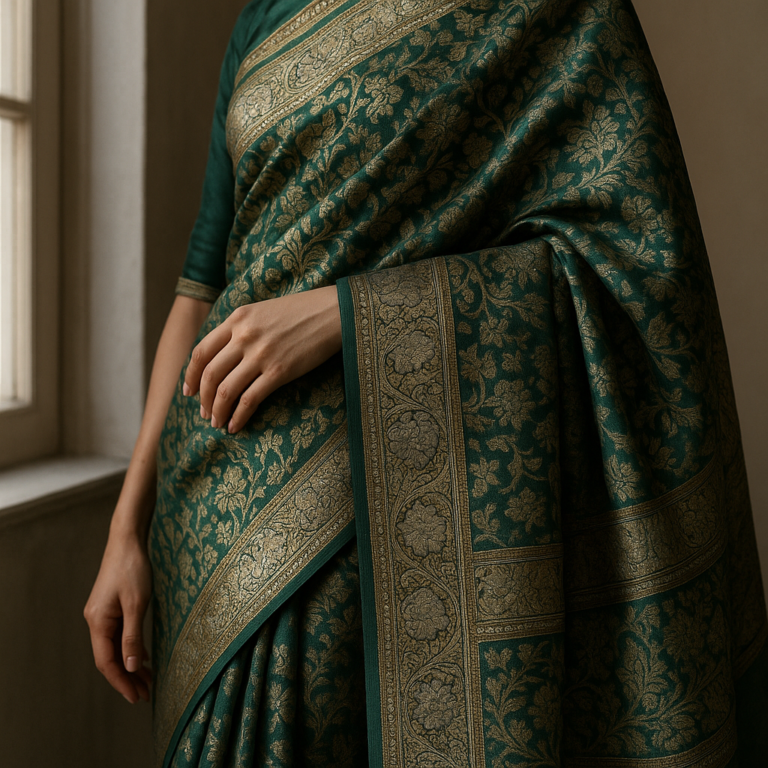
For the bride, the mother of the bride, and every woman who has ever stood in front of a Banarasi rack and frozen.
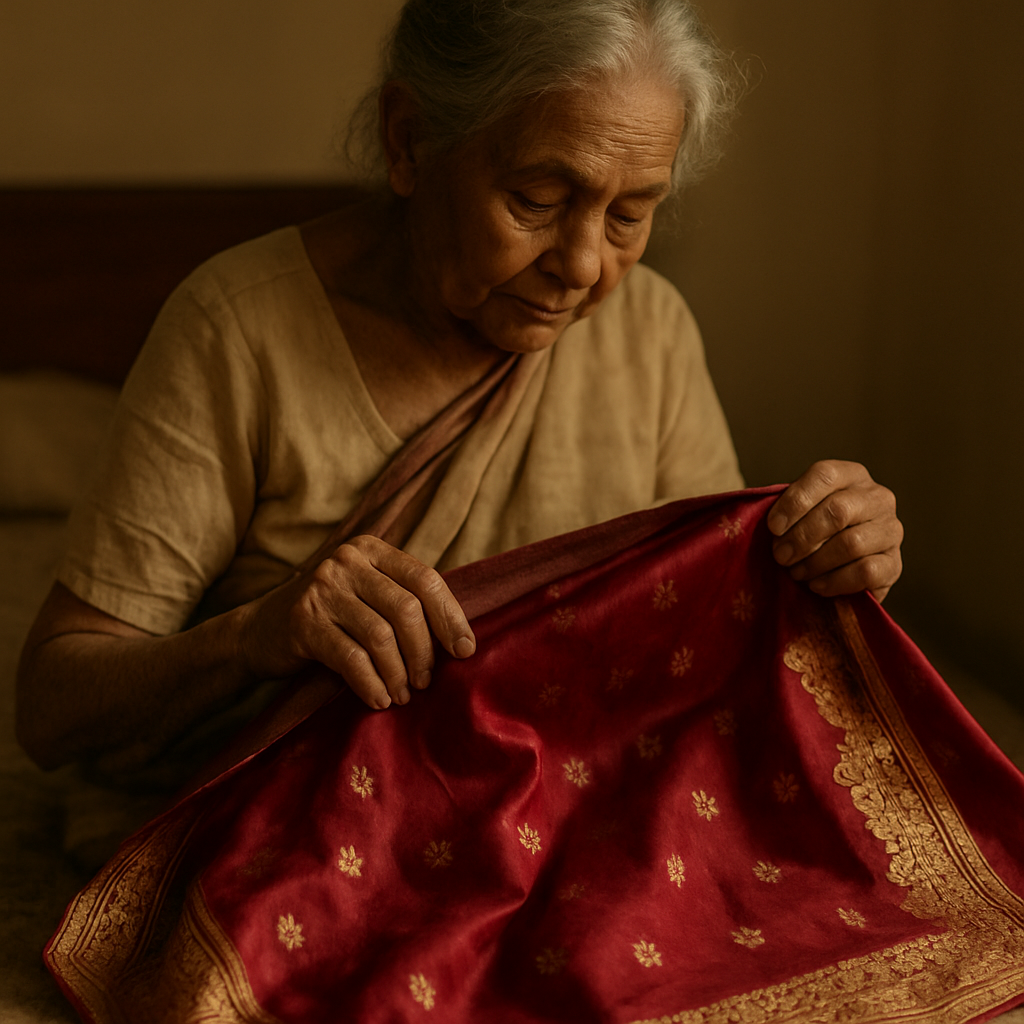
A wedding Banarasi saree is not a purchase — it is a decision. The piece you choose will be in your wedding photographs for the rest of your life. It will likely be passed to your daughter. It will be the saree you remember when you remember your wedding. So the question is not "which is prettiest?" — it is "which will I still love in 30 years?"
This guide walks through everything a bride (or her family) needs to consider before buying a Banarasi saree for the wedding.
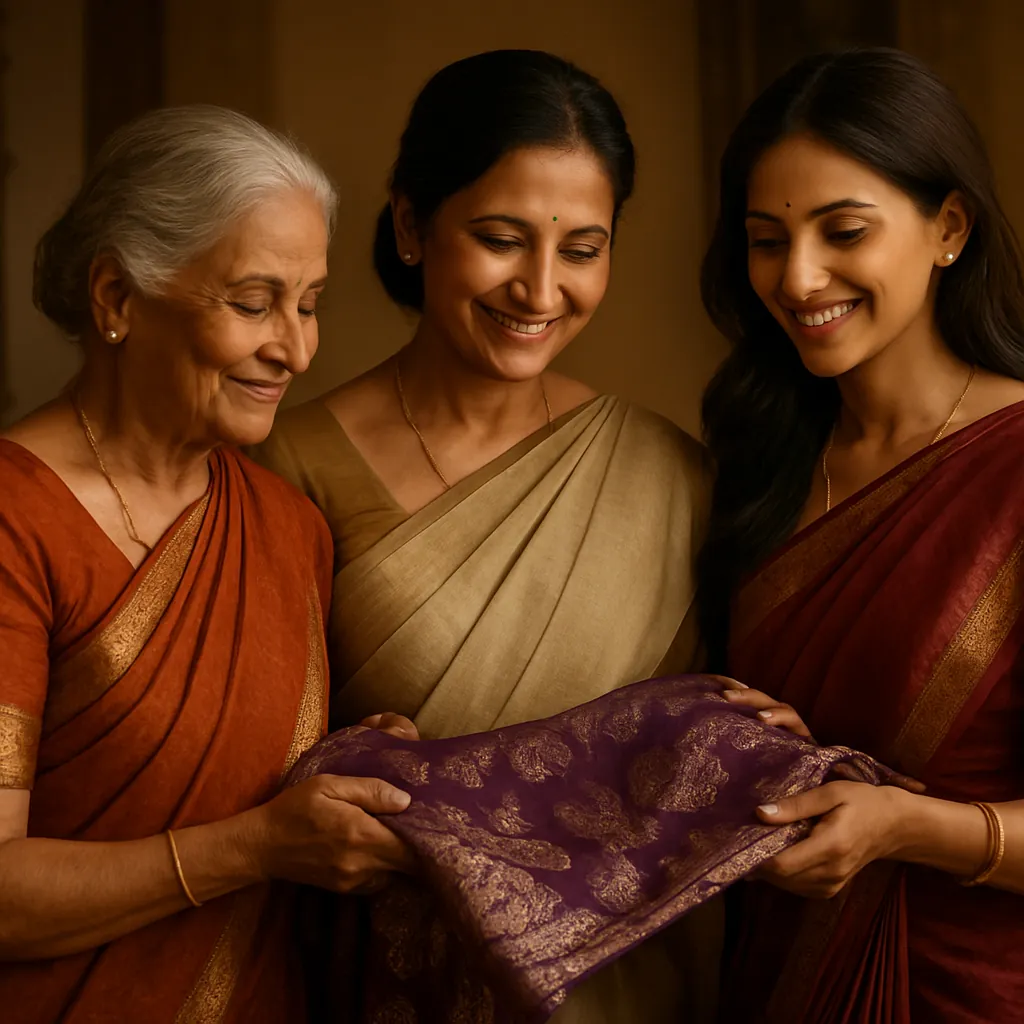
The Five Decisions You Need to Make
Decision 1: Which Function Is This For?
The biggest mistake brides make is buying "one Banarasi saree for the wedding" — meaning one piece for the main ceremony. But Banarasi sarees suit different functions differently:
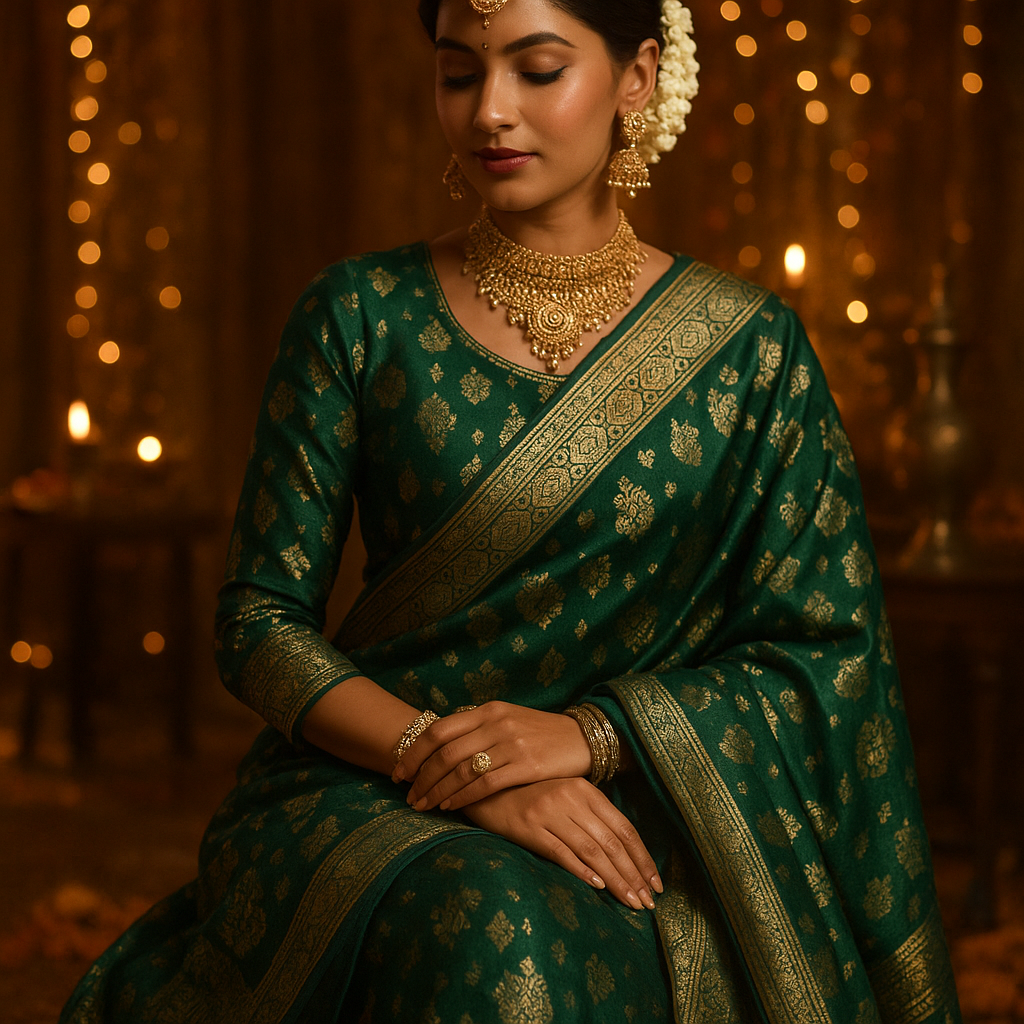
- The wedding ceremony (pheras): Katan silk, deep colour (red, maroon, deep green), heavy zari, full jall work. This is the heirloom piece.
- Mehndi / Haldi: Organza or cotton silk, lighter colour (yellow, mint, coral), minimal zari. You will be sitting for hours — comfort matters.
- Sangeet / Cocktail: Katan or organza in jewel tones (emerald, sapphire, wine), statement zari border. This is where you can experiment.
- Reception: Either fabric, contemporary colour (ivory, champagne, dusty rose), modern blouse cut. Photographs well under professional lighting.
If budget allows only one Banarasi, buy for the main ceremony. The other functions can be styled with non-Banarasi silks.
Decision 2: Colour by Season and Astrology
Colour is the most personal decision — and the most contested in Indian families. Here is the practical breakdown:
By Season
- Winter wedding (Nov–Feb): Deep maroon, ruby red, emerald green, royal blue, deep purple. These colours photograph rich in cool light.
- Summer wedding (Mar–Jun): Coral, peach, mint green, dusty rose, ivory. Lighter colours feel seasonally right and do not absorb heat.
- Monsoon wedding (Jul–Sep): Magenta, deep orange, turquoise, peacock blue. Saturated colours that pop against grey skies.
By Astrological Recommendation (Optional)
Many Indian families consult a pundit for auspicious colours based on the bride's rashi (moon sign). Common recommendations:
- Aries / Scorpio (Mars): Red, maroon
- Taurus / Libra (Venus): Pink, white, pastel
- Gemini / Virgo (Mercury): Green, peach
- Cancer (Moon): White, silver, pearl
- Leo (Sun): Gold, orange, mustard
- Sagittarius / Pisces (Jupiter): Yellow, gold
- Capricorn / Aquarius (Saturn): Blue, dark tones
These are traditional, not mandatory. If your family insists, honour it. If not, choose what you love.
Decision 3: Zari Work — Heavy or Light?
This is where brides overspend. The temptation is to go "full bridal" — heavy zari everywhere, full jall work, intricate meena. The result is a Rs 25,000+ saree that looks stunning in person but photographs as a flat gold mass under wedding lights.
What photographs better:
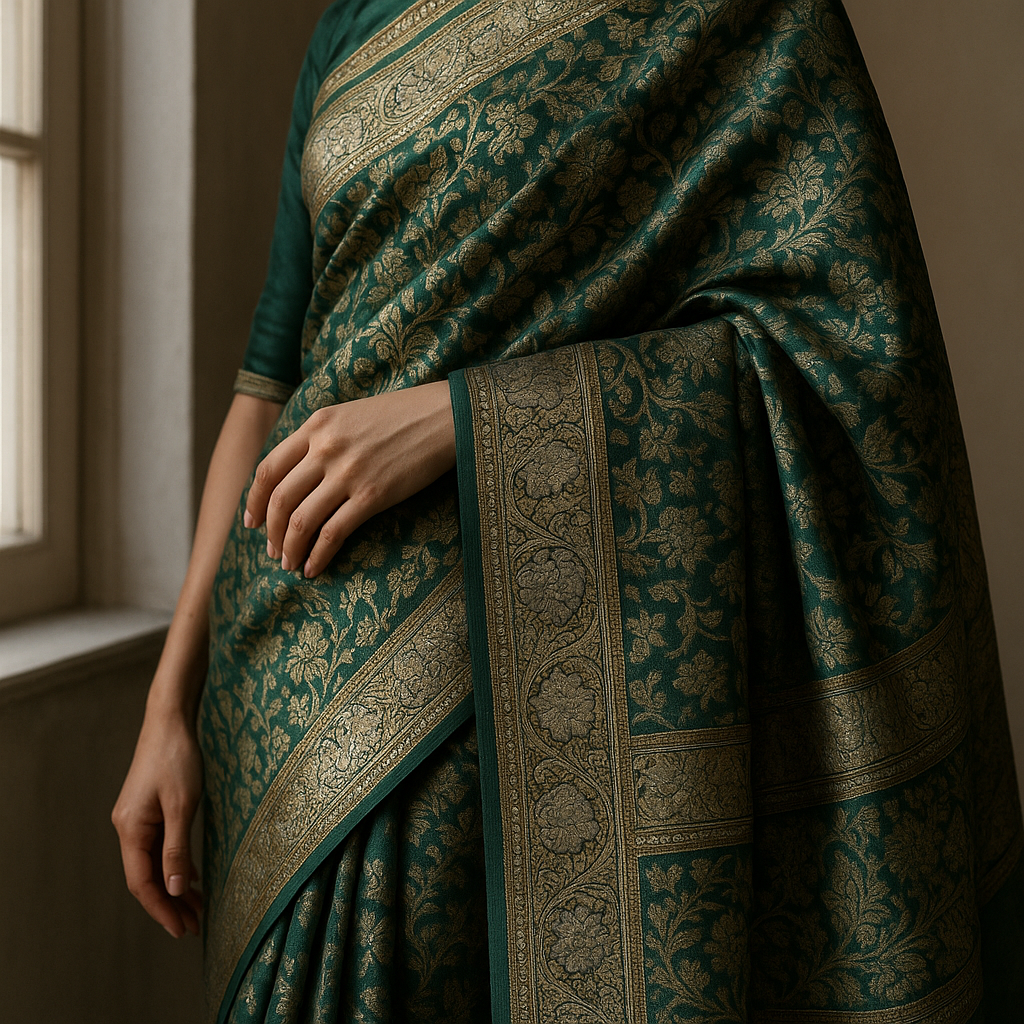
- Butta work (small motifs scattered) — the patterns stay visible even in flash photography.
- Border-heavy design — a rich pallu and border with a relatively plain body. The contrast looks elegant and the body colour reads true in photos.
- Half jall — jall work on the pallu only, plain or butta on the body. Best of both worlds.
Full jall (all-over intricate pattern) is breathtaking in person but tends to look "too much" in photographs unless you have a top-tier photographer who understands how to light it.
Decision 4: Blouse Pairing
The blouse can make or break a Banarasi saree. Three rules:
- Contrast, not match. A red Banarasi with a red blouse looks flat. A red Banarasi with a gold, contrast-pink, or contrasting-weave blouse looks designed.
- The blouse fabric should match the saree weight. Heavy katan needs a heavy blouse (raw silk, brocade). Light organza needs a light blouse (silk cotton, organza itself).
- Sleeve length matters more than you think. Three-quarter sleeves photograph most flattering on Indian arms. Full sleeves look traditional; sleeveless looks modern but unforgiving in close-up photos.
Most brides buy the blouse fabric from the same weaver as the saree — this guarantees colour and texture match. Our unstitched suit pieces often come with matching blouse fabric; ask when ordering.
Decision 5: Budget — How Much Should You Actually Spend?
For a bridal Banarasi, the realistic 2026 budget ranges are:
- Rs 8,000–Rs 15,000: Premium katan, real zari, butta work, 10–15 day weave. Excellent value, photographs beautifully, lasts forever.
- Rs 15,000–Rs 25,000: Heavy zari katan, full or half jall, 20–30 day weave. Heirloom-grade.
- Rs 25,000–Rs 50,000: Pure gold zari, commissioned piece, 30–60 day weave. Investment-grade.
- Rs 50,000+: Museum-grade, often with named master weavers, 60+ day weave. For families with the budget and the appreciation.
Do not be pressured into the top tier. A Rs 12,000 katan with great styling will outperform a Rs 35,000 piece styled poorly.
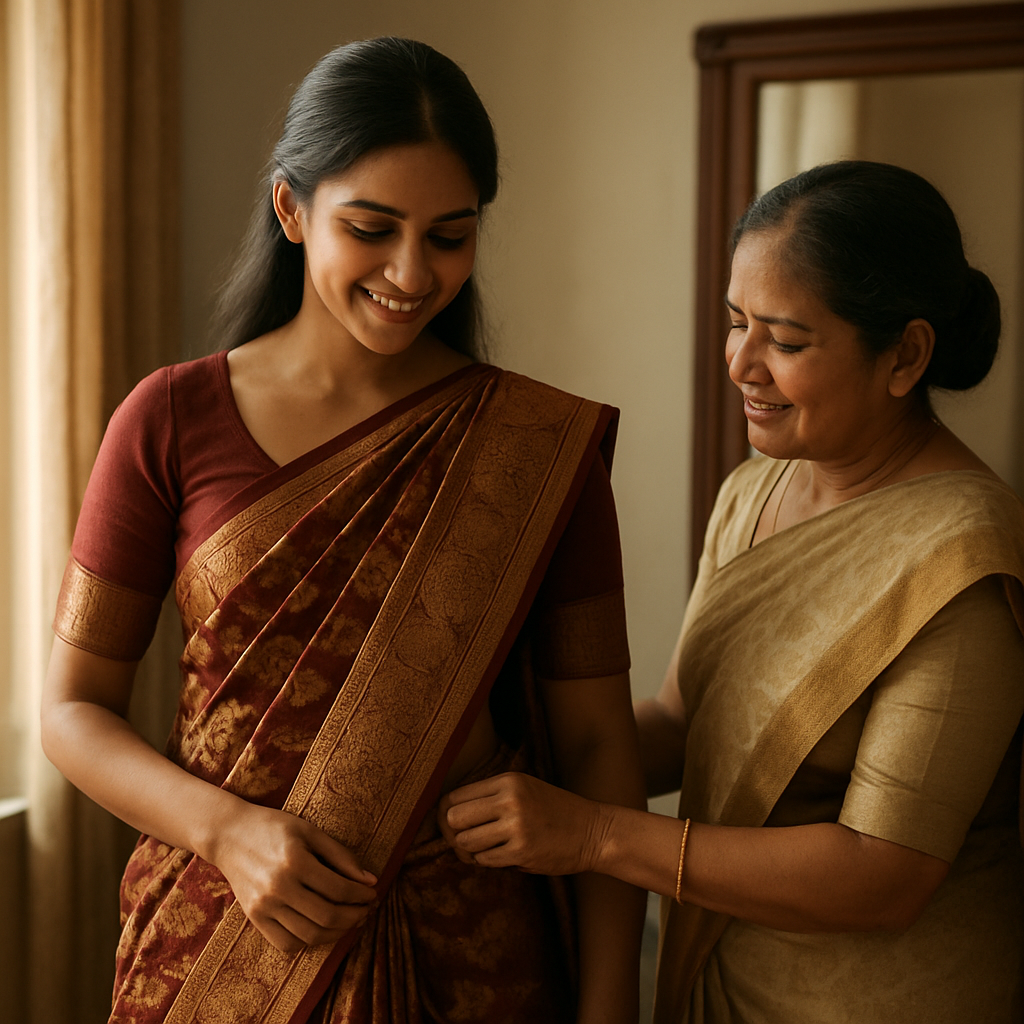
The 5 Mistakes Brides Make
1. Buying Without Trying the Drape
A saree on a mannequin looks different than on you. A heavy katan that looks stunning flat may feel like armour once draped. Always request a video of the saree draped on a model, or visit the store and try it on.
2. Ignoring the Fall and Picot
"Fall" is a cotton tape stitched to the inner hem of the saree to give it weight and a smooth drape. "Picot" is the decorative edge stitching. Both are essential for a bridal saree — without them, the saree will not sit right and the hem will roll. Budget Rs 300–Rs 500 for this; do not skip it.
3. Choosing Colour from Instagram
Instagram filters and screen calibration lie. A "deep maroon" on your screen may be bright red in person. Always ask the seller for an unedited phone photo in daylight before committing to a Rs 15,000+ purchase.
4. Buying the Heaviest Saree You Can Afford
Heavy zari = heavy saree = heavy to wear. A 800-gram katan feels like a weighted blanket after 6 hours of wedding ceremony. If you are small-framed or not used to heavy sarees, choose a 400–500 gram piece even if it means less zari.
5. Forgetting the Storage Plan
A bridal Banarasi needs a muslin cloth bag (not plastic), neem leaves or camphor for pest prevention, and a cool dry storage spot. Plastic causes mildew. Mothballs smell forever. Plan storage before you bring the saree home. Full storage guide here.
What to Ask the Seller Before Buying
Five questions that separate honest sellers from the rest:
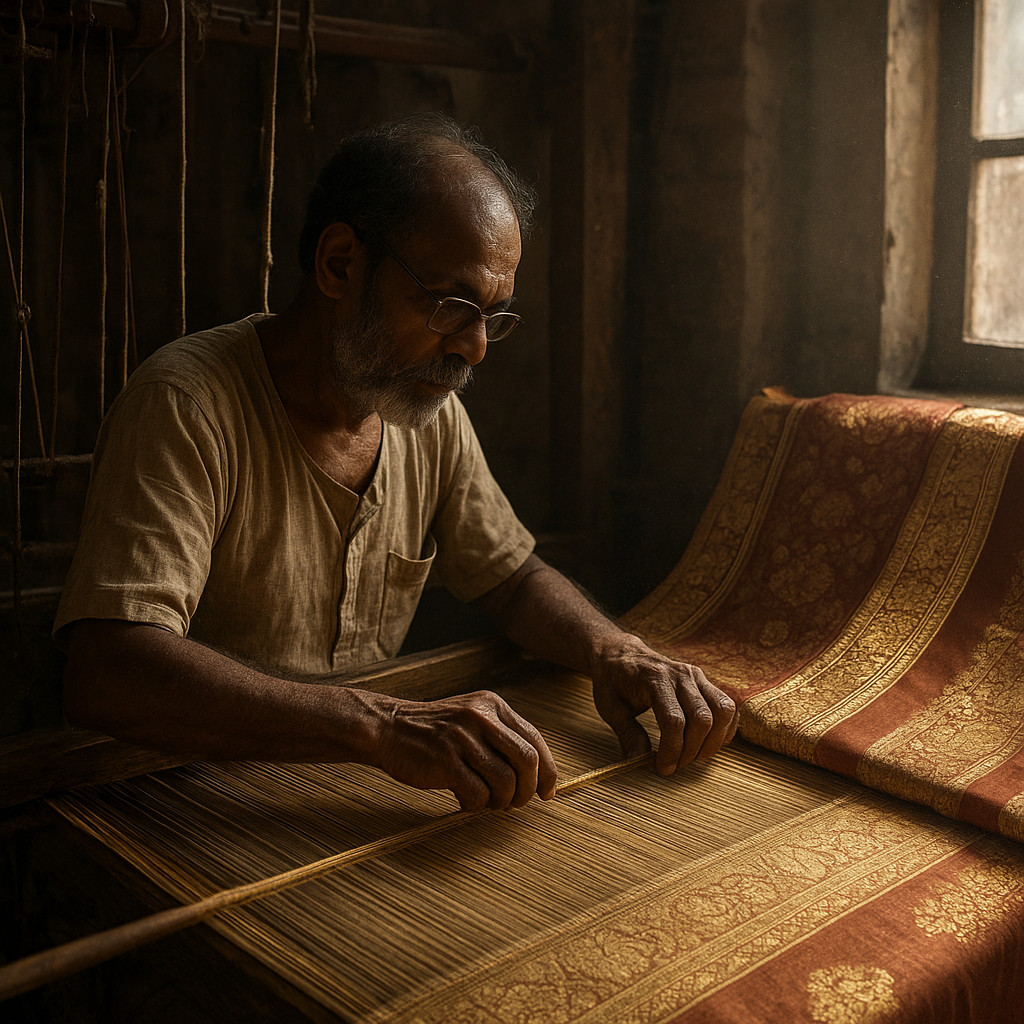
- "Is this handloom or power-loom?" (Handloom is genuine; power-loom is faster but legally not Banarasi.)
- "What is the silk mark number?" (Every certified pure silk saree has one.)
- "Which weaver family made this?" (Honest sellers can name them.)
- "What is the zari grade — tested, real, or pure gold?" (See our zari guide.)
- "Can I see an unedited daylight photo of the draped saree?"
If the seller dodges any of these, walk away.
Frequently Asked Questions
How much does a bridal Banarasi saree cost in 2026?
A genuine bridal-grade katan silk Banarasi starts at Rs 8,000 for premium real-zari work and goes up to Rs 50,000+ for pure gold zari commissioned pieces. The sweet spot for most brides is Rs 12,000–Rs 18,000.
Can I wear a Banarasi for my South Indian wedding?
Yes, but it is unconventional. South Indian weddings traditionally use Kanjivaram silk. A Banarasi works for the reception or modern functions, but for the main ceremony, your family may prefer Kanjivaram. Both are stunning — do not mix them up.
How early should I buy my bridal Banarasi?
At least 3 months before the wedding. Custom pieces take 30–60 days to weave, plus 2–3 weeks for fall, picot, and blouse stitching. Buying under 2 months leaves you with ready-stock options only.
Should the bride's Banarasi match the groom's outfit?
Coordinated, not matched. If the bride wears deep maroon katan, the groom can wear ivory or cream with maroon accents. Identical colours look odd in photographs — contrast photographs better.
Where can I buy an authentic bridal Banarasi online?
Our bridal-grade Banarasi collection is sourced directly from weaver families in Varanasi.
Getting married in 2026 or 2027? Send us your wedding date and budget — we will recommend 3 pieces from our collection that suit your season, colour preference, and budget. No pressure, no sales script.