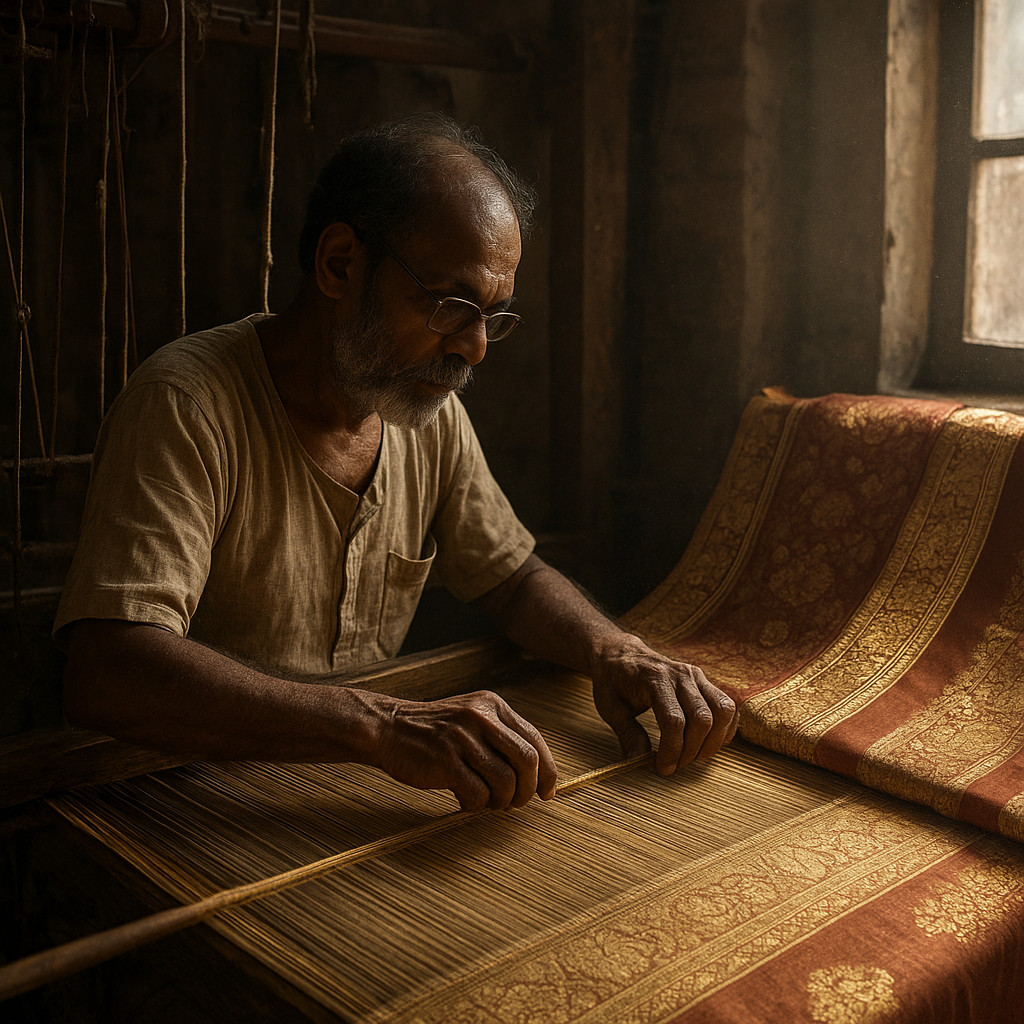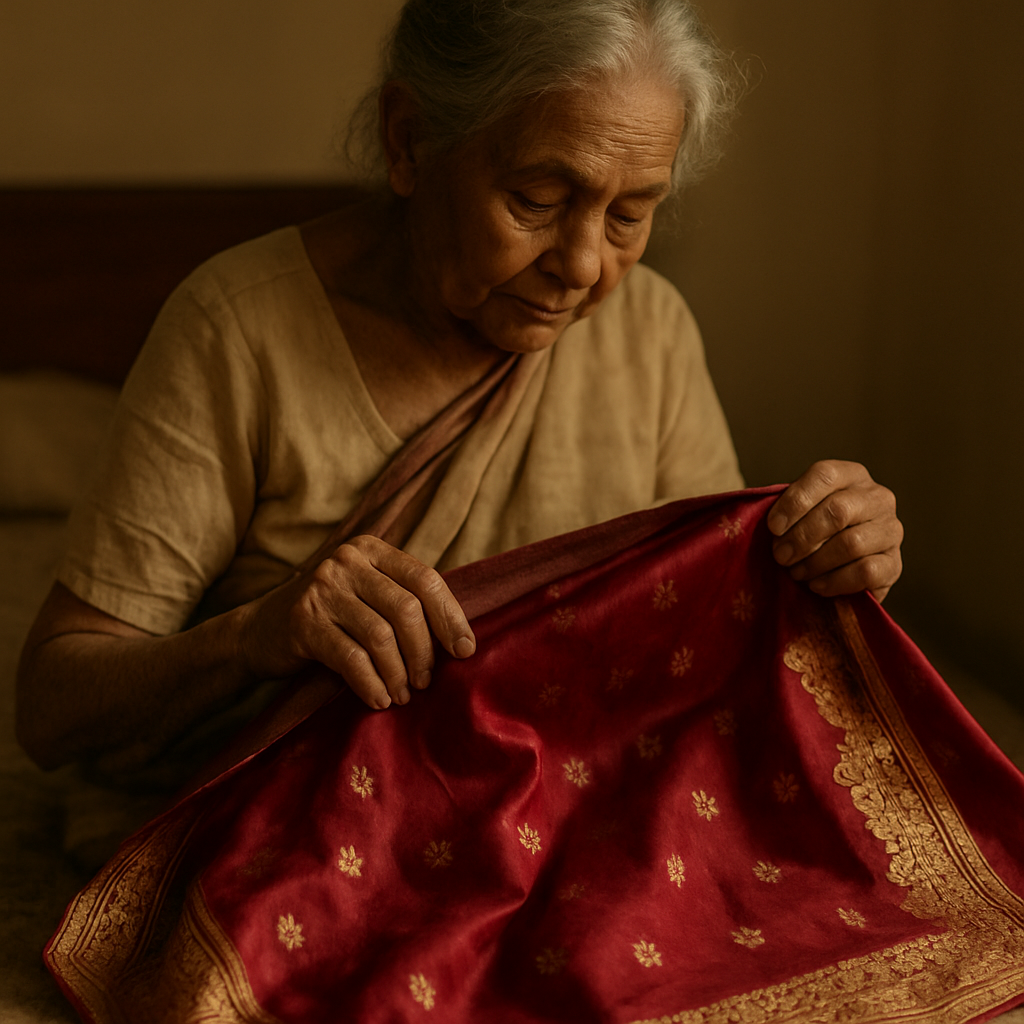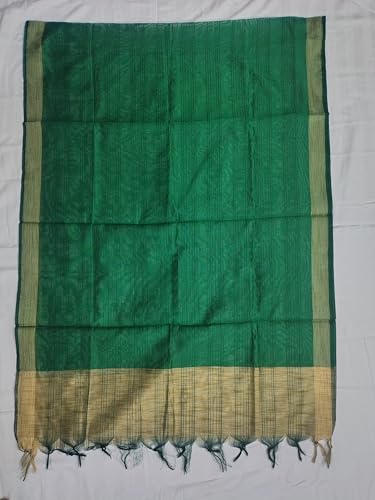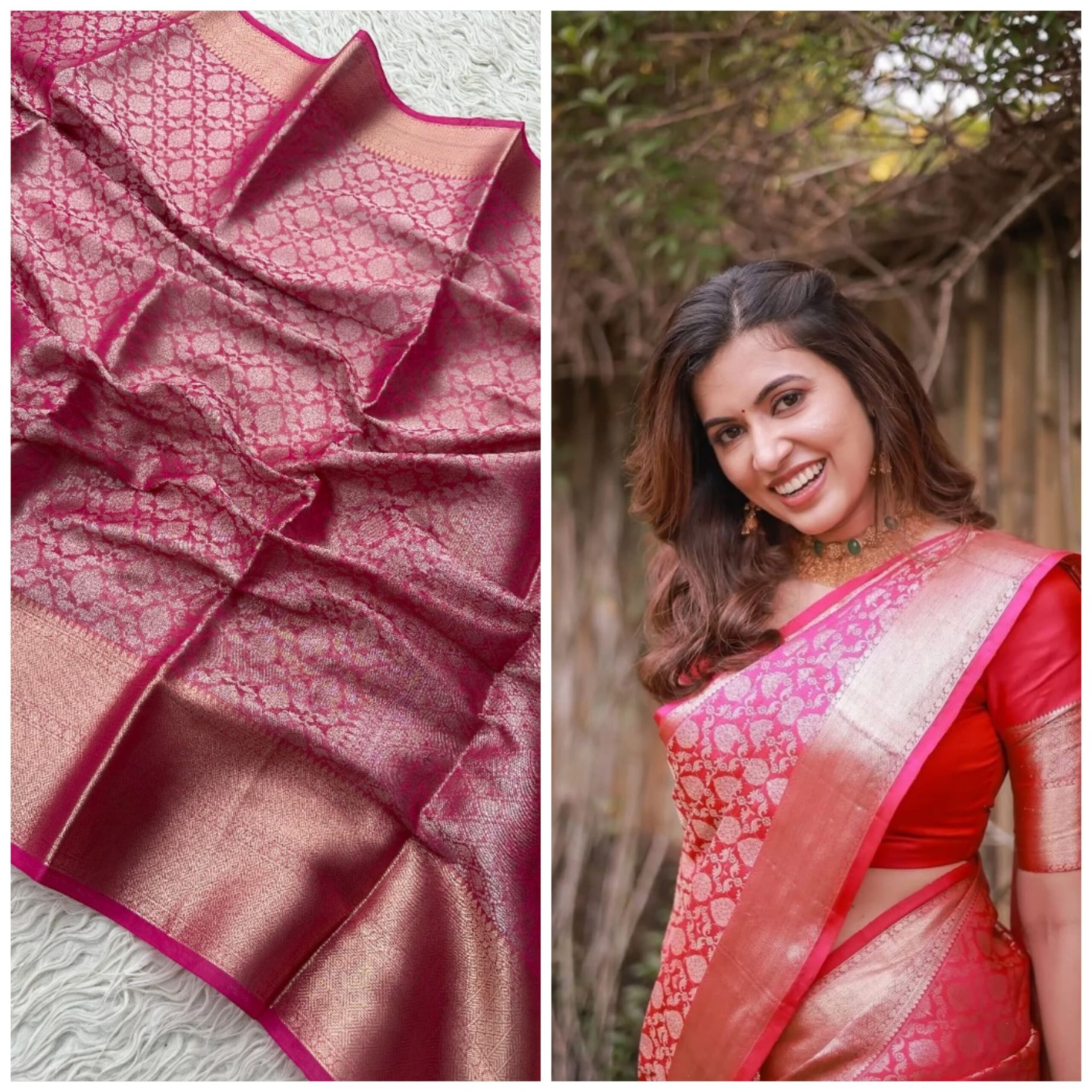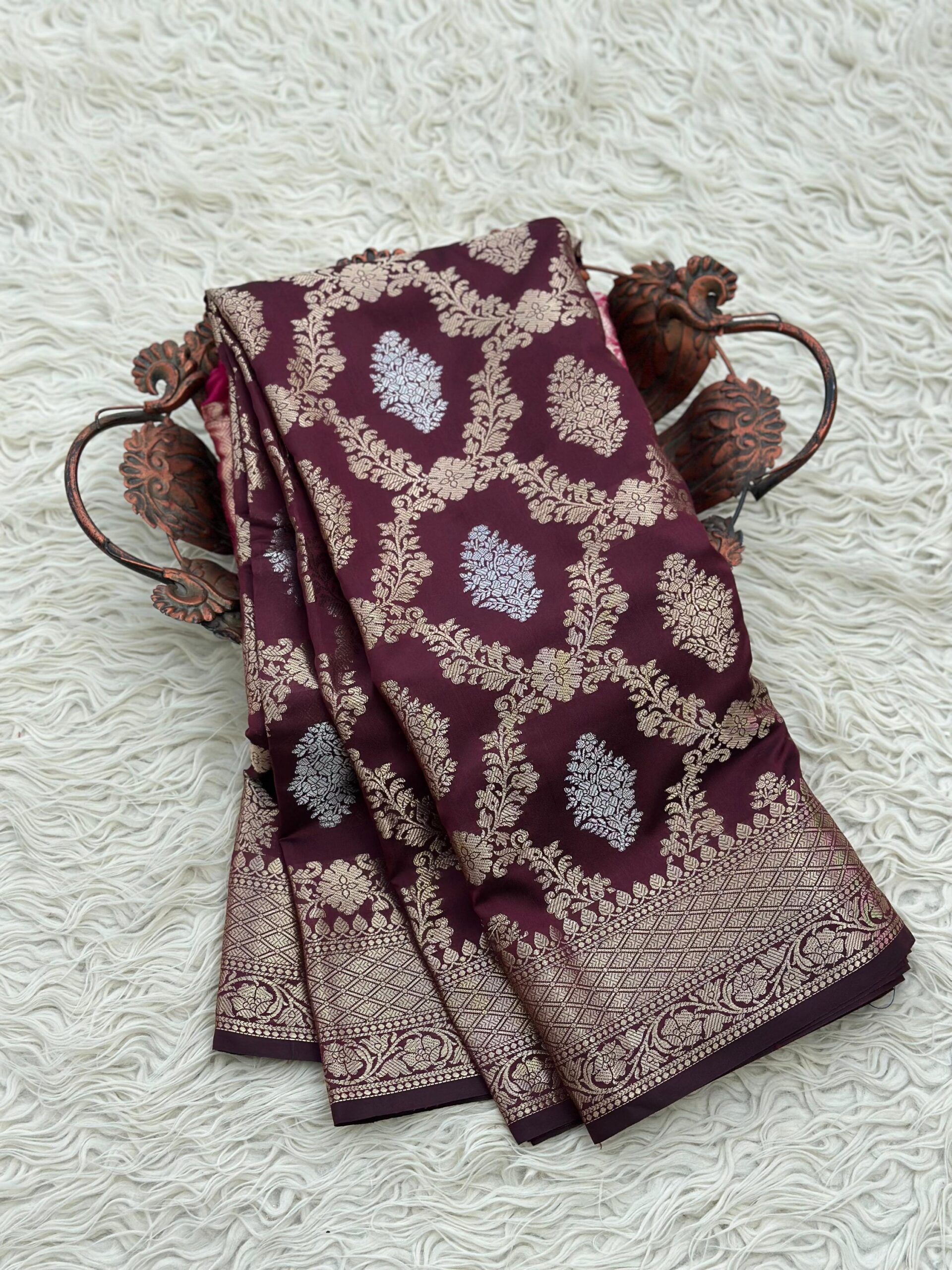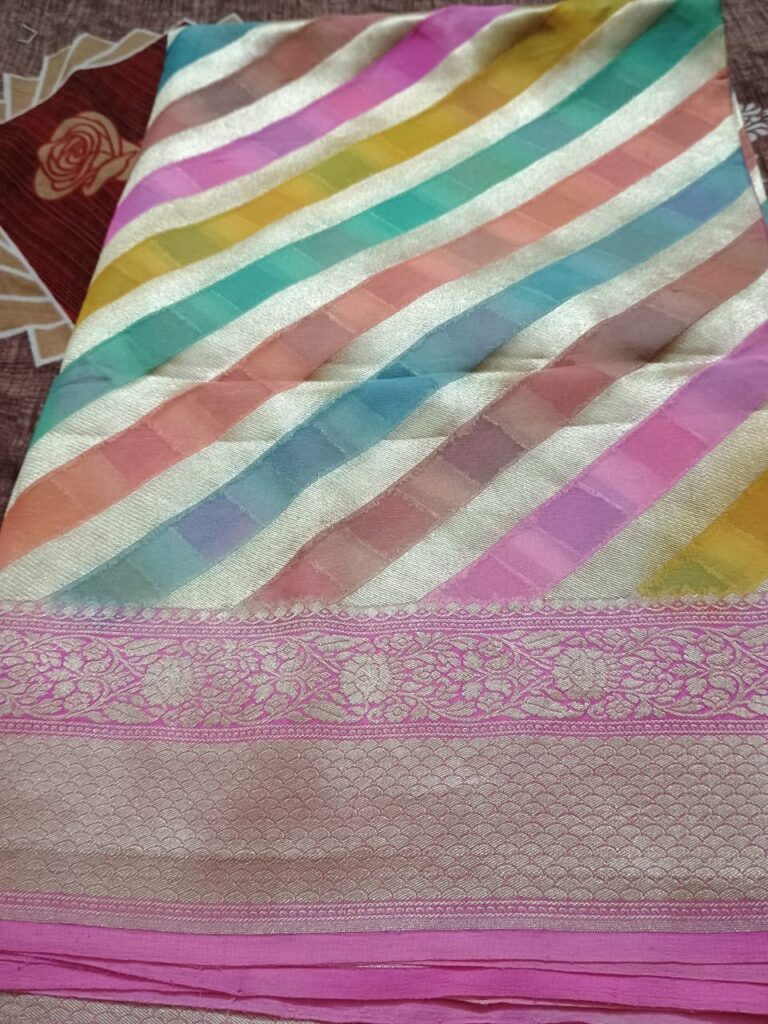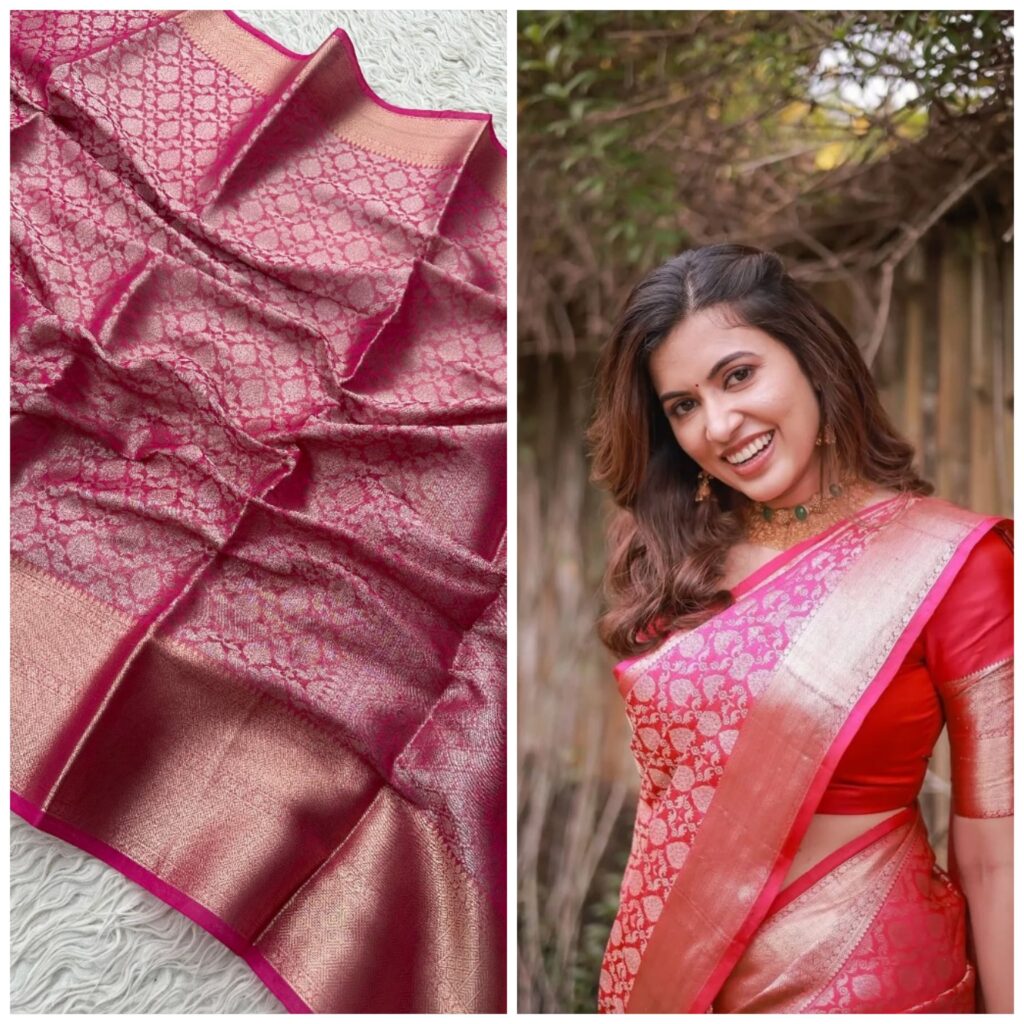
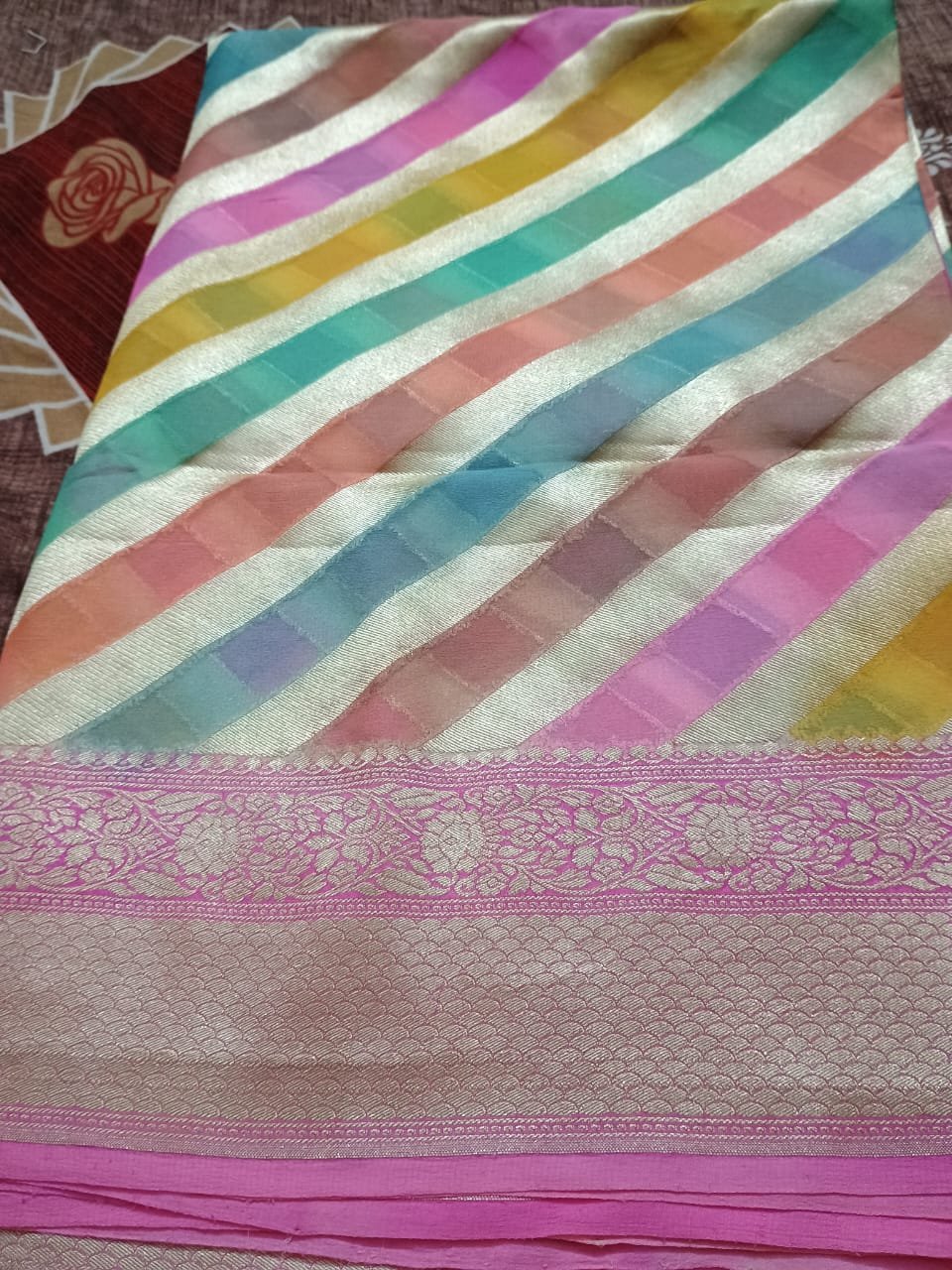
I handle a lot of cloth across a week at Nisa Silk Fab in Ahmedabad. After the wedding season rush, I was refolding a stack of Banarasi-style sarees that had been packed away since the previous season. One piece had a heavy zari border running along the pallu and the edge. As I opened it, I could see exactly where the fold had sat for months. The zari along that crease had darkened slightly, and the fold line itself had not relaxed even after I smoothed it out with my hands. That is the thing about zari: it does not behave like cotton or plain weave. It remembers a fold, and if you leave it long enough, the fold becomes part of the cloth.
A saree like this is not bought for one season. It is worn at weddings, receptions, and family gatherings, and it should still be wearable years later. That only happens if the washing, drying, and storing are done with the fabric in mind. Below is what I tell people at the counter, and what I follow when I handle our own stock.
Why a Banarasi Saree Needs Different Care
A Banarasi-style saree is usually a mix of silk and zari, and each of those materials reacts differently to water, heat, and pressure. Zari is a metallic thread, often wrapped around a core fibre. It can tarnish when it touches moisture or perfume, and it can crack if it is bent sharply over and over again. A crease in zari is not the same as a crease in cotton; the metal layer can fatigue along the fold, and once it breaks, the dull line stays.
Silk fibre, when it is present, loses strength when it is wet. Agitation in water—rubbing, scrubbing, or the tumble of a washing machine—can weaken the fibre so that it tears along the weave. Dyes used in traditional ethnic wear can also be sensitive. Some colours bleed when they meet water, and others fade quickly in direct sunlight. Because a Banarasi-style saree combines all three—zari, silk, and dye—you cannot treat it like an everyday cotton saree. The care label on your piece is the first place to look, and if you are unsure, ask us before you do anything.
If you want background on what makes an original Banarasi weave distinct, we have put together a short guide here:
Washing a Banarasi Saree
For zari-heavy pieces, dry cleaning is the safest route. Water and zari do not mix well, and a home wash can leave the border stiff or discoloured. When you take a saree to the dry cleaner, tell them it has zari work and ask them to avoid harsh solvents or heavy pressing on the border. Point out any stains so they can pre-treat them locally rather than running the whole saree through a strong cycle. Ask whether they have experience with Banarasi-style sarees, and if they do not, look for someone who does.
Never machine-wash a Banarasi-style saree. The drum agitates the fabric, and the spin cycle wrings it out in a way that stresses both the silk and the zari. Never use harsh detergent or bleach. Even a mild detergent meant for delicates can leave a residue that attracts moisture, and bleach will weaken the fibre and dull the zari permanently.
If there is a small mark—a smudge from a bangle, a spot of food—spot-clean it instead of washing the whole saree. Blot the mark with a clean, white, absorbent cloth. Press gently, then lift. Never rub. Rubbing spreads the stain and abrades the fibre. If you need to use a little water, test it on an inside seam first. When in doubt, take it to a professional. Follow the care label on your Nisa piece, and ask the shop if you are not sure.
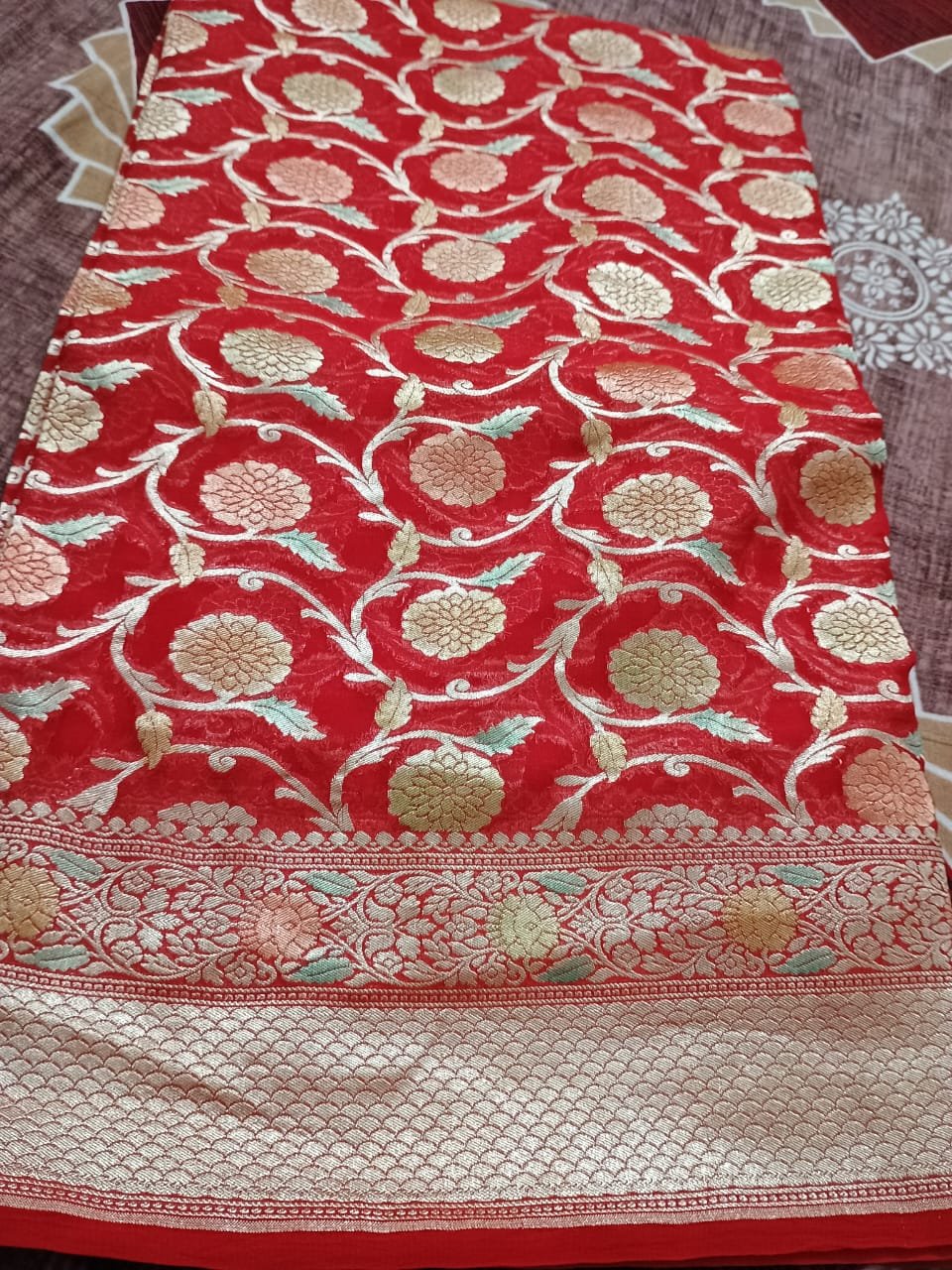
Drying
Never wring a wet or damp Banarasi-style saree. Wringing twists the fibre and can snap zari threads along the twist. If the saree has been spot-cleaned with water, lay it flat on a clean, dry towel and roll the towel up gently to press out excess moisture. Then unroll it and leave it flat to dry in a shaded, airy room.
Never dry it in direct sun. Sunlight fades dye and can make zari brittle. A shaded clothesline is acceptable if the saree is supported evenly, but drying flat is better because the weight of the wet cloth will not pull the weave out of shape. Make sure the saree is completely dry before you fold it for storage. Even a little dampness trapped in a fold can lead to mildew or a musty smell that is hard to remove.
Ironing and Pressing
Use low heat. High heat can scorch silk and melt or discolour zari. Always place a press cloth—a clean piece of muslin or thin cotton—between the iron and the saree, especially over the zari border. The press cloth protects the metallic thread from direct contact with the hot plate.
Steam with care. Too much steam can spot silk or leave water marks on zari. If you must steam, hold the iron slightly above the fabric and let the steam relax the crease without touching the surface. Better still, iron on the reverse side so the zari and the face of the saree are protected. If you are not confident, ask a dry cleaner who handles ethnic wear to press it for you.
Storing a Banarasi Saree
Storage is where most sarees are lost, not because of one big mistake but because of small ones repeated over time. Wrap your saree in clean, washed muslin before you put it away. Muslin lets the fabric breathe while keeping dust off. Do not use the thin plastic cover that comes from the dry cleaner; plastic traps moisture and can cause the zari to tarnish.
Refold the saree every few months. If a saree stays in the same fold for too long, the crease sets and the zari along that line can darken or weaken. I have seen this with my own stock: a border left in one fold for months develops a permanent shadow that no amount of pressing removes easily. Changing the fold spreads the stress across different parts of the cloth.
Keep the saree away from moisture, perfume, and direct light. Perfume sprayed directly on fabric can leave a mark and react with zari. Store it in a cupboard shelf, not hanging by the pallu, because hanging stretches the weave over time. You can place silica gel packets or dried neem leaves nearby to absorb moisture and deter insects, but do not let naphthalene balls touch the fabric. Naphthalene can leave a smell and a chemical residue. Never seal a saree in plastic for long-term storage; it needs air.
Stains and Damage
If you spill something, act quickly but gently. Blot the area with a clean, dry cloth to lift as much as possible. Do not pour water on it, and do not try home remedies like vinegar, lemon juice, or salt unless you know exactly how the dye and zari will react. These can set a stain or damage the metallic thread.
Take the saree to a professional straight away if the stain is oily, if it has dried and set, if the zari has turned black or green along a fold, or if there is a tear or a pulled thread. A cleaner who works with Banarasi-style sarees will know whether the piece can be wet-cleaned or needs solvent treatment. Always follow the care label on your Nisa piece and ask us before you attempt anything at home.
Mistakes I See Most Often
The most common mistake is washing a zari-heavy saree at home because it looks sturdy. It may look fine after one wash, but the fibre is already weakened, and the damage shows months later as a tear along the weave.
Another mistake is storing a saree in its dry-cleaning plastic. I have opened sarees that smelled of trapped dampness, with zari that had turned dull along the edges. Plastic is for transport, not for storage.
People also leave naphthalene balls directly on the saree or in the same fold. The smell is hard to remove, and the chemical contact is not kind to zari or dye.
Ironing directly on the zari border is another frequent error. One pass with a hot iron can flatten the metallic thread so it never shines the same way again.
Finally, many people refold their saree the exact same way every time they put it back. The crease deepens, and eventually the cloth does not want to open anywhere else. Rotate the fold, and the saree will last longer.
FAQ
Can I wash my Banarasi saree at home?
It is best not to wash a zari-heavy Banarasi-style saree at home. Water and agitation can weaken the fibre and dull the zari. Dry cleaning is safer, and you should always check the care label first.
How often should I refold my stored saree?
Refold it every few months so the same crease does not set permanently. Changing the fold also prevents the zari along one line from darkening or weakening over time.
Can I use naphthalene balls in my saree cupboard?
Keep naphthalene away from the fabric itself. You can place it in the cupboard if you wish, but never let it touch the saree, as it can leave a smell and a residue on the zari and dye.
What do I do if I spill something on the saree?
Blot the spill with a clean, dry cloth and do not rub. Avoid home remedies and take it to a professional cleaner if the mark does not lift or if it is an oil stain.
Should I dry clean every time I wear it?
Not necessarily. If you have worn it for a few hours and there are no marks, airing it out and refolding it differently is enough. Dry clean it when there is a visible stain or before long-term storage.
A saree kept well is worn again and again. It moves from one wedding to the next, from one generation to the next, without losing its shape or its shine. The care you give it after the event matters as much as the occasion itself.
If you are looking for pieces made to be kept, browse our Banarasi-style sarees here. You can also read our guide on pricing, and our suggestions for gifting.
Standard delivery in India takes 7–14 business days, with flat ₹100 shipping across India. All sales are final, and we do not accept returns. You can reach us at +91 9825985765 or +91 9978985765, or write to [email protected]. We are based in Ahmedabad, and we are always happy to answer questions about the care label on any piece you buy from us.