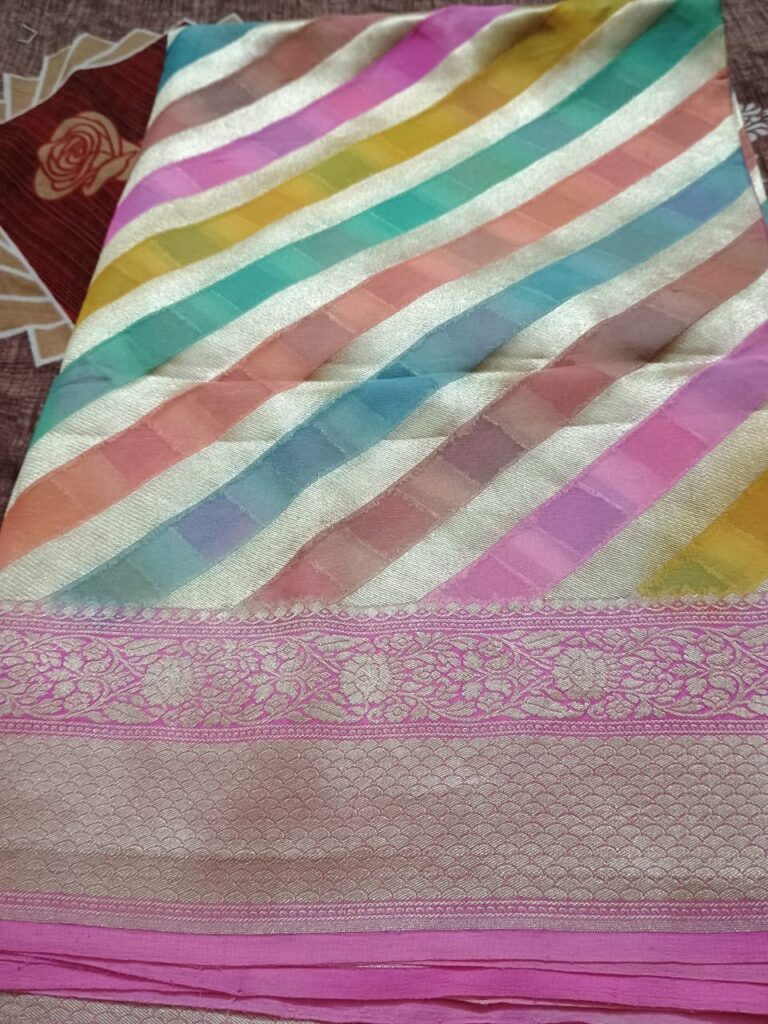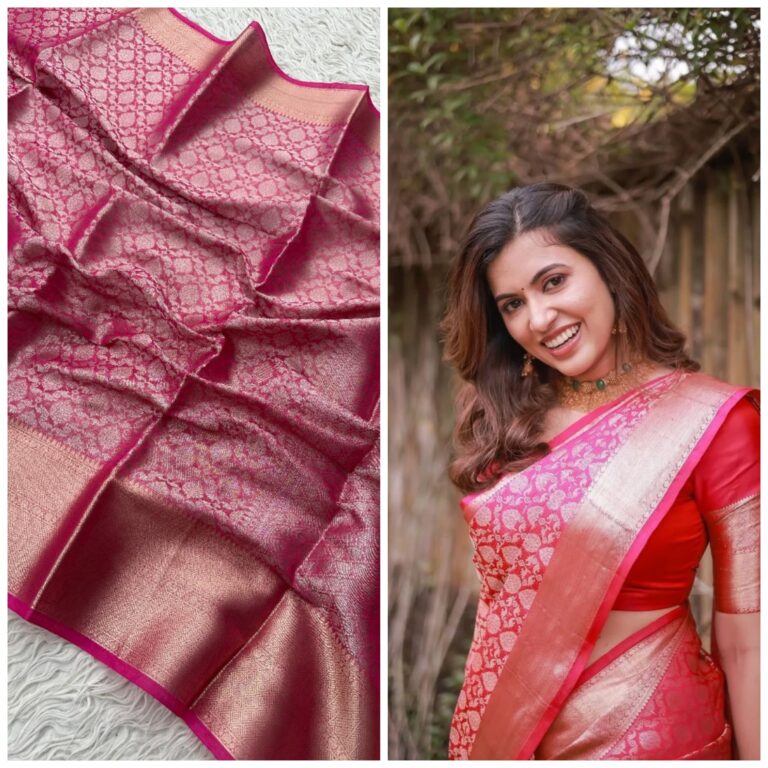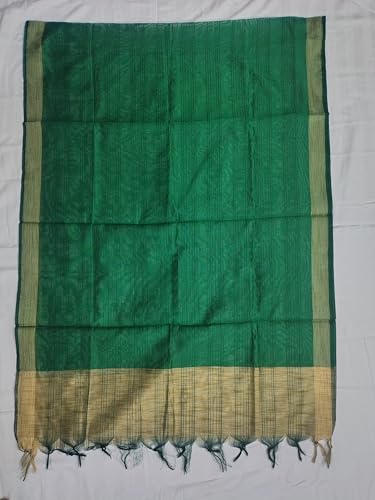
Last Friday, in the middle of wedding season, I laid three sarees out side by side on the cutting table behind the counter at Nisa Silk Fab. They belong to the same broad Banarasi family, but they have completely different personalities.
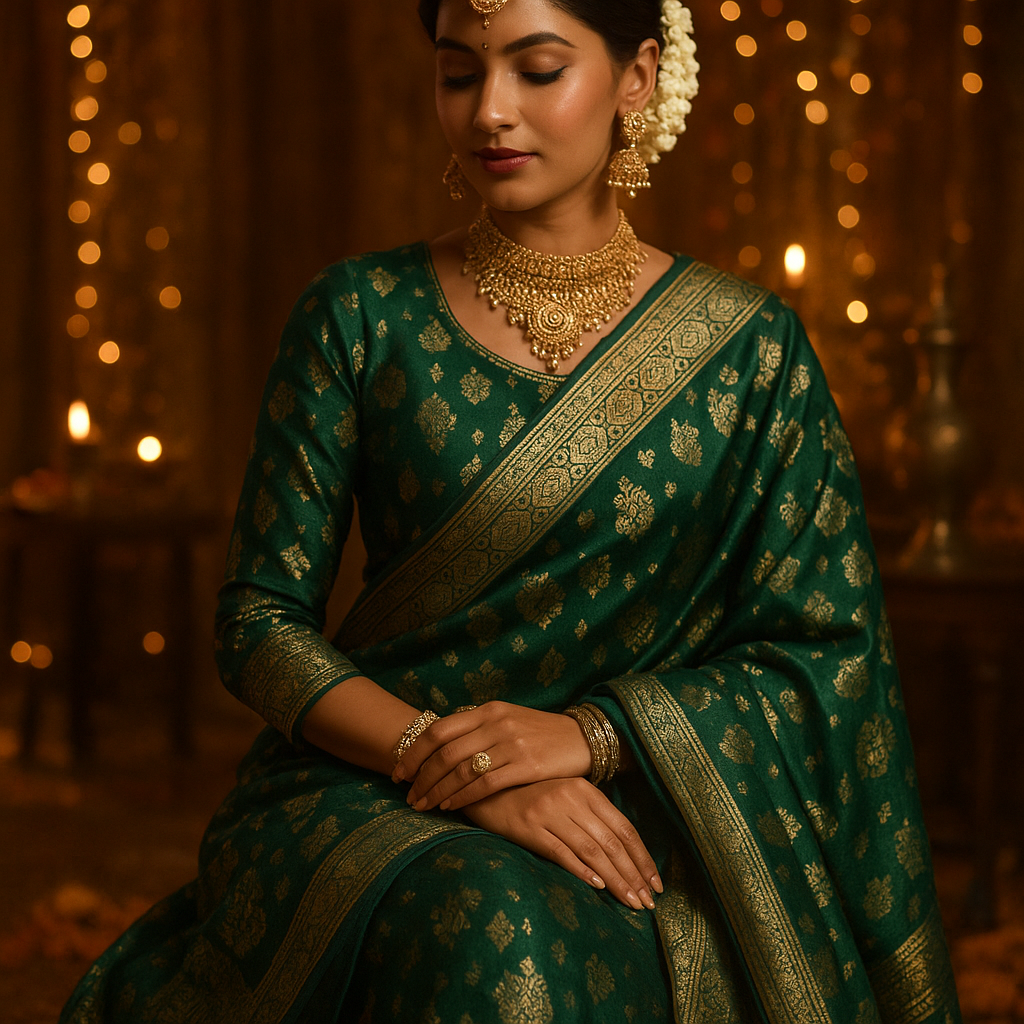
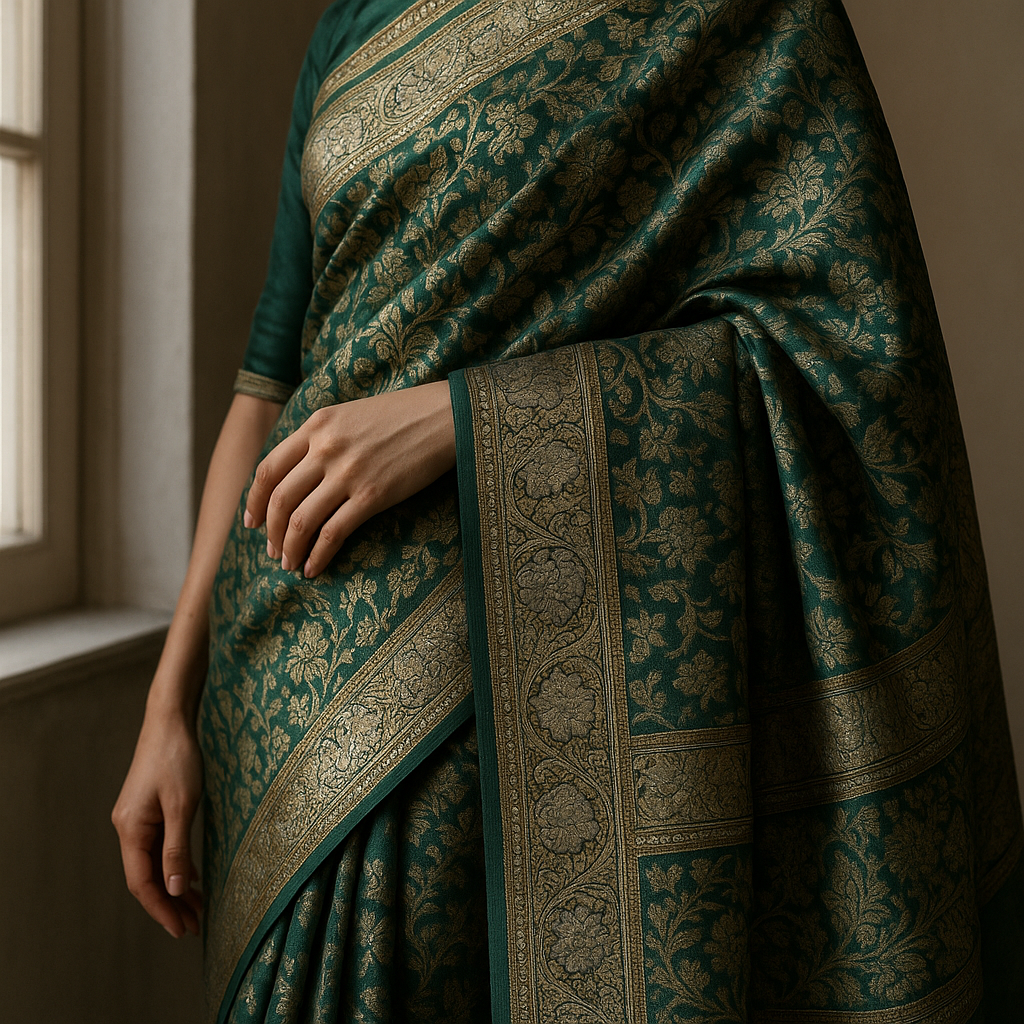
The first is deep green, crowded with leafy vines that run from one edge to the other. The second is pale gold, looking almost plain until the light moves across it and a soft sheen appears. The third is dark, with figures woven into it—horses, riders and trees—that look like a scene pressed into the fabric.
Someone standing nearby said they looked like three different traditions. I told her they are all Banarasi, and that the difference is in the weave, not in the place or the occasion. That is what I want to explain here.
1. What a Banarasi weave actually is
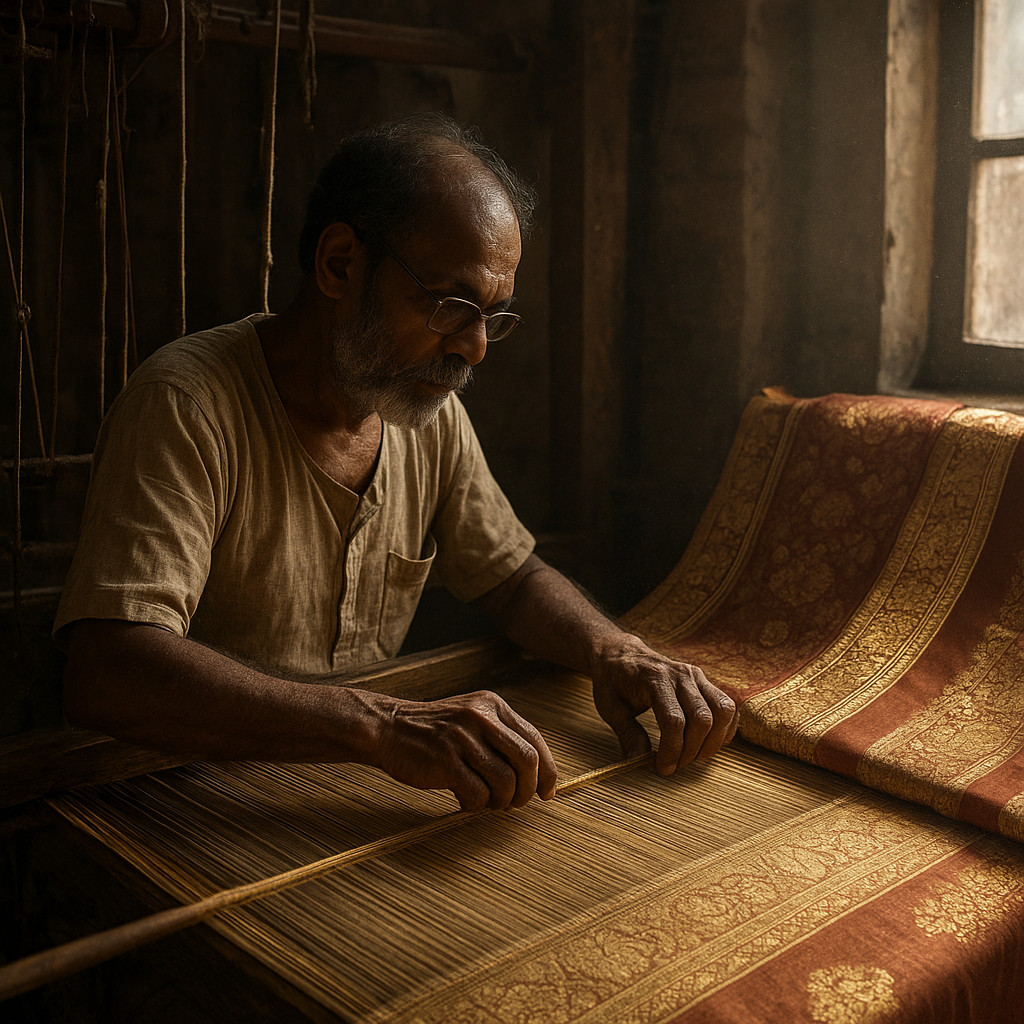
When people say Banarasi, they often picture a saree with a heavy border and a pallu shot through with metal-looking thread. Technically, a Banarasi weave is a form of extra-weft brocade. This means the pattern is created by additional weft threads that pass through the warp only where the motif needs to appear. The design is woven into the structure of the cloth, not printed on the surface or added afterwards.
If you turn the saree over, you can usually see the difference between the ground and the pattern. Sometimes the extra threads float on the back; sometimes the texture simply changes where the motif sits. That is the simplest test: a printed design lies on top, while a woven design is part of the cloth itself.
The ground can be silk, cotton or a blend. At Nisa Silk Fab we sell Banarasi-style sarees, and I always ask customers to check the product description for the exact composition. Pure silk is not currently in stock here, and I cannot tell you whether any specific piece is handloom or powerloom. What I can say is that the visual language of these weaves comes from a long tradition of weaving associated with Varanasi, and the names Jangla, Tanchoi and Shikargah refer to different ways of arranging the pattern on the cloth.
How to Identify an Original Banarasi Saree: 9 Checks Before You Pay
2. Jangla
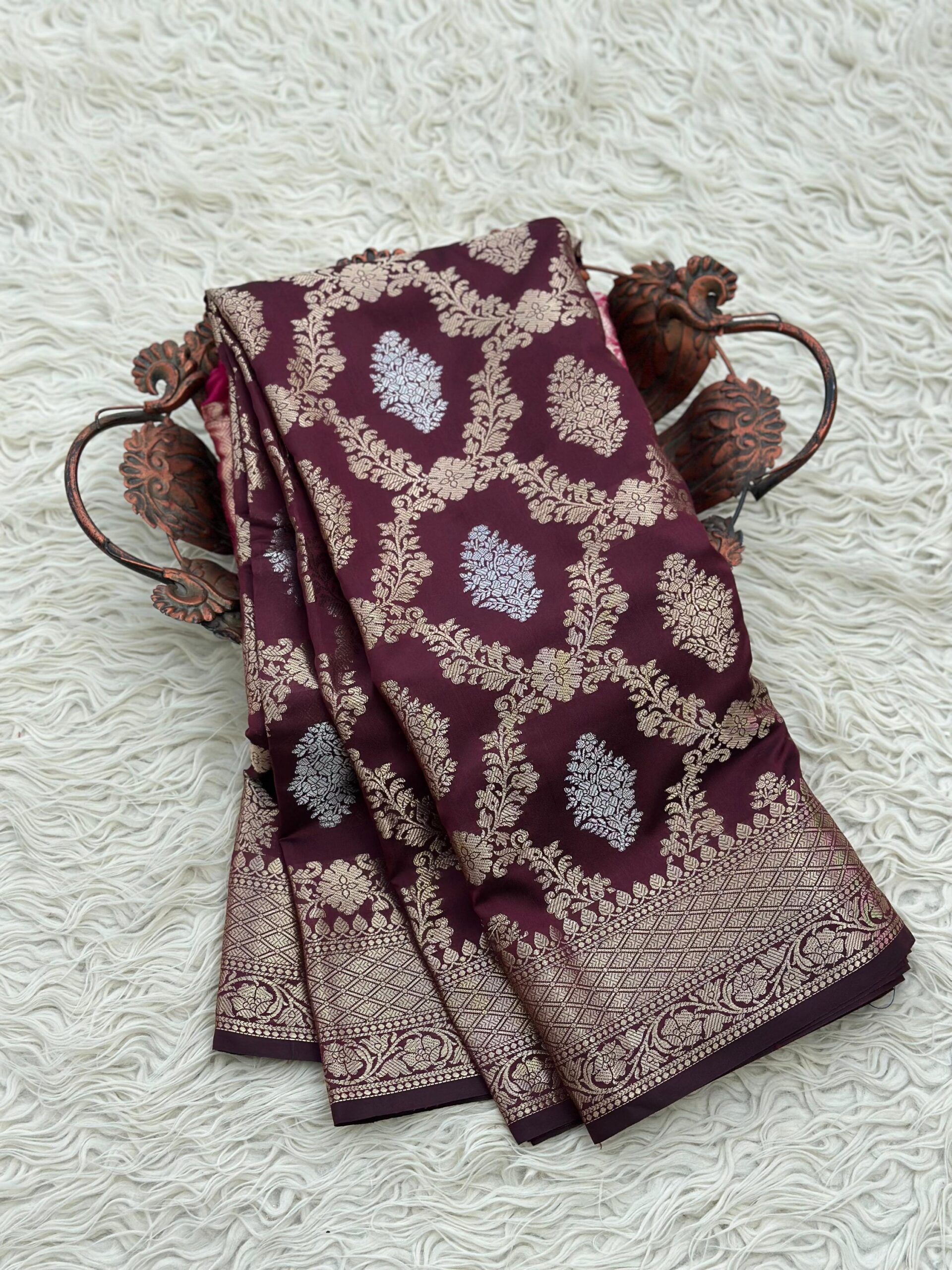
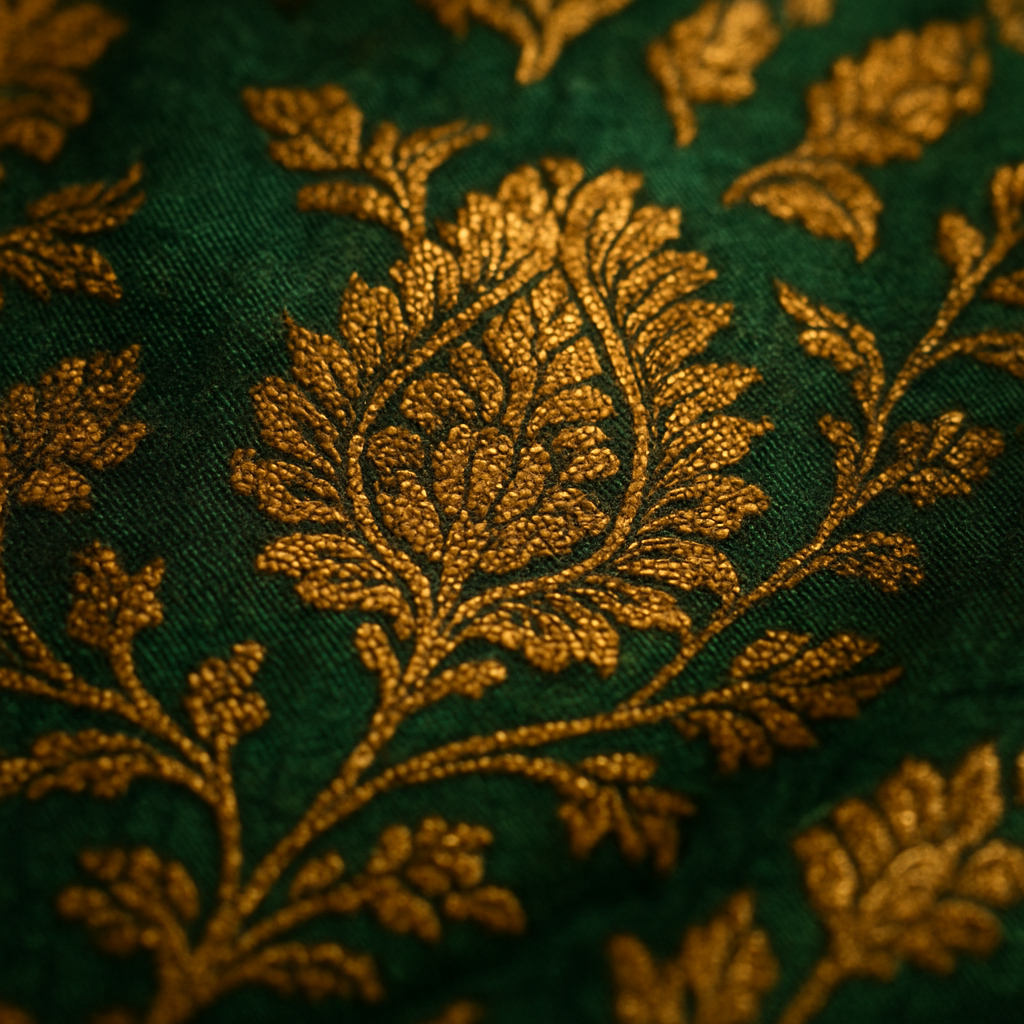
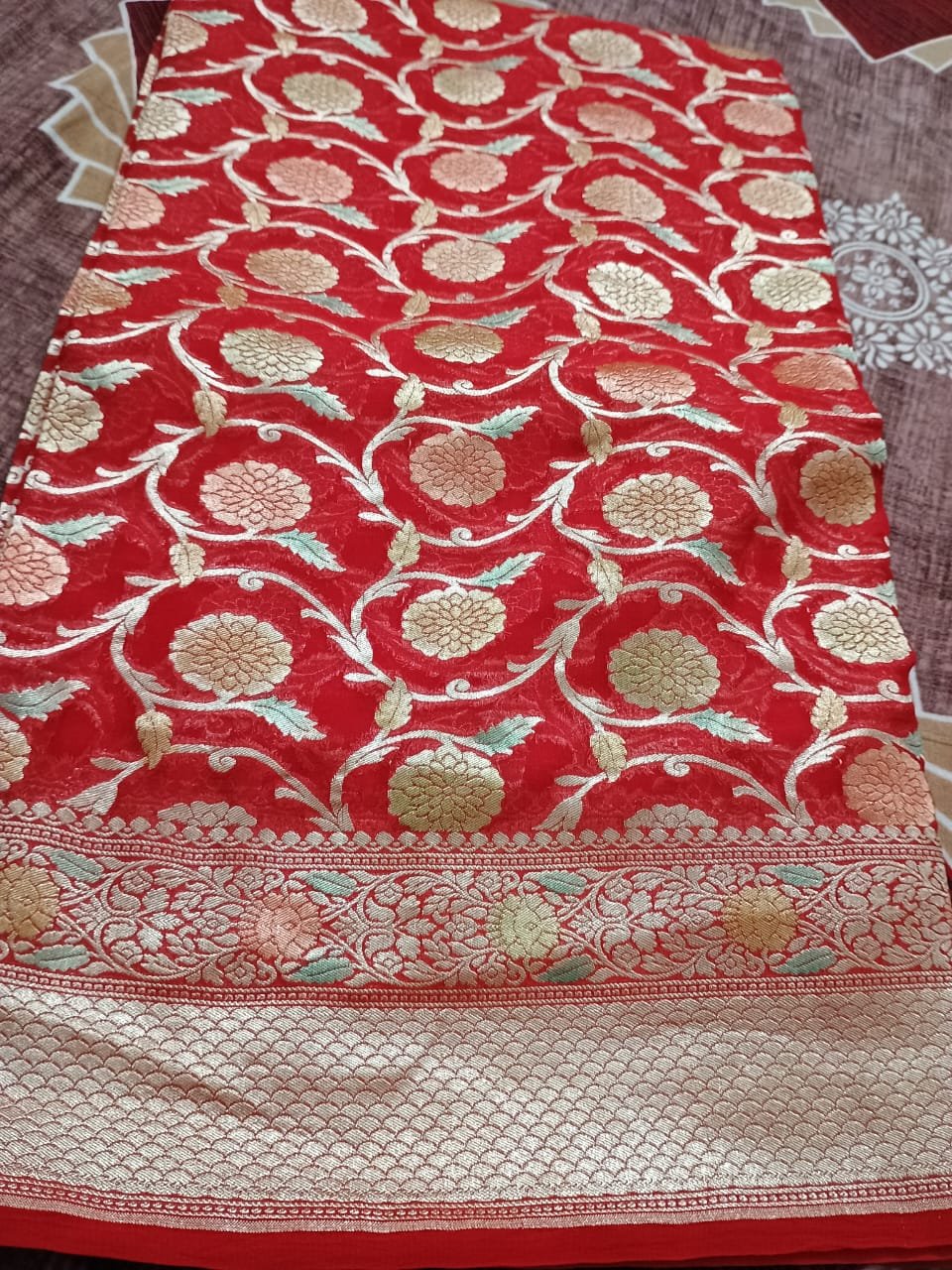
Jangla is the most exuberant of the three. The word suggests a jungle, and the design lives up to it. The motif is dense, all-over foliage—scrolling vines, creepers, leaves and flowers that cover the body of the saree without leaving much plain ground visible. It is not a border-heavy design; the exuberance is spread across the entire length.
Up close, you can see individual vine stems curling around one another, with small flowers tucked into the curves. The pattern repeats, but the repeats overlap and intertwine, so the eye does not rest on any one spot. From a distance, the saree looks like a tapestry. It reads as heavy and celebratory because there is so little empty space.
Because the pattern covers so much of the surface, Jangla feels substantial. It is the weave I reach for when a customer wants something that announces itself when she walks into a room. The weight of the cloth matches the weight of the design.
3. Tanchoi
Tanchoi is the quietest of the three, and that is exactly why some customers prefer it. The motifs are small, tight and closely packed—often paisleys, small flowers or geometric elements—but they do not spread across the saree in the way Jangla does. Instead, they cluster so that the surface reads as a subtle, self-patterned ground.
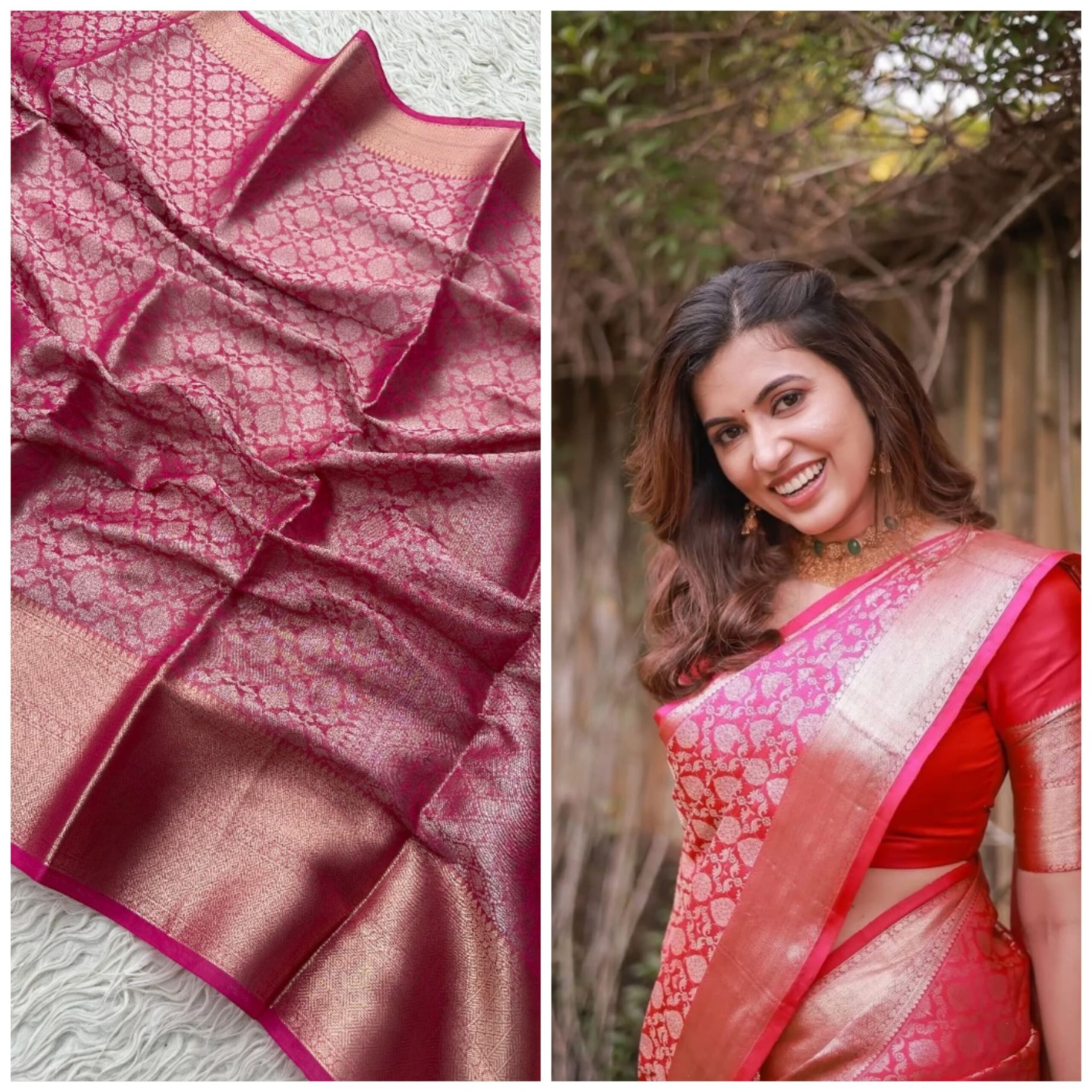
The base has a satin-like quality. It is smooth, with a soft sheen that changes with the angle of light. At first glance, a Tanchoi saree can look almost plain. It is only when you hold it up to a window or turn it under a shop light that the small motifs reveal themselves as a tone-on-tone pattern woven into the cloth.
Because the coverage is lighter than Jangla, Tanchoi tends to drape with more fluidity. It does not shout. It suggests. For a guest at a daytime wedding, or for anyone who wants a Banarasi-style saree without the visual weight of heavy brocade, Tanchoi is often the right choice.
4. Shikargah
Shikargah is a pictorial weave. The word refers to a hunting ground, and the designs show exactly that: figures on horseback, animals, trees, sometimes a hunter with a bow or a dog at his heels. These are not abstract vines or small repeated motifs. They are scenes, woven into the saree as if someone had pressed a picture into the warp and weft.
This is the least common of the three weaves in everyday shops, and it is the most narrative. Where Jangla covers the surface and Tanchoi whispers across it, Shikargah tells a story. You have to open the cloth fully to see the composition, because a single motif might span more than what is visible in a folded section.
Because it is figurative, Shikargah appeals to a collector's eye. It is not the weave for someone who wants a safe, conventional wedding saree. It is the piece you choose when you want the saree to be the conversation, not just the backdrop.
5. How to tell them apart at a glance
You do not need to be a weaver to separate these three. Look first at the scale of the pattern. Jangla uses large, scrolling elements that repeat across the body. Tanchoi uses small, tightly packed elements that read as texture from a distance. Shikargah uses figures—people, animals, trees—that are clearly representational.
Next, look at density. Jangla has the heaviest coverage; the ground is almost entirely obscured by pattern. Tanchoi has the lightest coverage; the ground shows through and carries the sheen. Shikargah sits in between, with distinct pictorial blocks separated by plain or lightly patterned space.
Finally, look at the ground itself. Jangla's ground is busy. Tanchoi's ground is satin-like and smooth. Shikargah's ground is there to support the scene, not to compete with it.
If you are still unsure, check the product description of any Banarasi-style saree you are considering. The listing should tell you which weave tradition the design references.
Banarasi vs Kanjivaram: Which Silk Saree Suits Your Wedding Season?
How they feel in the hand
I handle cloth every day, and these three weaves behave differently when you pick them up. Jangla has weight. The surface is raised where the extra weft sits, and you can feel the ridges of the vine pattern under your fingertips. It holds its shape when folded, and it drapes with a certain stiffness.
Tanchoi slips through the fingers like satin. The ground is smooth, and the pattern is felt more than seen unless the light catches it. It folds easily and does not behave like a heavy brocade.
Shikargah needs space. When the saree is folded, you might only see a horse's head or a fragment of tree. You have to open it fully on a table to understand the scene. The detail is there, but it is distributed across the length, not concentrated in one spot.
6. Which weave suits which occasion
Jangla is for the reception and for the bride's close family. It is heavy, visible, and celebratory. If the saree needs to hold its own in a crowded hall under bright lights, Jangla does that without effort. It is the kind of cloth that looks complete even with minimal jewellery.
Tanchoi is for daytime functions and for guests who want understatement. It works at a mehendi or a morning wedding where a heavily brocaded saree might feel too much. The satin-like ground catches daylight gently, and the small motifs do not compete with jewellery or other accessories. It is a weave that steps back and lets the wearer take the lead.
Shikargah is for a statement piece and a collector's eye. It is not conventional, and it is not for everyone. If you want a saree that people will lean in to look at, Shikargah is the one. It is the weave you choose when the occasion calls for something rare and pictorial rather than simply decorative.
The three weaves at a glance
| Weave | Pattern | Density | Ground | Best suited to |
|---|---|---|---|---|
| Jangla | Scrolling vines and foliage | Heavy, all-over | Busy, largely obscured | Reception, close family |
| Tanchoi | Small motifs, paisleys | Light, clustered | Satin-like, smooth | Daytime, understated guests |
| Shikargah | Hunting scenes, figures | Pictorial, spaced | Supports the scene | Statement, collectors |
FAQ
What is the difference between Jangla and Tanchoi?
Jangla uses dense, scrolling foliage that covers most of the saree's body. Tanchoi uses small, tightly packed motifs on a smooth, satin-like ground that reads as subtle texture from a distance.
Is Shikargah always a hunting scene?
Traditionally, yes. Shikargah refers to a hunting ground, and the woven figures usually show riders, animals and trees arranged as a narrative scene across the cloth.
Can I buy a Jangla, Tanchoi or Shikargah saree from Nisa Silk Fab?
Nisa Silk Fab sells Banarasi-style sarees. The product description of each saree says which weave tradition its design references, so check the listing of any saree you are interested in before you buy.
Are these sarees made of pure silk?
Pure silk is not currently in stock at Nisa Silk Fab. The composition varies by product, so check the product description for details on the material used.
How do I know which weave a saree uses?
Look at the pattern scale, density and ground. Jangla is heavy and all-over, Tanchoi is small and smooth, and Shikargah is pictorial. If the listing is unclear, contact us and we will help as far as the product details allow.
The weave is the saree's character. A Jangla carries the energy of a celebration, a Tanchoi moves quietly through a daytime gathering, and a Shikargah asks to be looked at closely. Choose the weave that matches the occasion and the person wearing it, not just the colour.
If you would like to see how these traditions appear in our current stock, browse the Nisa collection for Banarasi-style sarees. Each listing includes the composition and care details, so you can make an informed choice.
Browse the Banarasi sarees collection
Banarasi Silk Saree Price in India: What You Should Actually Pay in 2026
Standard delivery within India takes 7–14 business days. Shipping across India is a flat ₹100. All sales are final, and we do not accept returns.
You can reach us at +91 9825985765, +91 9978985765 or [email protected]. We are based in Ahmedabad.