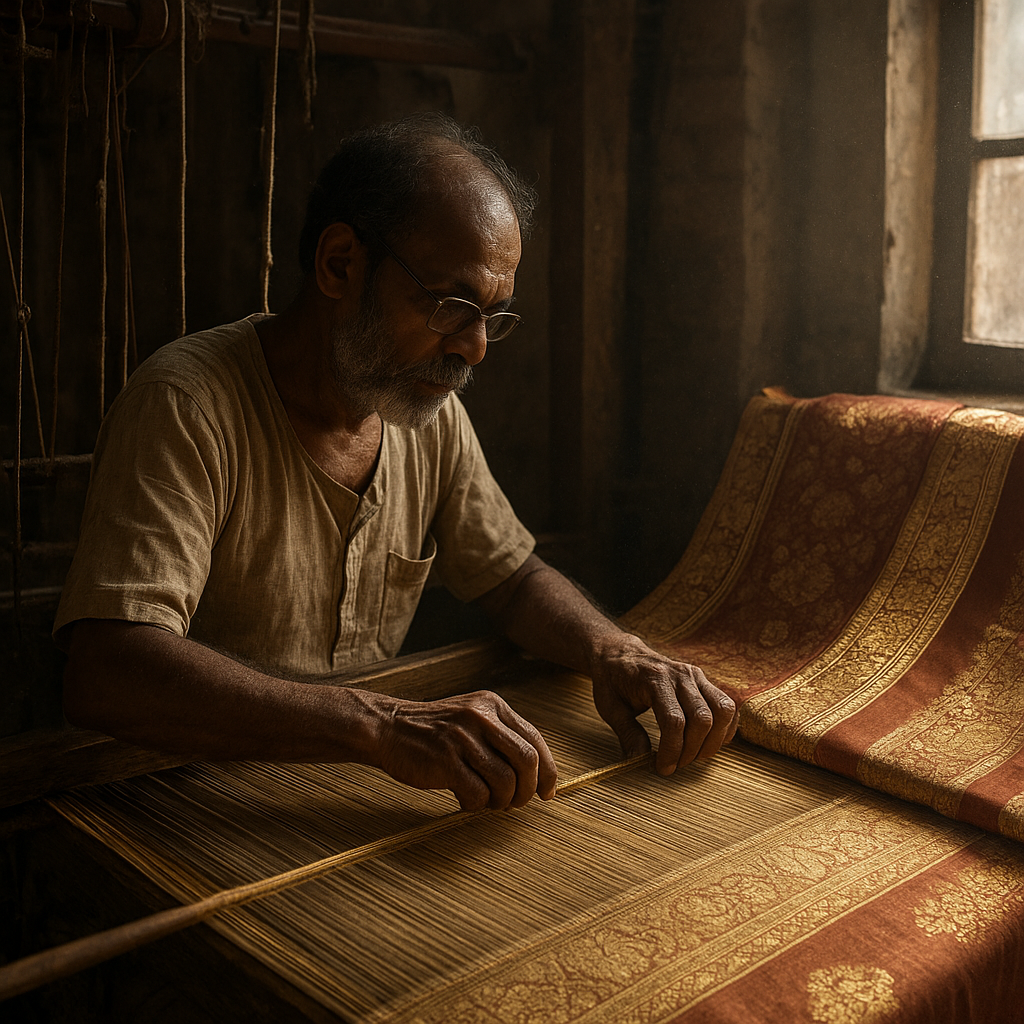
The pit-loom is the heart of Varanasi silk weaving — and it is unchanged in 500 years. The loom sits in a pit about 60 centimeters deep, with the weaver legs below floor level, working pedals that lift the heddles. The pit keeps the weaver cool in summer and warm in winter.
The looms are made of teak and shisham, and most are older than the weavers who work them. The wood darkens to near-black with decades of oil from the weavers hands. Each loom is a piece of living history.
A typical day begins early and ends at sunset. The atelier is quiet — there is no music, no radio. The only sound is the rhythmic clack of the looms, which after a while becomes a kind of silence.
At Nisa Silk Fab, our founder Mumtaz Ahmed works directly with 40+ master weaver guilds across Varanasi. Every ensemble is crafted over 180 artisan hours — no shortcuts, no factories, only the unhurried hand.
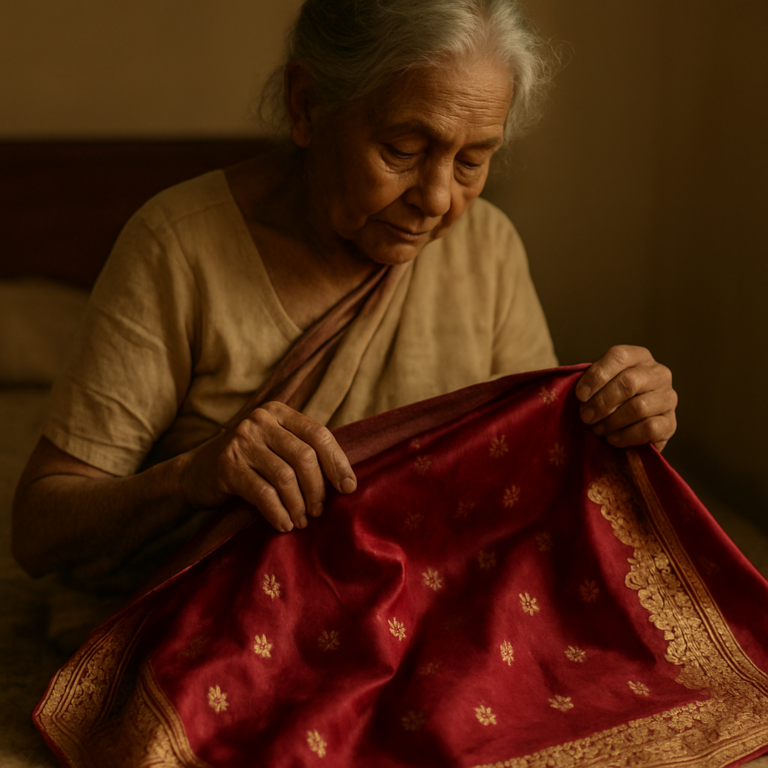
The motifs are tied from memory — there are no printed patterns. A single motif, the size of a thumb, can take three hours to tie. The weaver does not look at the cloth often; he feels it.
We do not allow photography in the atelier. The weavers find it intrusive, and we respect that. The images you see here were taken on a single afternoon, with permission, after we explained why.
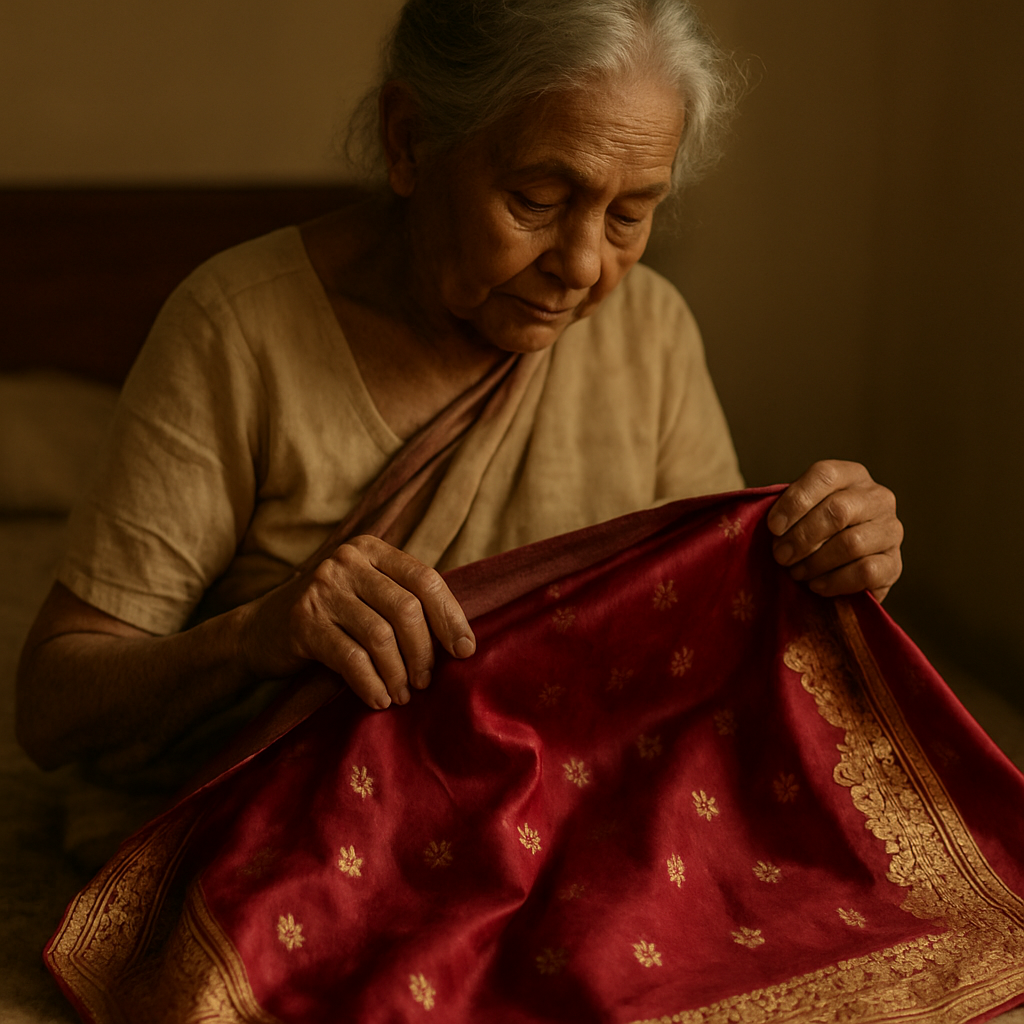
This is the craft we are preserving — not as a museum piece, but as a living tradition. Every saree you buy from Nisa Silk Fab keeps a loom running and a weaver hands busy.