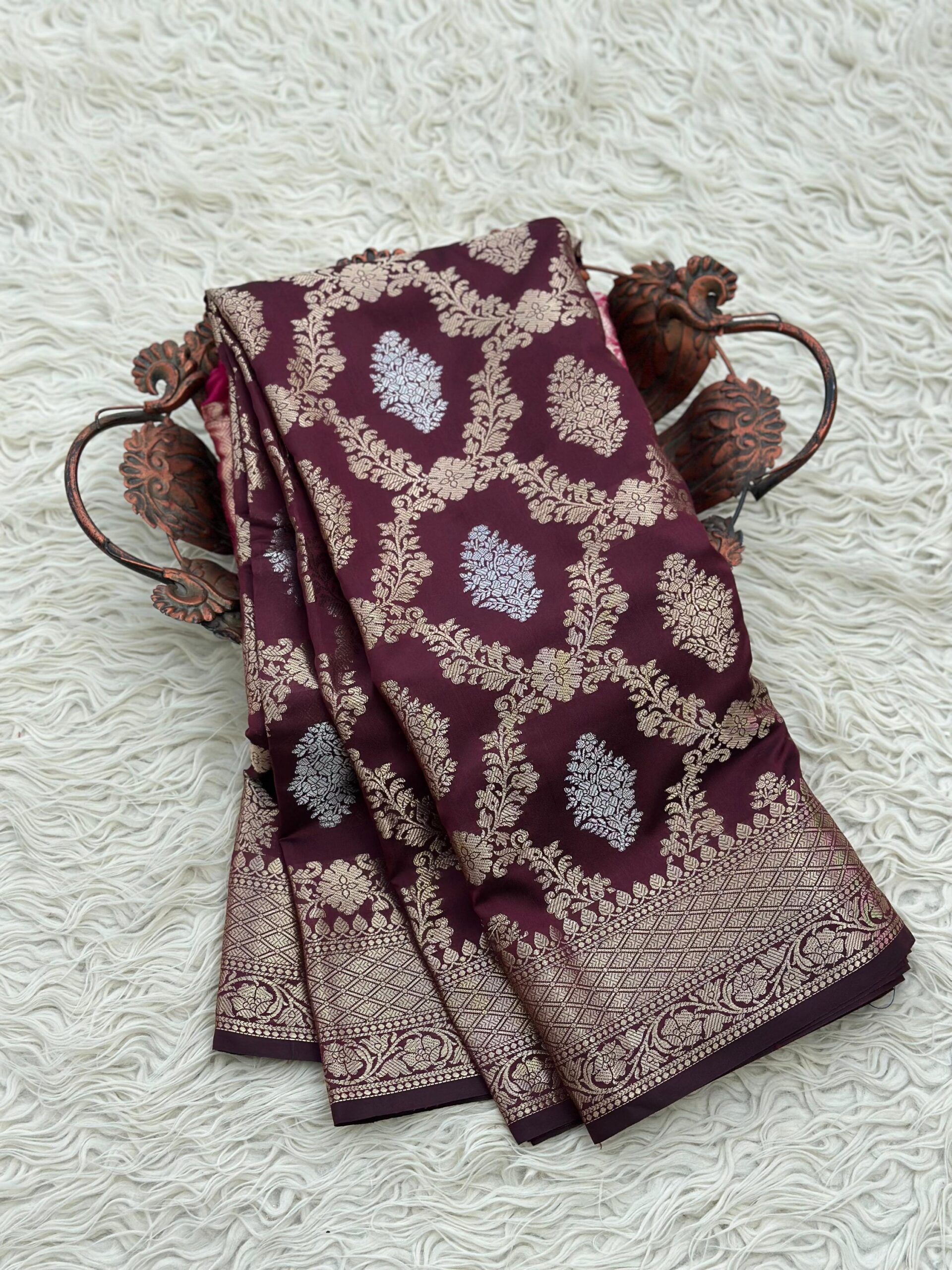
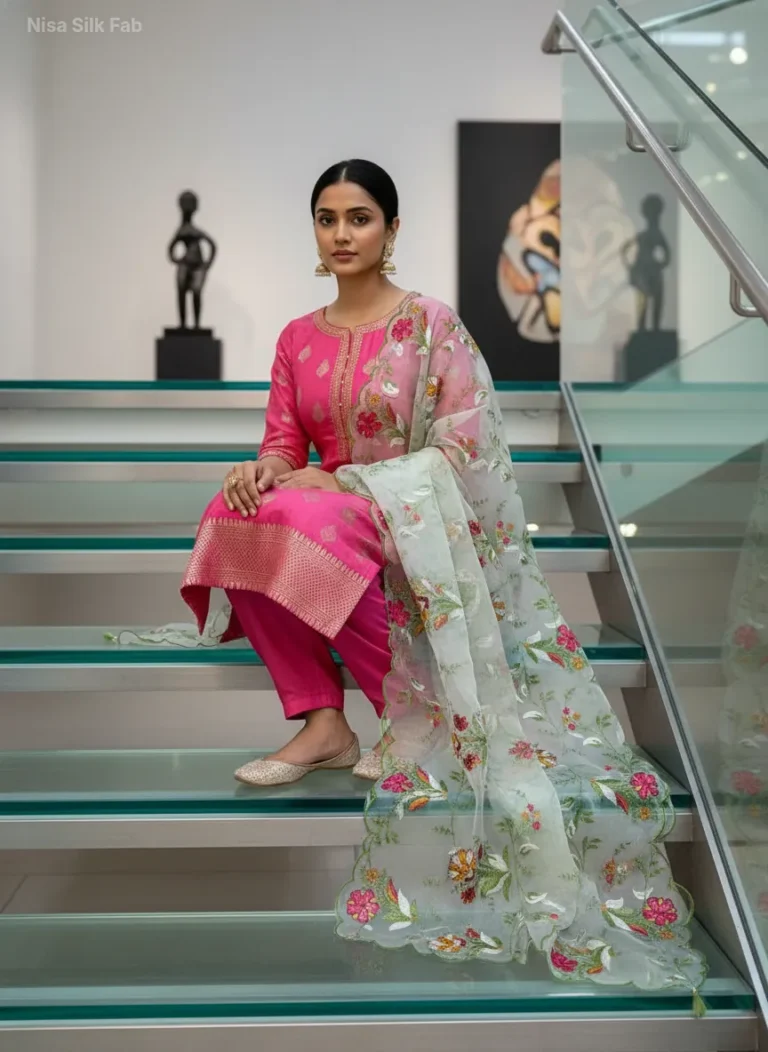
The market in Varanasi is loud. Sarees spill from shopfronts in heaps of colour, and two of them lie in your hands. They look the same. The same gold border. The same blush of pink. One is handwoven silk that a weaver spent twenty days on. The other is powerloom polyester with a metallic spray. You cannot tell yet. That is the trouble.
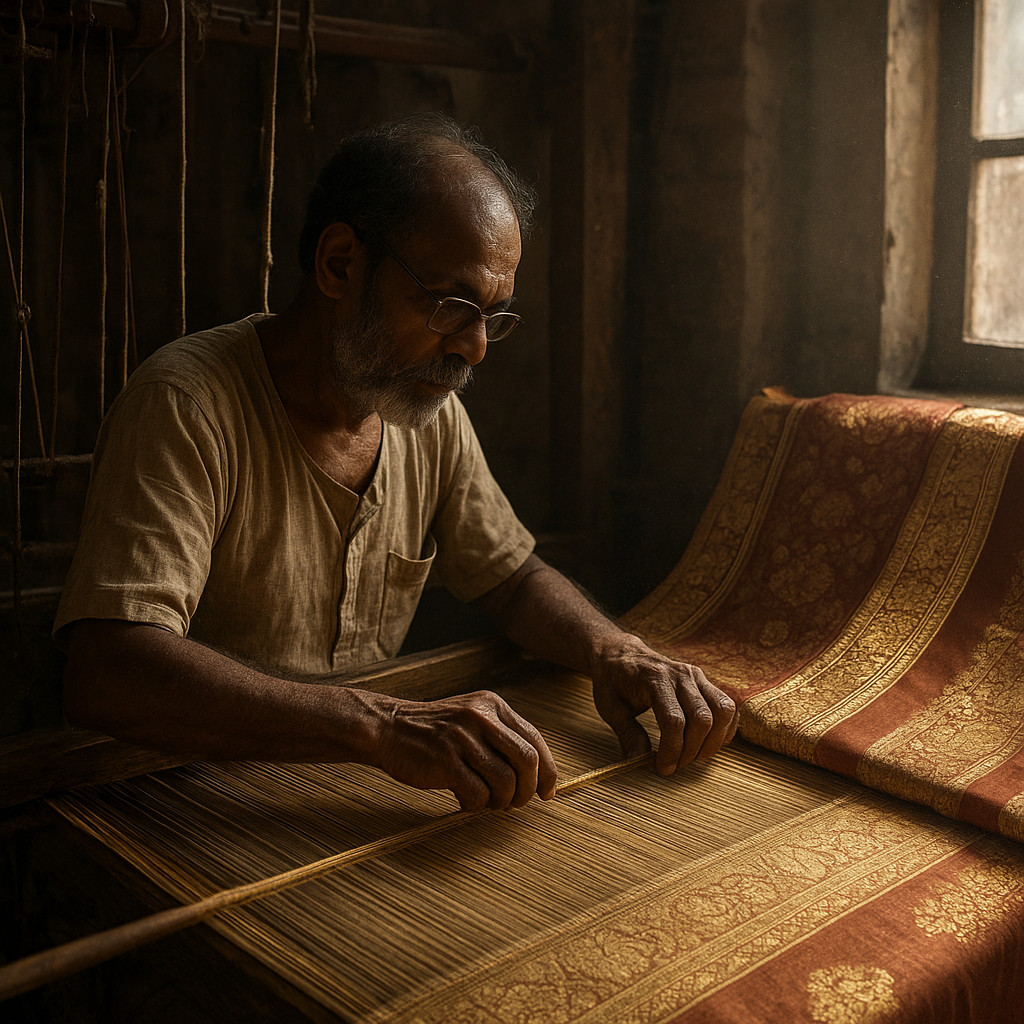
A few lanes away, in Madanpura, a loom clicks. A shuttle moves back and forth. Callused palms guide silk thread through the warp. This is where a Banarasi saree begins—not in a warehouse, not in a mill, but in a room where the air smells of dye and steam, and where one weaver might tie thousands of knots by hand before the pallu is finished.
When you pay for a Banarasi, you are paying for that room. You are paying for the weaver's inheritance. The market will sell you either one. This guide helps you know which one you are holding.
1. Check the Silk Mark tag and verify it
A tag can be borrowed. A number can be copied. What matters is whether it holds up to scrutiny.
Silk Mark is a certification issued by the Silk Mark Organisation of India, under the Ministry of Textiles. It certifies that the fabric is pure silk. Look for a Silk Mark tag or sticker on the saree. It usually carries a hologram and a unique identification number.
The most important step is to verify that number. You can enter it on the official Silk Mark website to check whether it is genuine and matches the product details. A legitimate seller will not hesitate to share the number or let you inspect the tag.
Keep in mind that Silk Mark certifies pure silk, not necessarily that the saree is handloom. A powerloom saree made of pure silk can also carry Silk Mark. So treat it as a useful starting point, not the final word on authenticity.
2. Turn the saree over and study the reverse side
The front of a saree is made to be admired. The back is made to be honest.
Handloom weaving, especially with extra-weft zari or silk work, usually leaves visible floats on the reverse side. These are loose threads where the motif has been woven in. In cutwork styles such as butidar or jangla, you may see neatly cut thread ends on the back.
Machine-made or powerloom sarees tend to have a much cleaner, uniform reverse. Some are backed with a thin paper or mesh to hide the construction, and the motifs can look flat or slightly embossed rather than woven into the fabric.
Ask the seller for clear photos or a video of the reverse side before you buy. If they only show the front, that is a reason to pause.
3. Examine the zari closely
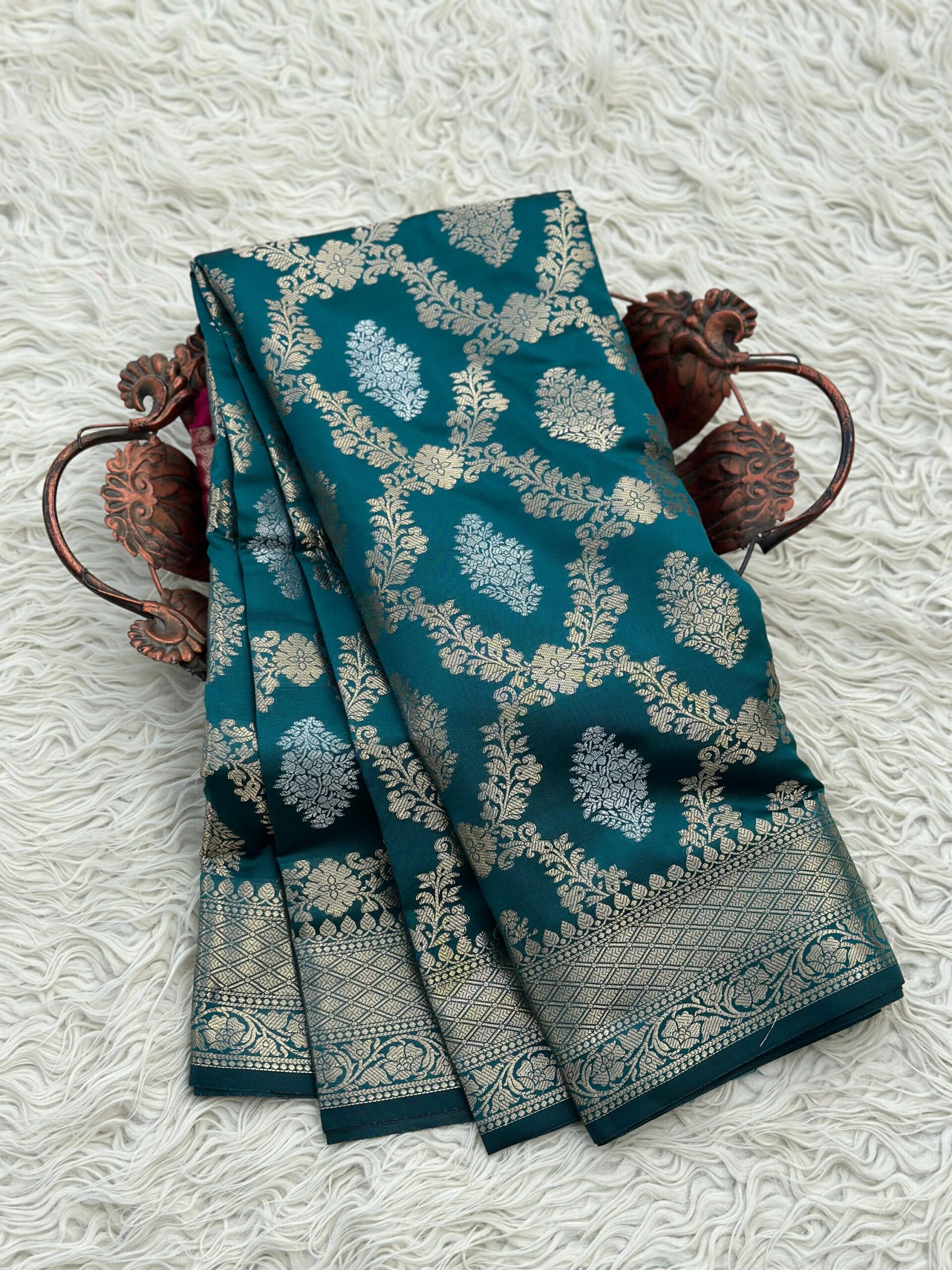
Zari is the voice of a Banarasi saree. When it is real, it speaks softly.
Traditional Banarasi zari is made by wrapping a silk core with silver thread and then gold-plating it for gold zari. It has a soft, deep lustre and some weight to it.
Fake zari is usually a polyester or plastic thread coated with a metallic film. It often looks overly bright, almost mirror-like, or conversely dull and lifeless. It is also noticeably lighter and stiffer.
You can do a gentle scrape test on an inconspicuous area using a needle. Real zari tends to reveal a silver or reddish silk core underneath the plating. Fake zari usually shows a uniform white or plastic layer beneath the coating. Do this carefully so you do not damage the saree.
4. Feel the fabric and judge the weight
Silk has a temperature. It holds warmth in a way synthetic fibre never will.
Pure silk has a distinctive feel. It is smooth but not slippery, warm to the touch, and has a natural sheen rather than a harsh glare. When you handle it, pure silk often makes a faint crisp sound, sometimes called "scroop." It also drapes with a satisfying weight.
Art silk and polyester imitations tend to feel cool, overly slippery, or unnaturally light. They may generate static cling and lack the body of genuine silk. If the saree feels featherweight for its size, it is unlikely to be pure silk handloom.
For a deeper comparison, you can read our pure silk vs art silk guide to understand how the two behave in wear and drape.
5. Do a burn test on a spare thread (with care)
Fire does not lie. It will tell you in seconds whether a thread is silk or plastic.
This is one of the most reliable ways to distinguish pure silk from synthetic fibre, but it must be done safely and only on a spare thread or an inconspicuous snip—never on the main body of the saree.
Pull out a few threads from the pallu edge or a blouse piece. Hold them with tweezers over a small flame on a fireproof surface, such as a ceramic plate. Keep water nearby and do not attempt this near curtains, children, or flammable materials.
Pure silk burns slowly, curls away from the flame, and smells like burnt hair or feathers. It leaves behind a black ash that crushes easily between your fingers. Synthetic fibres melt into hard, black beads and smell like burning plastic or chemicals.
If you are not comfortable doing this yourself, ask the seller if they can provide a burn-test video of a spare thread from the same lot.
6. Look at the motifs and weave irregularities
A hand makes small mistakes. A machine does not.
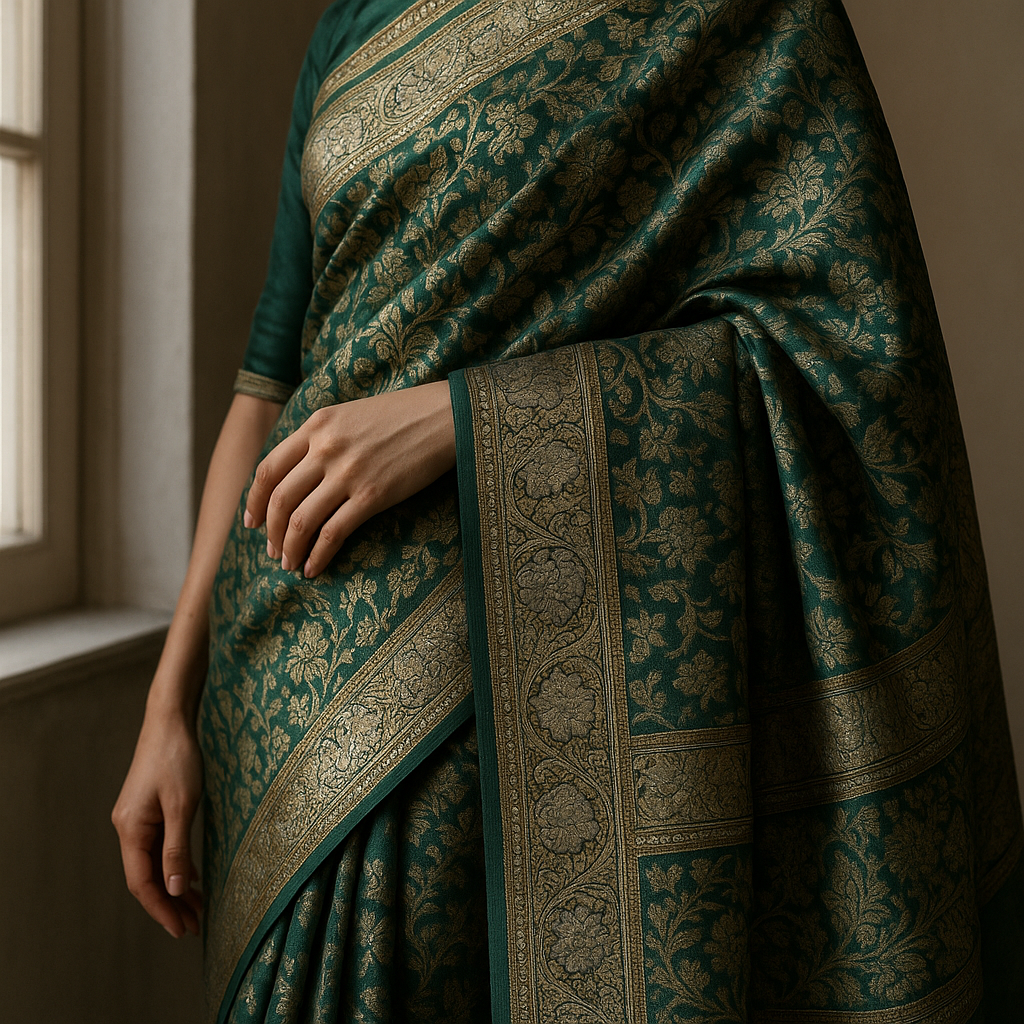
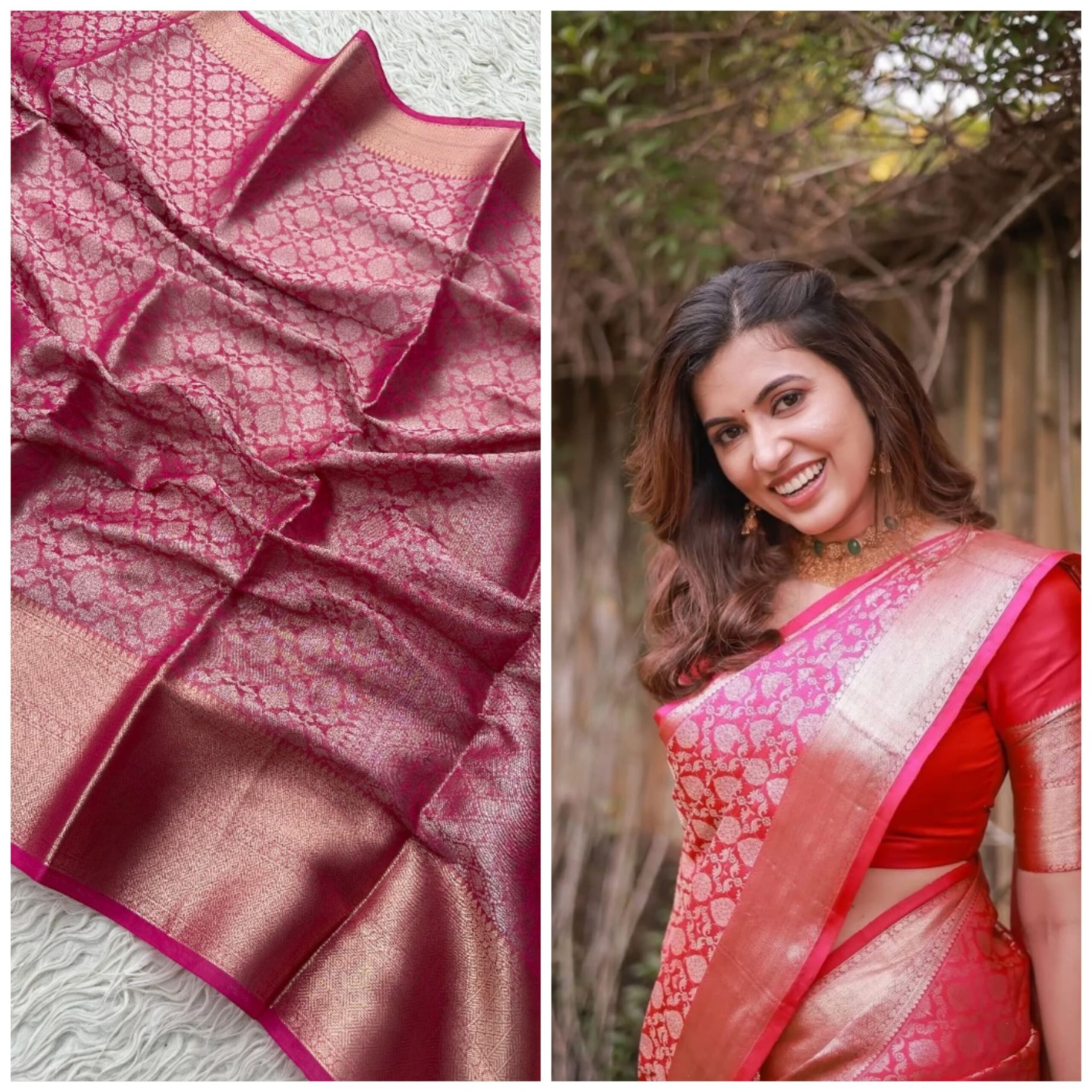
Banarasi sarees are known for Mughal-influenced designs—butis (small motifs), bel (creeping vines), jangla (dense foliage patterns), and kalka (paisley). On a handloom saree, you will often notice slight irregularities: a buti that is not perfectly symmetrical, or minor variations in motif spacing. These are marks of the human hand, not flaws.
Powerloom sarees are usually too perfect. Every motif looks identical, the spacing is mathematically exact, and the design can have a slightly raised or printed appearance. If the saree looks machine-uniform down to the last thread, it probably was made on a machine.
7. Ask about the GI tag
A name carries weight when it is protected.
Banarasi sarees and brocades hold a Geographical Indication (GI) tag. This means the name "Banarasi" is legally tied to sarees made in Varanasi and surrounding districts using traditional methods. The GI tag protects the origin and heritage of the weave.
Ask your seller whether the saree is GI-marked or whether they can confirm it was woven in the Banaras cluster. A GI tag speaks to origin, not necessarily to quality on its own, but it is an important indicator that the saree comes from the right place and tradition.
8. Apply a price sanity check
A saree that costs less than a meal cannot contain weeks of labour.
A genuine handloom pure-silk Banarasi saree represents days or weeks of labour, the cost of pure silk yarn, and real zari. It cannot be sold for a few hundred rupees. If a deal looks too good to be true, it almost certainly is.
The price of an original reflects the quality of silk, the purity of the zari, and the complexity of the weave. A simple handloom Banarasi costs less than an elaborate jangla with heavy gold zari, but even the entry-level genuine piece will sit well above mass-market imitations. Speak in general terms: if the price does not reflect the material and craftsmanship, walk away.
You can explore general pricing factors in our Banarasi saree price guide to understand what drives cost without relying on guesswork.
9. Buy from a seller who answers questions
The person selling you the saree should know its story.
A trustworthy seller will show you the reverse side in photos or video, answer questions about the weave and origin, and offer a clear return policy. They will not get defensive when you ask for a Silk Mark number or more details about the zari.
If a seller uses only stock images, avoids direct questions, or has no return window, treat that as a warning sign. You can browse our collection directly through shop Banarasi sarees to see how transparent product presentation should look.
Quick verdict: original vs fake at a glance
| Check | Original Banarasi | Fake / Machine-made |
|---|---|---|
| Silk Mark | Verified hologram and unique number | Missing, unverifiable, or mismatched |
| Reverse side | Visible floats, cut threads, handloom irregularities | Clean, uniform, sometimes paper-backed |
| Zari | Silk core with silver/gold plating; soft lustre | Plastic or polyester with metallic coating; stiff |
| Fabric feel | Warm, smooth, natural sheen, noticeable weight | Cool, slippery, overly shiny or dull, very light |
| Burn test | Smells like burnt hair; crushable ash | Smells like burning plastic; hard beads |
| Motifs | Slight irregularities; Mughal-inspired butis, bel, jangla | Too perfect; repetitive, printed look |
| GI tag | Linked to Varanasi/Banaras cluster | No origin claim or vague sourcing |
| Price | Reflects silk, zari, and weeks of loom work | Unrealistically low |
| Seller | Transparent, shows reverse side, accepts returns | Evasive, stock photos only, no returns |
What an original costs, honestly
There is no single price for a Banarasi saree. A lightweight handloom piece with minimal zari will cost less than a heavy katan silk saree with elaborate jangla work and pure gold zari. What you can say with confidence is that a genuine handloom pure-silk Banarasi is never a bargain-basement purchase.
You are paying for silk yarn, real zari thread, and the time of a weaver who may spend weeks on a single saree. When a seller quotes a price that seems disconnected from these realities, it is worth asking where the saree was woven and what materials were used. Honest pricing goes hand in hand with honest answers.
Frequently asked questions
Is Silk Mark the same as a handloom mark?
No. Silk Mark certifies that the fabric is pure silk. It does not certify that the saree was woven on a handloom. A powerloom saree made of pure silk can also carry Silk Mark.
Can a saree be an original handloom Banarasi without a Silk Mark tag?
Yes. Some genuine weavers do not opt into the Silk Mark scheme. The absence of a tag is not proof of a fake, but it means you should rely more heavily on the other checks in this guide.
How do I verify a Silk Mark number?
Enter the unique number on the tag into the official Silk Mark Organisation of India website. The result should match the seller's description of the saree.
Does a GI tag guarantee quality?
Not exactly. The GI tag confirms that the saree originates from the Banaras region and follows traditional methods. It protects the name and origin, but you should still inspect the weave, zari, and fabric yourself.
Can I return a saree if the burn test shows it is synthetic?
That depends on the seller's return policy. Always buy from a seller who accepts returns if the product is not as described, and check whether testing a spare thread affects eligibility.
Closing
Buying a Banarasi saree is an investment in craftsmanship, tradition, and timeless elegance. These nine checks will help you shop with confidence, whether you are buying your first saree or adding to a cherished collection.
At Nisa Silk Fab, based in Ahmedabad, we offer Banarasi craft Banarasi sarees and believe in transparent sourcing so you know exactly what you are wearing. Take your time, ask questions, and let the weave speak for itself.