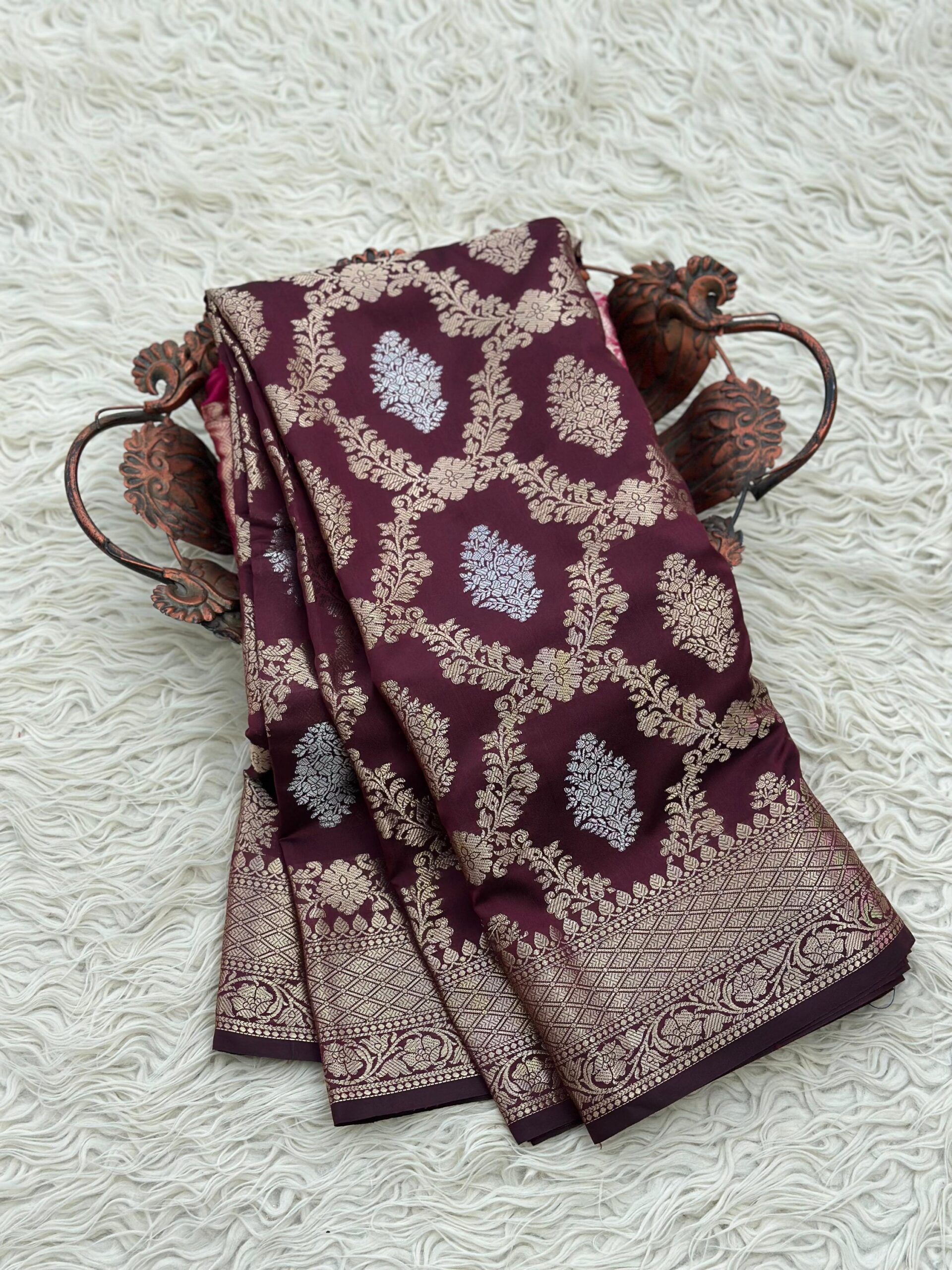
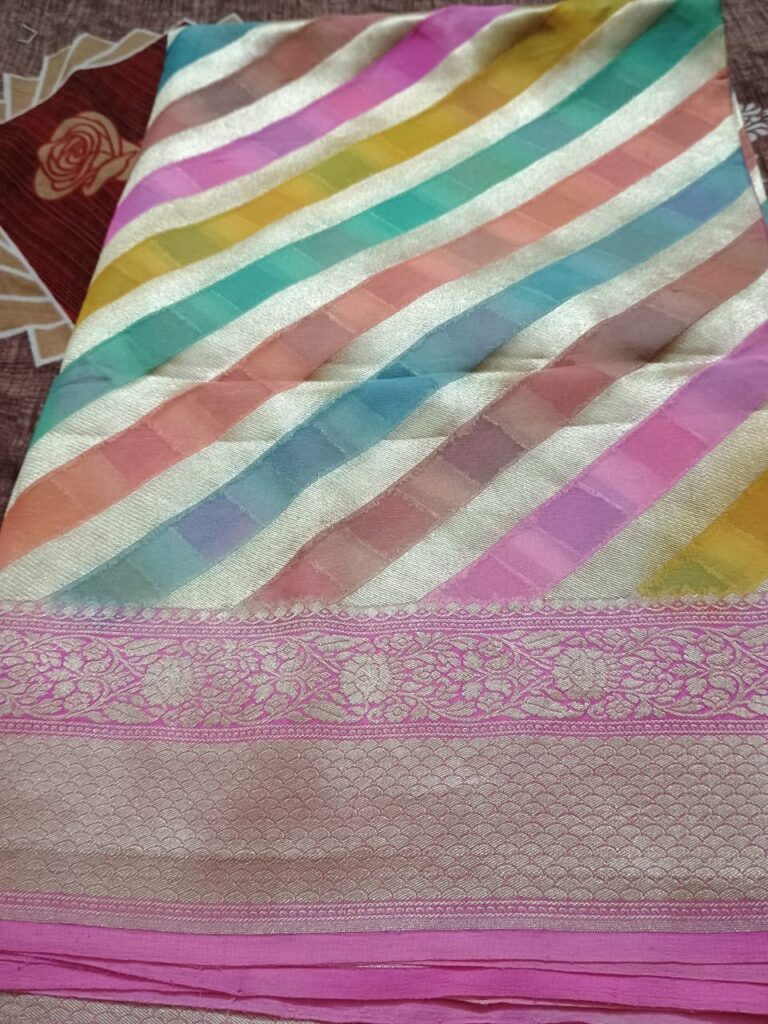
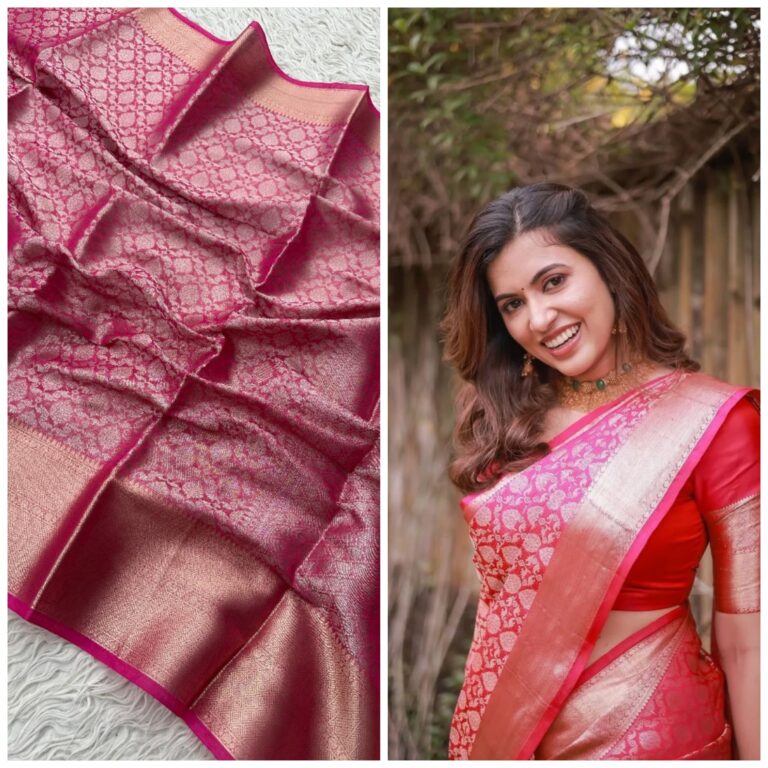
Because the question is not "is this silk?" — it is "which kind of silk?"
Here is something most silk sellers will not tell you: when you ask "is this pure silk?", the honest answer is almost always yes. Art silk (short for "artificial silk") is technically a silk product. So is polyester satin. So is rayon. The real question is whether you are buying mulberry silk — the protein fibre produced by silkworms — or a cellulose/synthetic mimic.
This matters because the price gap is enormous. A pure mulberry silk Banarasi saree costs Rs 2,000–Rs 25,000. An art silk lookalike costs Rs 400–Rs 1,200. If you cannot tell them apart, you are at the mercy of the seller.
Here are six tests you can do in under a minute each, in a shop or at home. We use these tests ourselves when sourcing.
Test 1: The Touch Test (5 seconds)
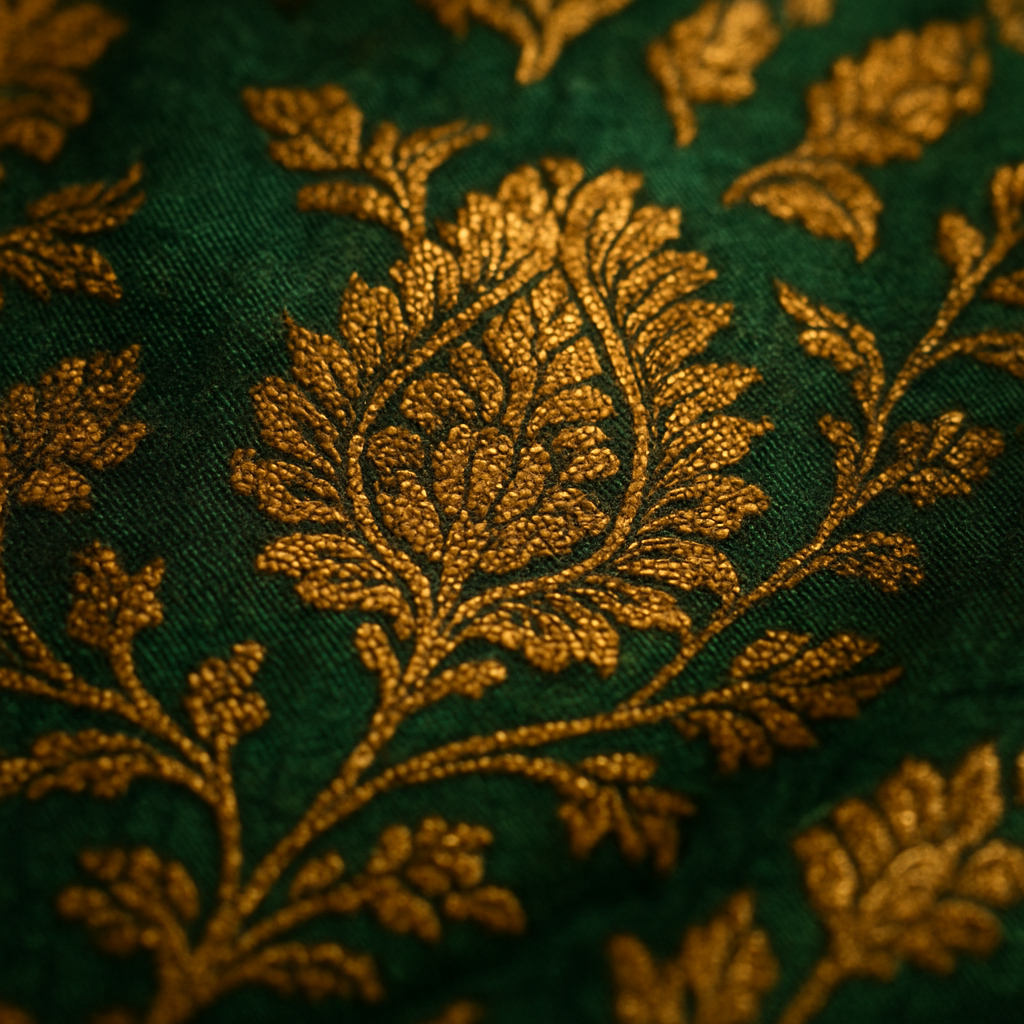
Pure silk feels warm against your skin. It has a slight drag — not slippery. Art silk feels cool and slick, almost like running your hand over plastic. This is because pure silk is a protein fibre (it absorbs body heat) while art silk is synthetic (it reflects heat).
The fastest version: close your eyes, hold the fabric against your cheek. If it warms up in 2–3 seconds, it is likely pure. If it stays cool, it is likely art.
Test 2: The Ring Test (10 seconds)
Take a gold or silver finger ring. Pull a corner of the saree fabric through the ring. Pure silk, being extremely fine, passes through smoothly with almost no resistance. Art silk, being thicker per strand, will catch or squeak against the ring.
This is one of the oldest tests in the trade. It works because pure silk yarn is finer than human hair — about 11–13 microns in diameter — while art silk yarn is typically 30+ microns.
Test 3: The Luster Test (15 seconds)
Hold the fabric under a light and tilt it back and forth. Pure silk has a soft, deep, almost liquid sheen — the kind of glow that seems to come from inside the fabric. Art silk has a hard, surface-level shine that looks the same from every angle.
Think of it as the difference between the glow of a pearl (pure silk) and the shine of a plastic button (art silk). Both are shiny. Only one glows.
Test 4: The Wrinkle Test (20 seconds)
Crush a small section of the fabric in your fist for 5 seconds, then release. Pure silk wrinkles — the creases stay for several seconds before slowly relaxing. Art silk bounces back almost instantly, leaving no crease.
This is because pure silk fibres have low resilience (they hold shape memory). Art silk fibres are highly resilient. Counterintuitively, the "perfect" fabric that never wrinkles is the fake one.
Test 5: The Burn Test (30 seconds)
This is the definitive test — but it requires sacrificing one thread. Pull a single thread from the inner seam (where the cut will not show) and burn it with a match or lighter.
| Material | Smell | Ash | Flame |
|---|---|---|---|
| Pure silk | Burnt hair | Brittle, black, crumbles to powder | Slow, self-extinguishing |
| Art silk (rayon) | Burnt paper | Soft grey ash | Fast, steady |
| Polyester | Plastic / chemical | Hard black bead, does not crumble | Black smoke, melts |
| Cotton blend | Burnt paper | Soft grey ash, no bead | Fast, even |
The burnt-hair smell is the giveaway. Pure silk is a protein (like hair), so it burns like hair. Anything else smells like something else.
Test 6: The Price Test (5 seconds)
This is the test most buyers skip. A genuine pure silk Banarasi saree, even at the cheapest end of handloom, cannot be sold for less than Rs 1,500. The silk yarn alone costs Rs 400–Rs 600, the weaver's wage is Rs 300–Rs 500 per day, and the zari + packaging + seller margin adds another Rs 400–Rs 600.
If a "pure silk Banarasi saree" is priced at Rs 699 or Rs 999 online, it is art silk. Not maybe. Not probably. Definitely.
This is not a value judgement — art silk has its place. It is affordable, looks pretty, and works for one-time occasions. But it should be sold as art silk, not as pure silk.
What About Blends?
Many "silk" sarees sold today are blends — 70% silk + 30% polyester, or 50% silk + 50% art silk. These are sold with creative names: "silk blend", "silk touch", "silk feel", "silk look". The silk content gives them a burn test that partially smells like burnt hair. The blend makes them cheaper.
Blends are not evil. They are a reasonable compromise for buyers who want the silk feel without the silk price. The problem is when they are marketed as "pure silk" — which is fraud, not compromise.
If you want pure silk, look for the Silk Mark certification hologram. It is issued by the Silk Mark Organisation of India (under the Central Silk Board) and requires laboratory verification of fibre content. Every pure silk saree we sell carries this mark.
Why This Matters Beyond Price
Pure silk breathes. It absorbs moisture, regulates temperature, and feels comfortable in 40 degree Indian summer. Art silk does not breathe — it traps heat and sweat. After 4 hours of wearing an art silk saree at a summer wedding, you will understand why pure silk costs what it costs.
Pure silk also ages. A well-cared-for pure silk saree looks better at 10 years than at 1 year — the silk softens, the zari develops a patina, the colours deepen. Art silk looks worse with every wash — the shine dulls, the fabric pills, the colours fade.
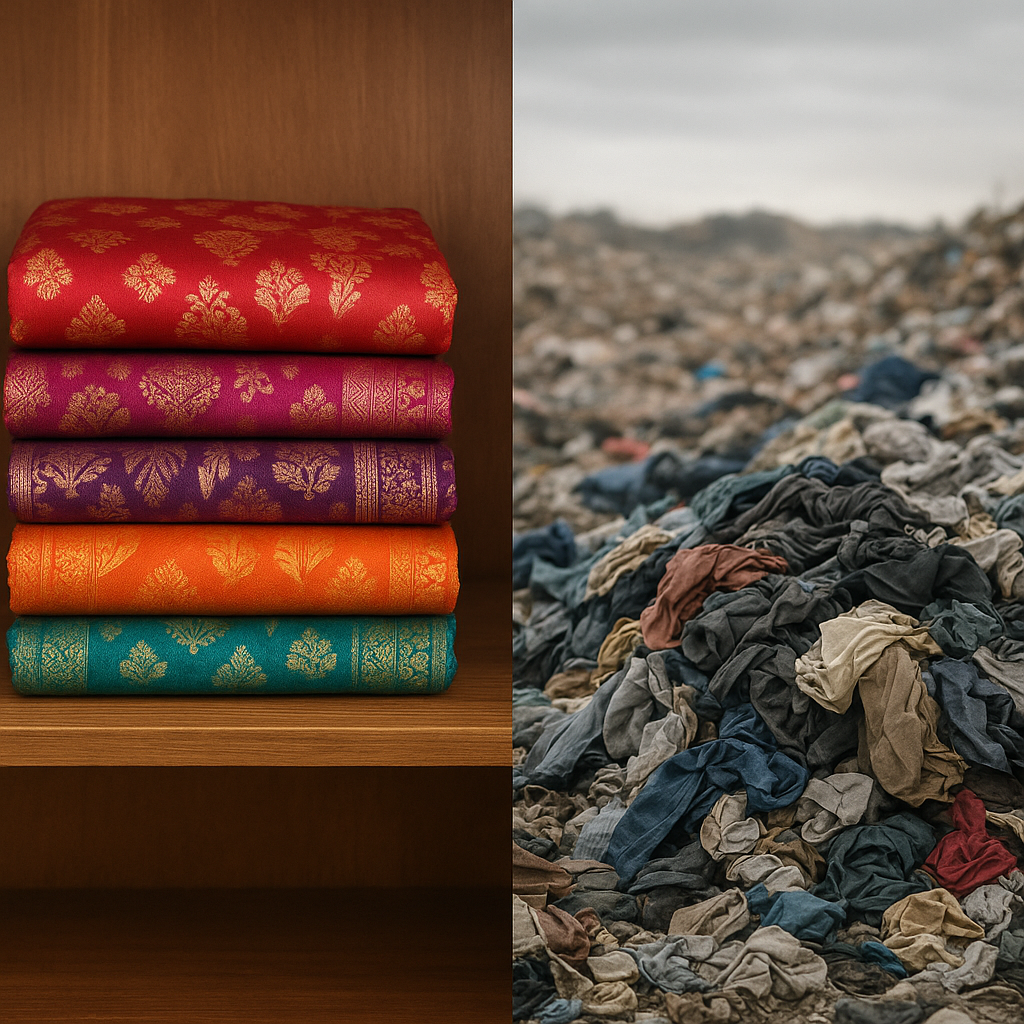
When you buy a pure silk saree, you are buying something that will outlive you. When you buy art silk, you are buying a single-season outfit. Both have their place. Know which one you are paying for.
Frequently Asked Questions
Is art silk bad?
No. Art silk is a legitimate, affordable alternative to pure silk. The problem is only when it is sold as pure silk. If a seller is honest about it being art silk and prices it accordingly (Rs 400–Rs 1,200), that is fair trade.
Can I wash pure silk at home?
Yes, with care. Cold water, mild detergent (or reetha/baby shampoo), no wringing, dry in shade. For heavy zari work, professional dry cleaning is safer. See our saree care guide for the full process.
Why does pure silk cost so much more?
Three reasons: (1) silk yarn costs Rs 400–Rs 600 per saree, (2) a handloom weaver takes 3–30 days per piece at Rs 300–Rs 500/day, (3) genuine zari adds another Rs 300–Rs 2,000. Art silk eliminates all three costs.
How long does pure silk last?
With proper care, 20–50 years. Many Indian households have Banarasi sarees passed down from grandmothers that are still wearable. Art silk typically lasts 2–5 years before showing visible wear.
What is the best test if I can only do one?
The burn test. It is definitive. Pull one thread from an inner seam and burn it — the smell of burnt hair tells you it is pure protein silk.
At Nisa Silk Fab, we sell only pure mulberry silk and katan silk sarees, sourced directly from weaver families in Varanasi. Browse the collection or ask us anything — we will tell you honestly what you are looking at, even if it is not ours.