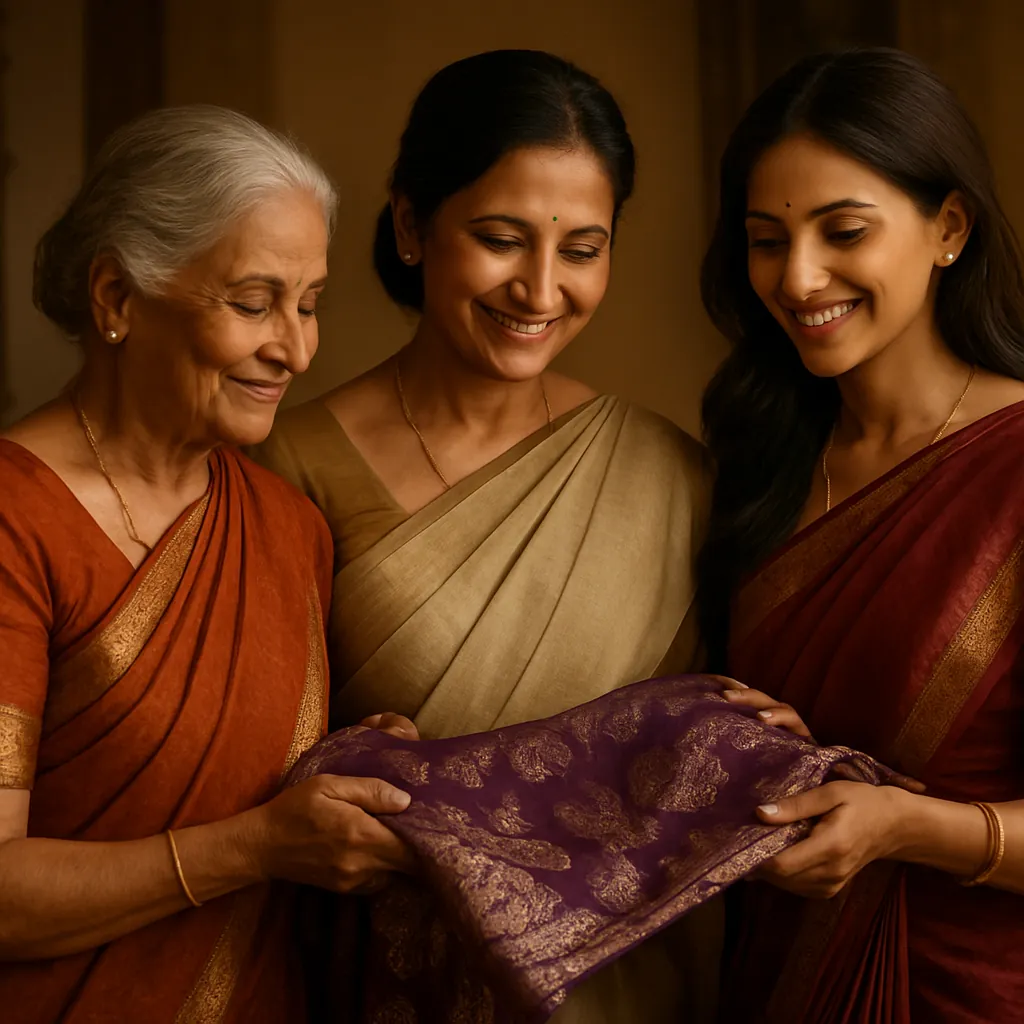
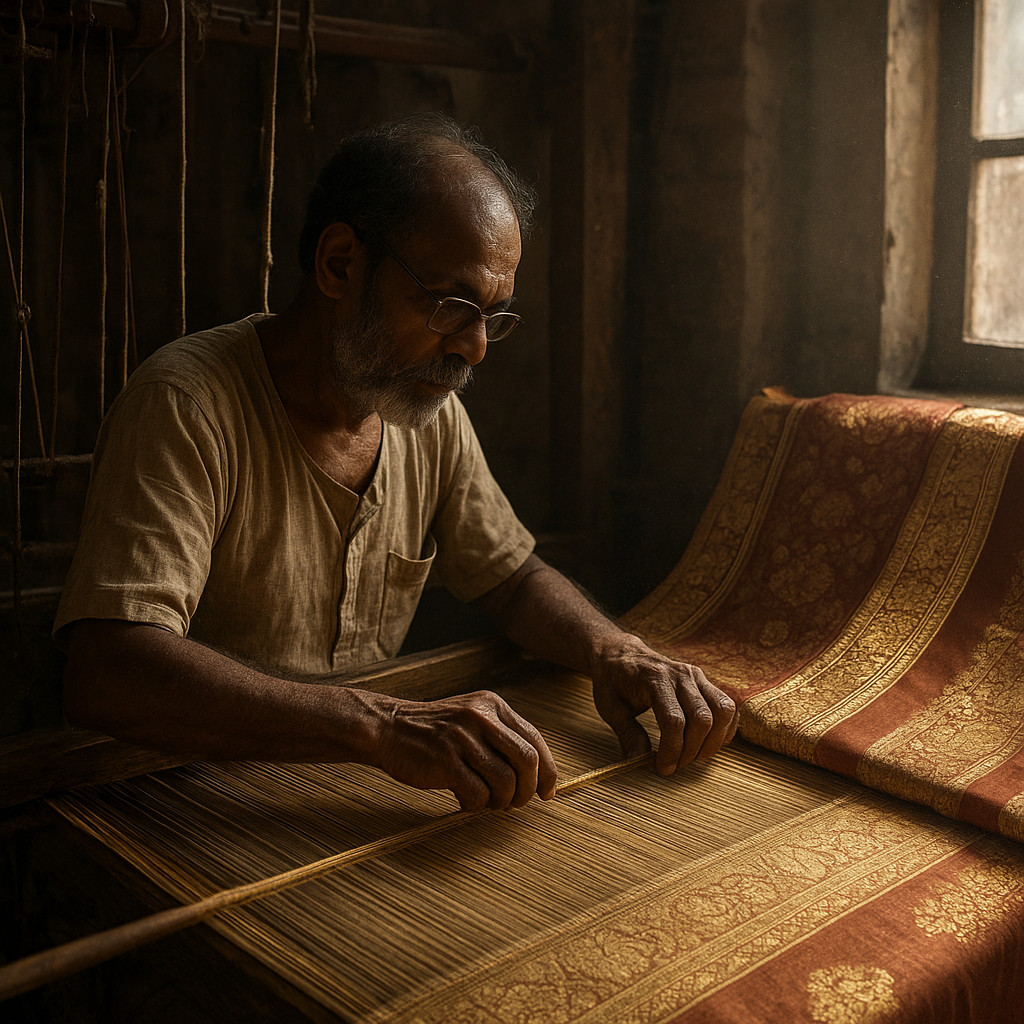
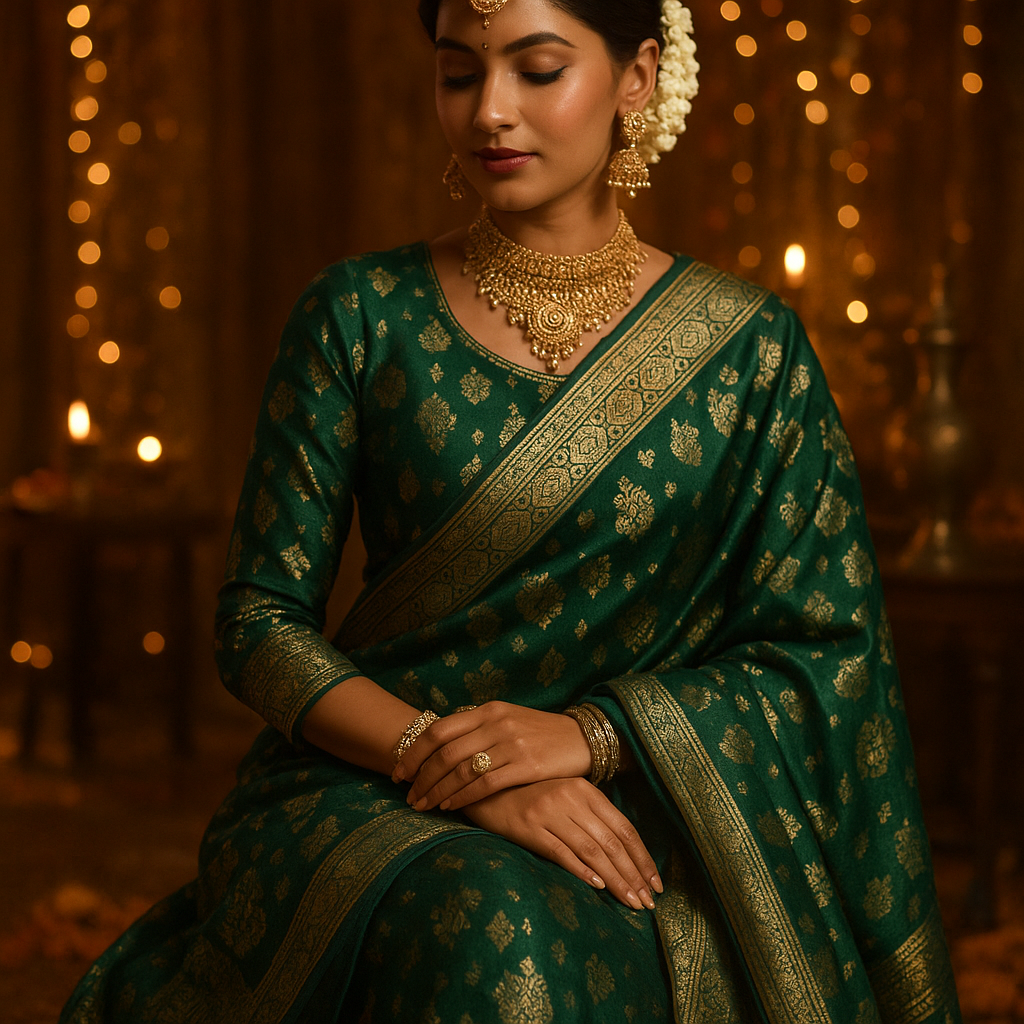
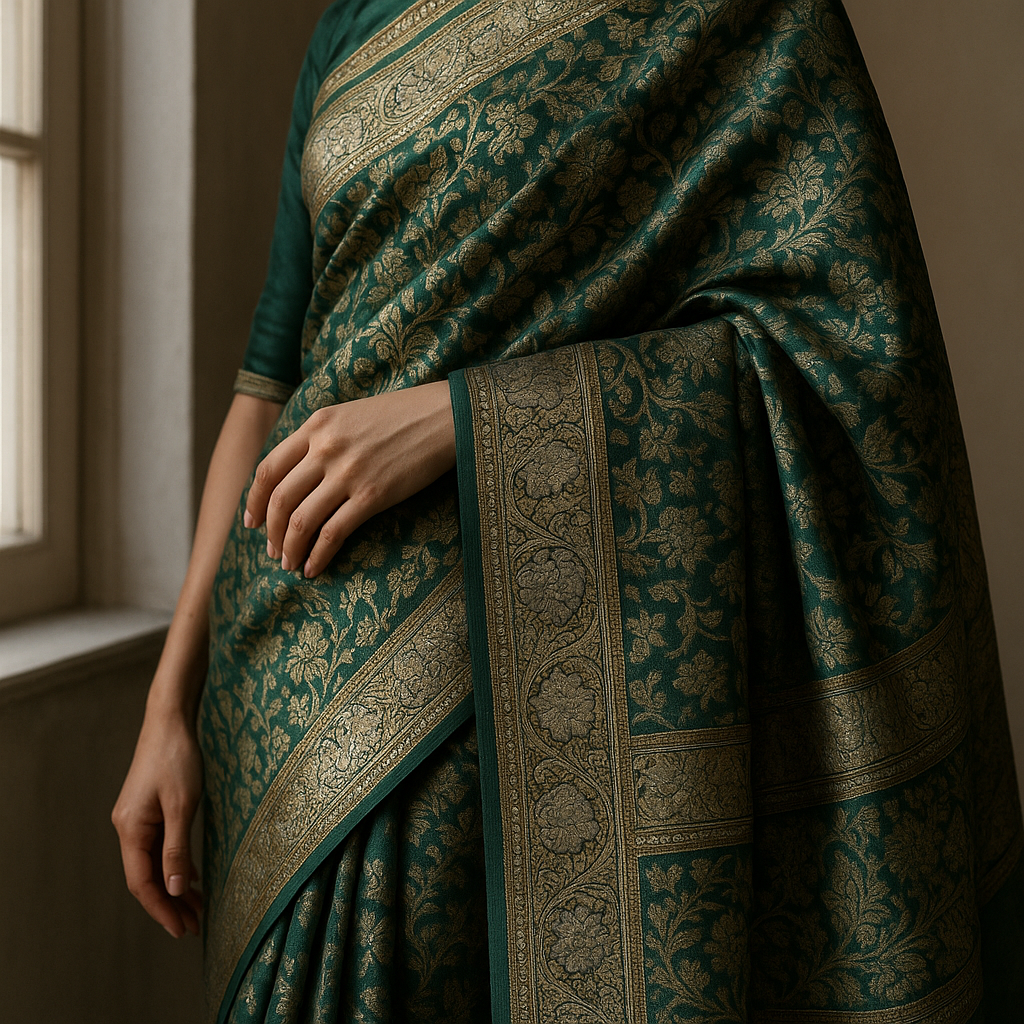
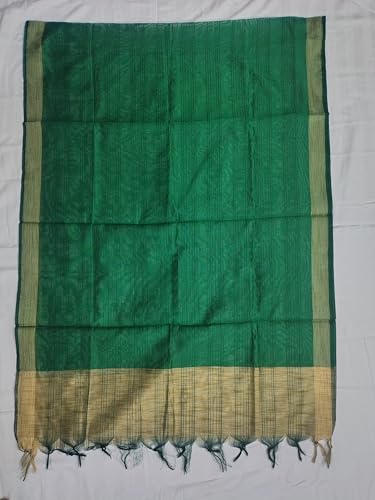
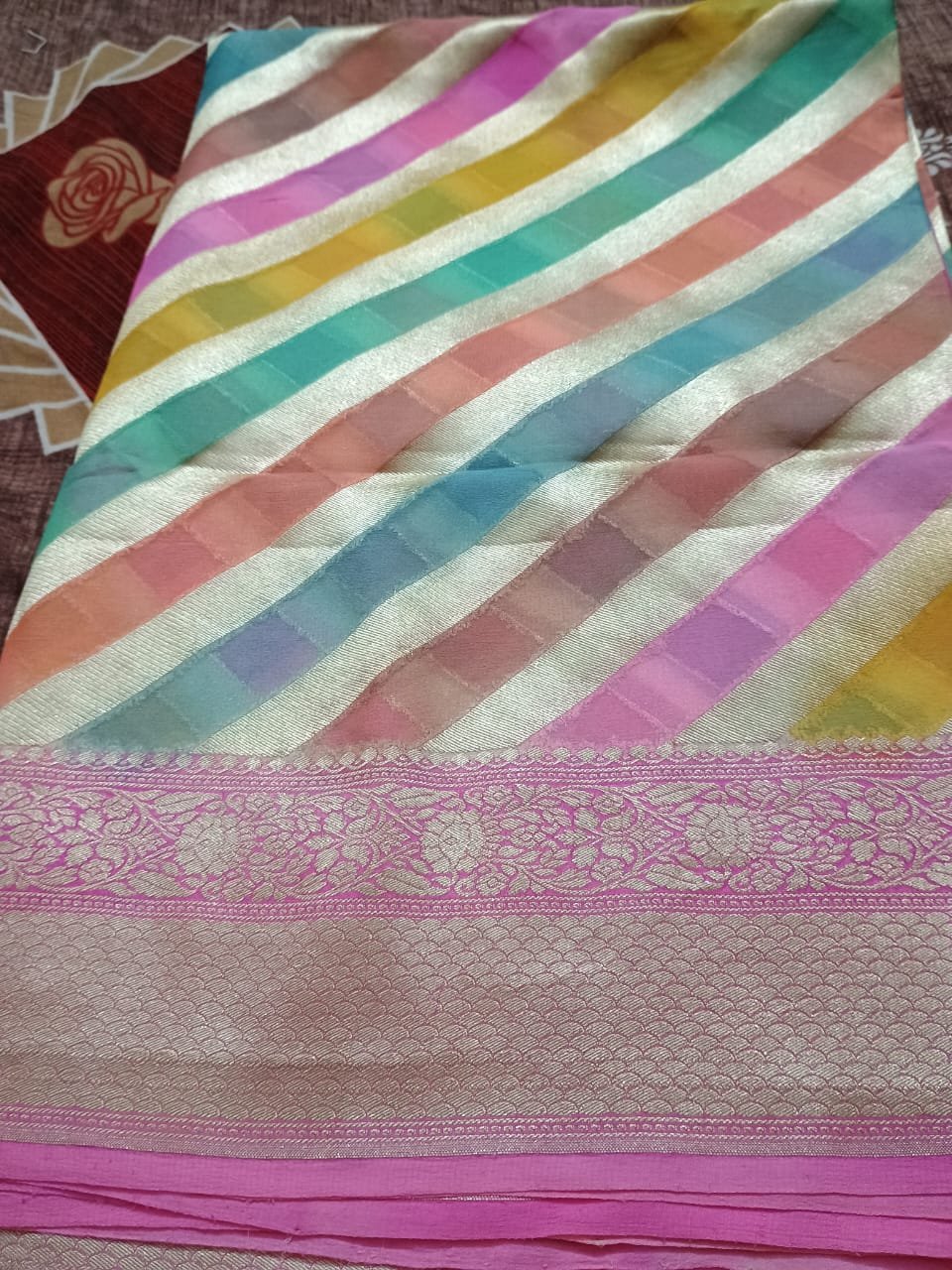
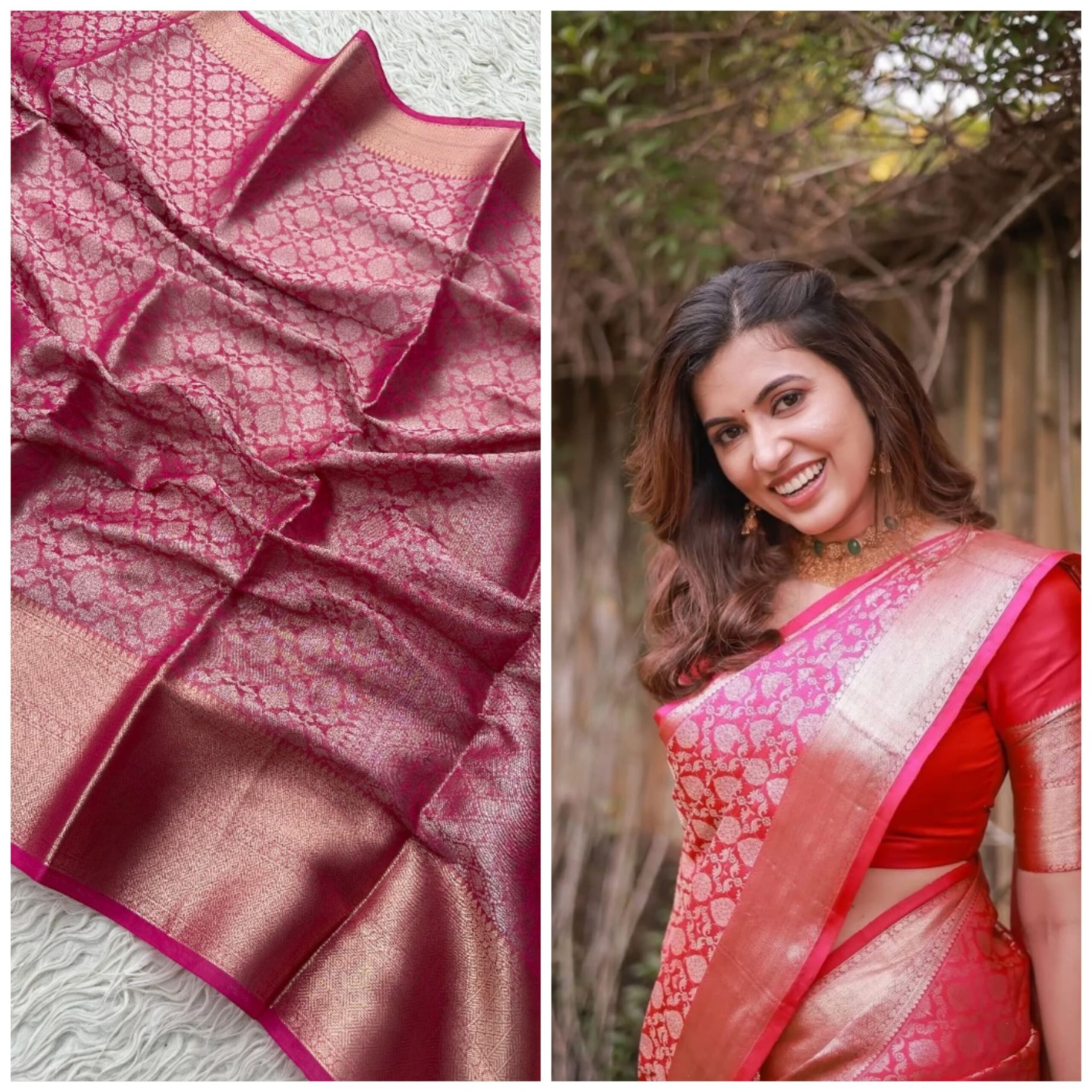
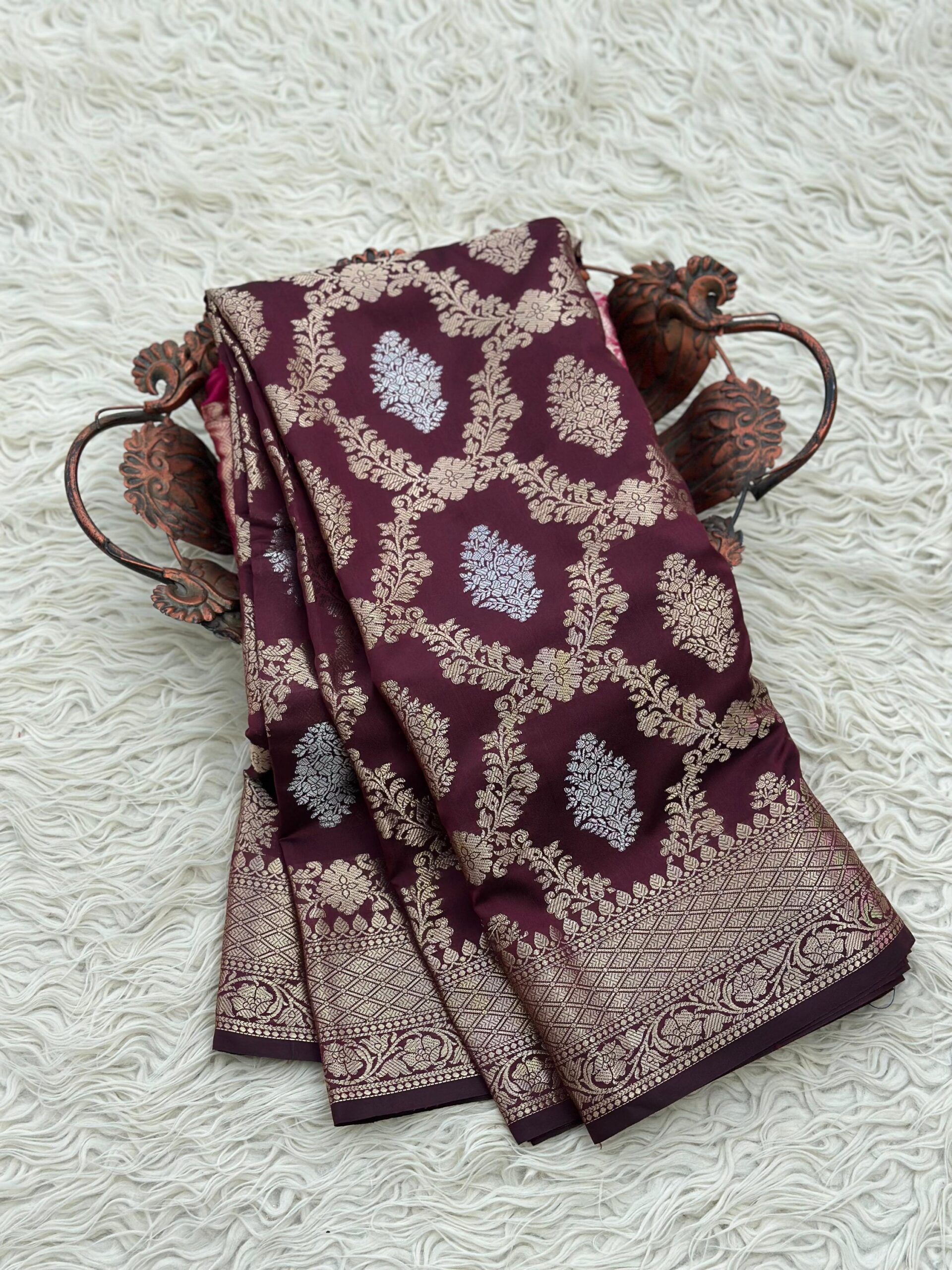
Two fabrics. One loom. Completely different sarees.
If you have ever shopped for a Banarasi saree, you have likely been asked: "Katan or Organza?" The choice sounds esoteric, but it changes everything — how the saree drapes, how it photographs, what occasion it suits, and how it ages. Pick wrong and you will have a beautiful saree you never wear.
Here is the practical comparison we give our customers when they ask.
What is Katan Silk?
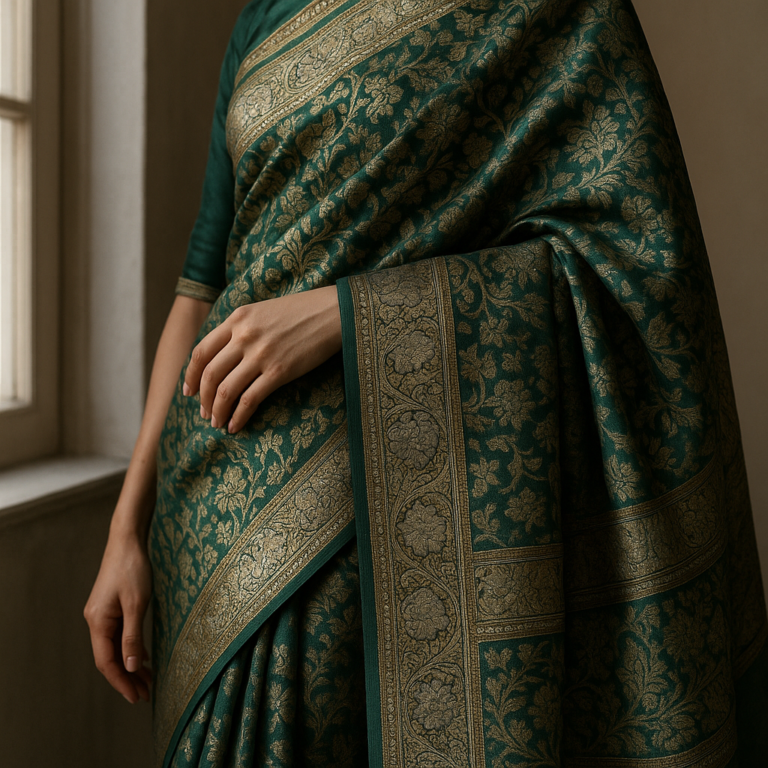
Katan silk is the traditional Banarasi fabric. It is made by twisting two or more silk yarns together to create a dense, slightly stiff, highly lustrous fabric. The weave is tight enough that you cannot see through it even when held up to light.
Katan has been the standard Banarasi weave for over 400 years. Most "Banarasi saree" images in your head — the deep maroon bridal piece, the gold zari work, the heavy drape — are katan silk.
What is Organza Silk?
Organza is a sheer, lightweight silk fabric woven from untwisted yarns. It is translucent — you can see shapes through it. The weave is open, the texture is crisp, and the fabric has a slight stiffness that holds shape beautifully.
Organza has become the modern face of Banarasi weaving in the last 5–7 years. It is what younger buyers see on Instagram — the pastel sarees with delicate zari borders, the minimalist bridal trousseau, the "modern Banarasi" aesthetic.
Side-by-Side Comparison
| Feature | Katan Silk | Organza Silk |
|---|---|---|
| Opacity | Opaque (cannot see through) | Sheer (translucent) |
| Weight | 500–800 grams per saree | 250–400 grams per saree |
| Texture | Dense, smooth, slightly stiff | Crisp, papery, structured |
| Drape | Heavy, falls straight | Light, holds shape |
| Sheen | Deep, liquid, warm | Bright, reflective, cool |
| Zari work | Heavy (full jall, complex butta) | Light (border-focused, minimal) |
| Price range | Rs 2,000 – Rs 25,000+ | Rs 3,500 – Rs 12,000 |
| Weave time | 5–30 days | 3–10 days |
| Best for | Weddings, winters, festive | Summer, day events, modern looks |
| Aging | Improves over decades | Stable, does not change much |
When to Choose Katan Silk
Katan is the answer when you want a saree that feels substantial. It is the fabric of bridal trousseaus, of Karwa Chauth evenings in October, of winter weddings in December. The weight of katan (500–800 grams) is part of the experience — you feel dressed, you feel occasioned.
Katan also photographs warm. The deep sheen catches golden-hour light beautifully. If you are buying a saree for wedding photography, katan almost always looks better on camera than organza.
Choose katan if:
- You are buying a bridal or pre-wedding saree
- You want an heirloom piece to pass down
- You live in a cooler climate or are shopping for winter
- You love the traditional Banarasi look — deep colours, heavy zari, full jall work
- You want a saree that ages and improves with time
Browse our katan silk collection — prices start at Rs 2,000 for entry-level handloom pieces.
When to Choose Organza Silk
Organza is the answer when you want Banarasi craft without Banarasi weight. It is the fabric of summer lunches, of destination weddings, of "I want to wear silk but not look bridal." The sheerness reads as modern, the light weight reads as effortless.
Organza also styles younger. The pastel organza saree with a thin gold zari border and a sleeveless blouse is the defining image of the 2024–2026 Indian wedding aesthetic. If you have seen it on Instagram, that was organza.
Choose organza if:
- You are buying for a summer or day event
- You want a lighter, more breathable saree
- You prefer pastel or jewel tones over deep traditional colours
- You like the modern minimalist Banarasi aesthetic
- You are under 35 and want a saree that does not look like your mother's
The Climate Question
This is the question buyers forget to ask and regret not asking. Katan silk in 40-degree May weather is misery — the dense weave traps heat, the heavy zari weighs on you, and by hour three you are counting minutes. Organza in 10-degree January feels too thin and the sheerness feels exposing.
Rule of thumb:
- March–June, September–October: Organza. Lighter, breathable, photographs well in soft light.
- November–February: Katan. The weight and density feel right in cold weather.
- July–August (monsoon): Neither — silk does not like humidity. Choose cotton silk or chanderi instead.
The Age Question (Sensitively)
We are often asked: "I am 28, will katan look too old on me?" or "I am 55, is organza too young?"
The honest answer: katan does not age you — bad styling does. A 28-year-old in a deep maroon katan with a sleeveless blouse and statement earrings looks stunning, not old. Similarly, a 55-year-old in a pastel organza with traditional jewellery looks elegant, not trying-too-hard.
What ages you is buying a saree that does not match your energy. If you feel confident in heavy traditional pieces, katan is yours at any age. If you feel more yourself in lighter, contemporary drapes, organza is yours at any age. See our styling guide for inspiration.
The Price Reality
Organza is sometimes more expensive than katan at the entry level (Rs 3,500 vs Rs 2,000) because organza requires higher-quality silk yarn — the sheerness means flaws are visible, so only the best yarn is used. At the premium level, katan is more expensive because heavy zari work drives the cost up significantly.
Both fabrics hold their value well. A Rs 5,000 katan and a Rs 5,000 organza will both be wearable in 15 years if cared for properly. Neither is a "better investment" — they serve different purposes.
The Verdict: Own Both
If budget allows, the ideal silk wardrobe has both. A katan for the winter weddings and the milestone occasions. An organza for the summer events and the day functions. Trying to make one fabric do both jobs means compromising on comfort, style, or both.
If budget allows only one, the question is: what is your next occasion, and in what season? Buy for the season you are in, not the season you wish you were in.
Frequently Asked Questions
Is organza cheaper than katan?
Not always. At entry level, organza is slightly more expensive (Rs 3,500 vs Rs 2,000) because it requires flawless silk yarn. At premium level, katan is more expensive due to heavy zari work. Both are genuine Banarasi silks — the price reflects materials and labour, not quality.
Which is more durable?
Katan. The dense weave and twisted yarn make it more resistant to snags and tears. Organza, being sheer, is more delicate and requires careful handling. Both last 15+ years with proper care.
Can I wear katan in summer?
You can, but you will be uncomfortable. Katan traps heat. If you must wear silk in 40-degree weather, choose organza, chanderi, or cotton silk blends instead.
Which is better for a bride?
For the wedding ceremony itself, katan. The weight, the opacity, the heavy zari — it photographs richer and feels more ceremonial. For pre-wedding functions (mehndi, haldi, sangeet), organza is more practical.
How do I care for each?
Both need dry cleaning for the first wash. After that, cold water with mild detergent, no wringing, dry in shade. Katan can be stored folded in muslin; organza is better stored hanging to prevent permanent creases. Full care guide here.
Still unsure which is right for you? Send us a message with your occasion, season, and budget — we will recommend honestly, even if it means pointing you to a different weaver.