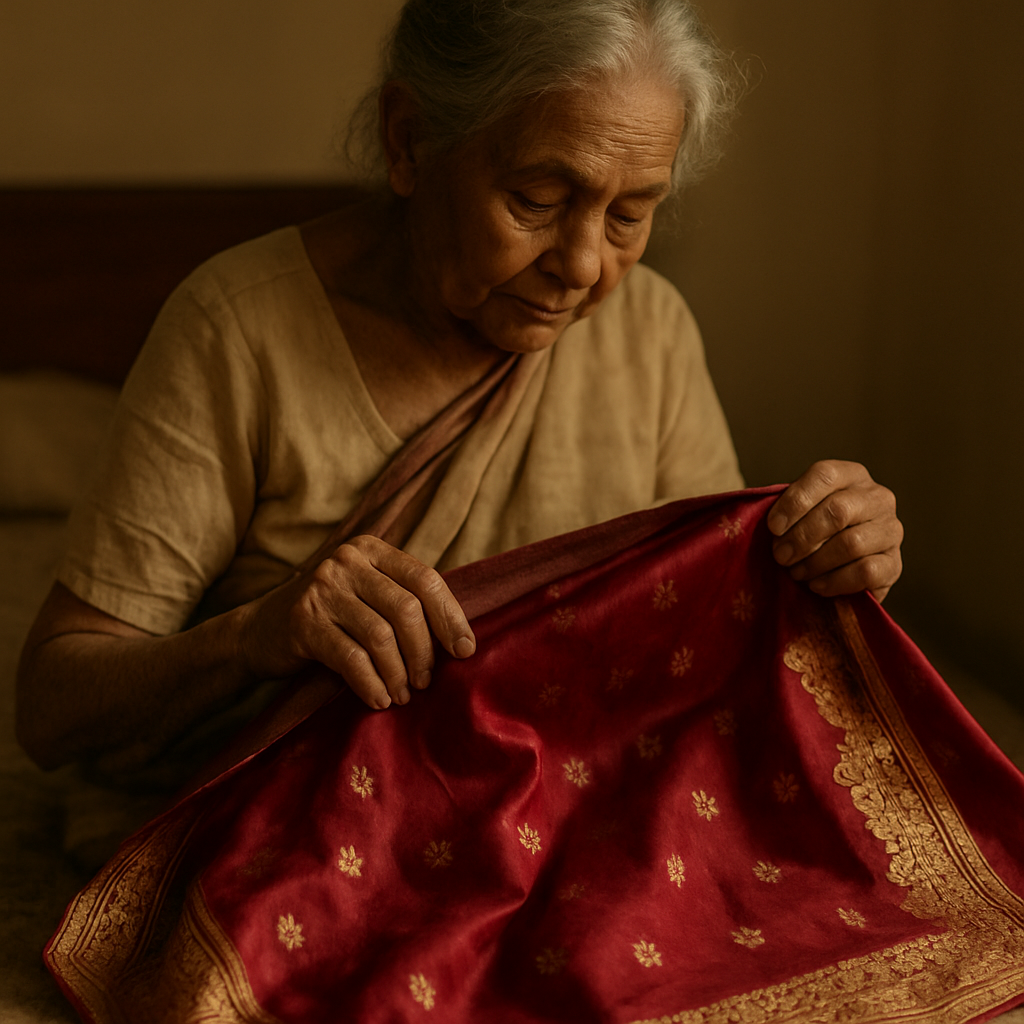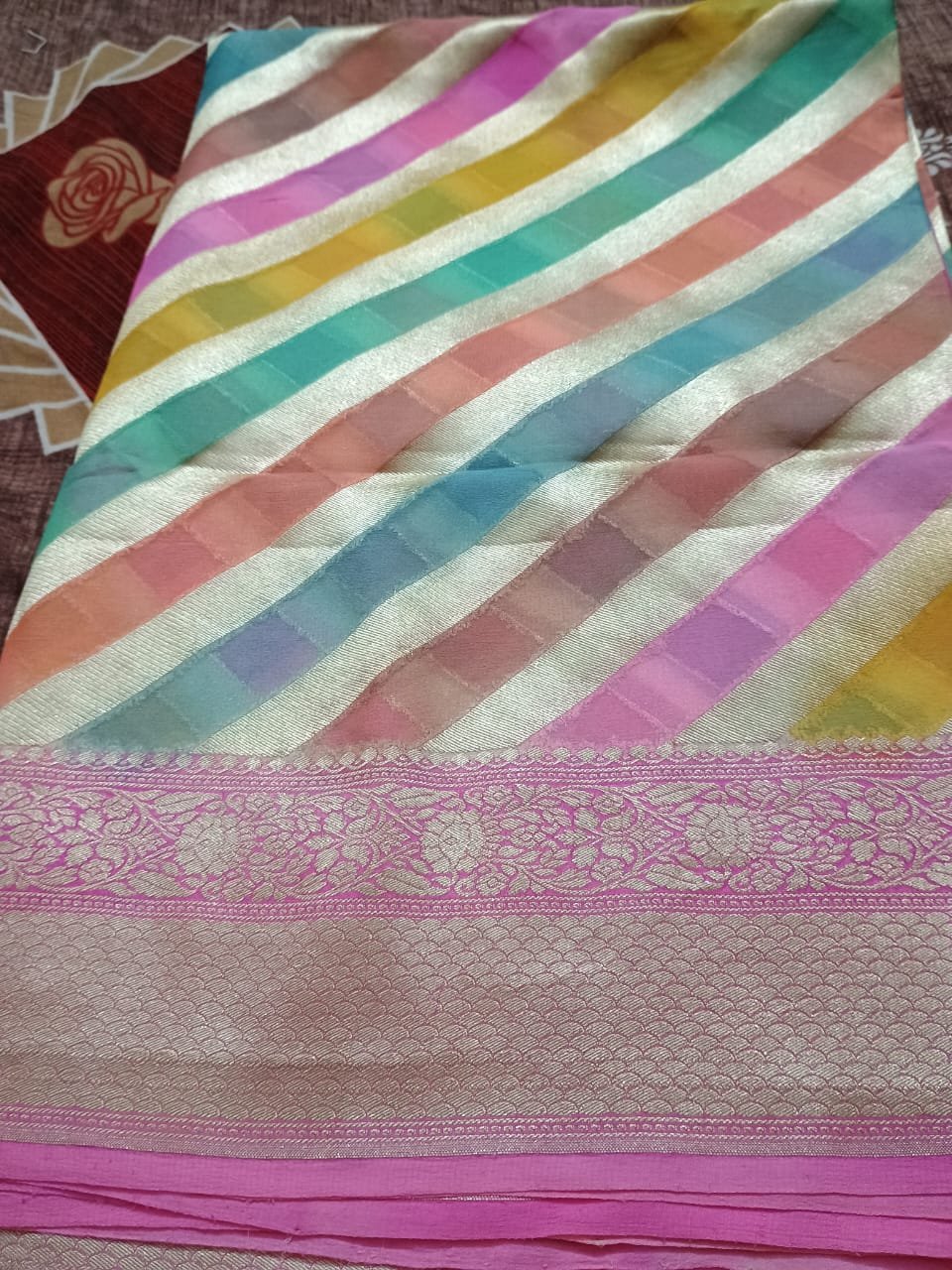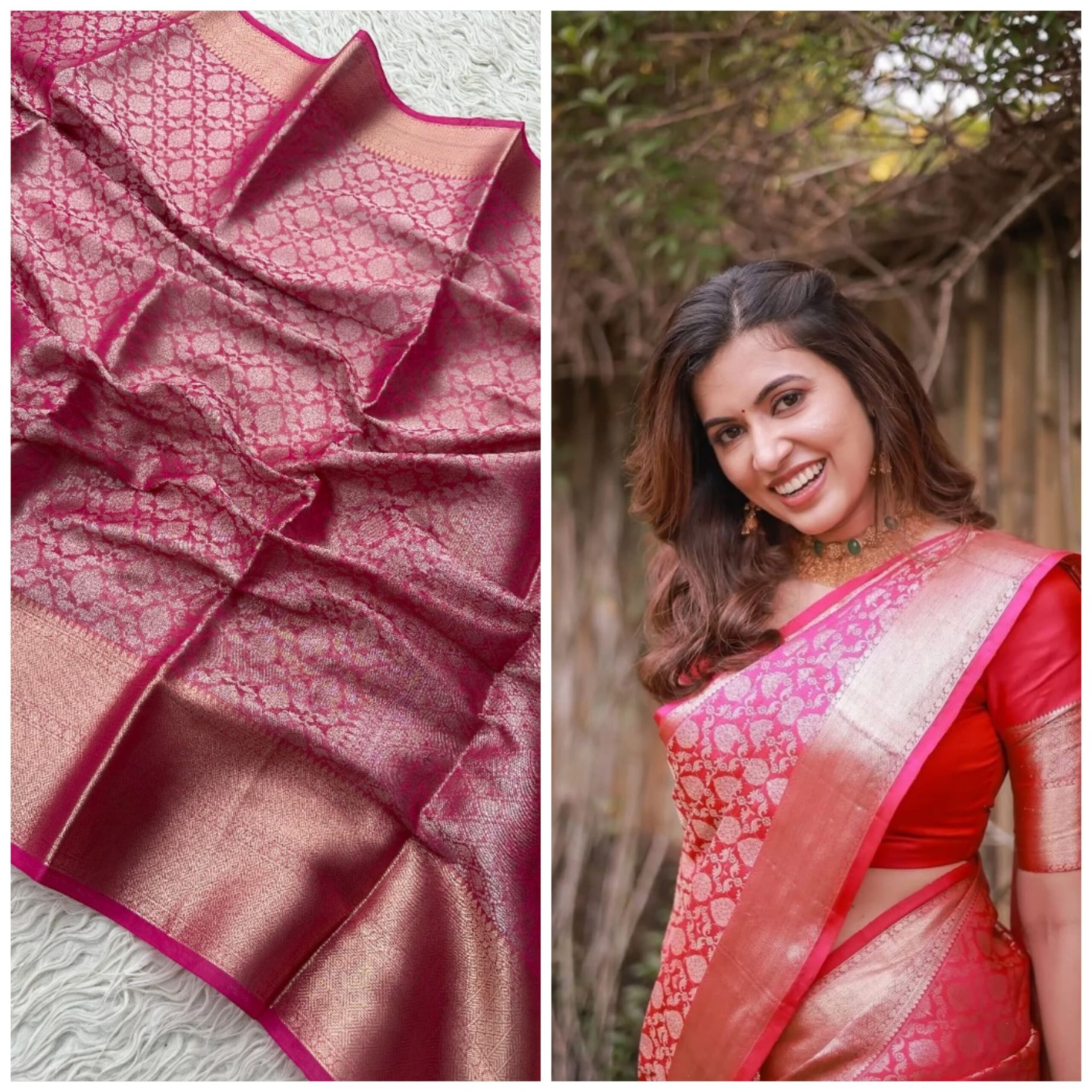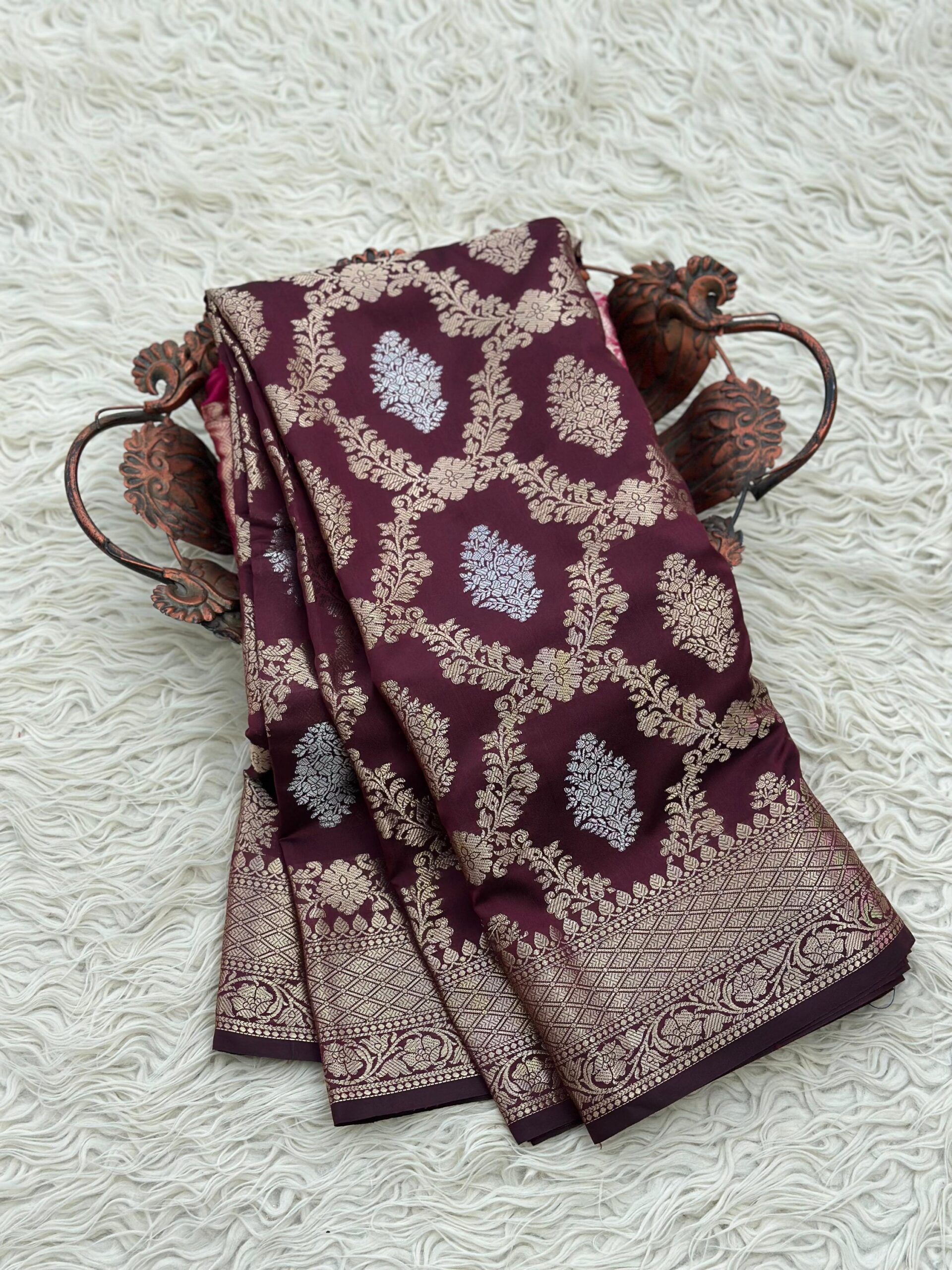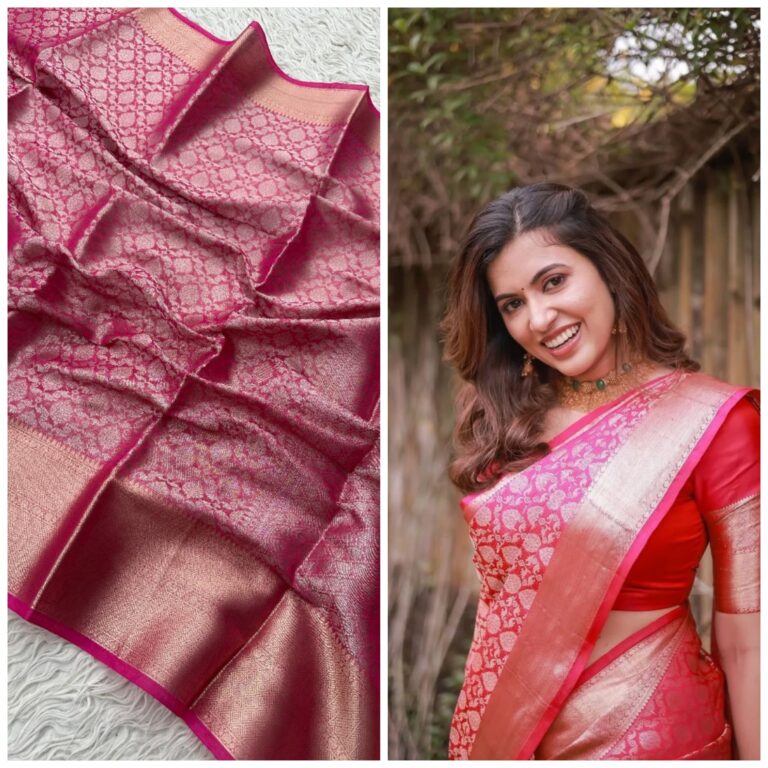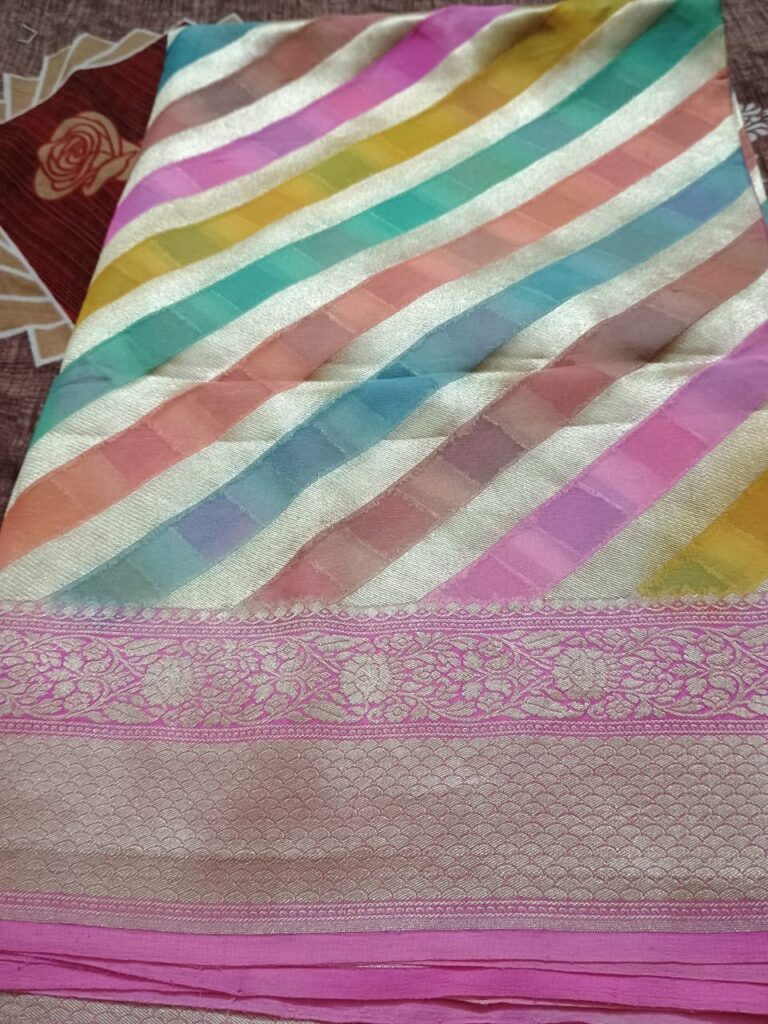
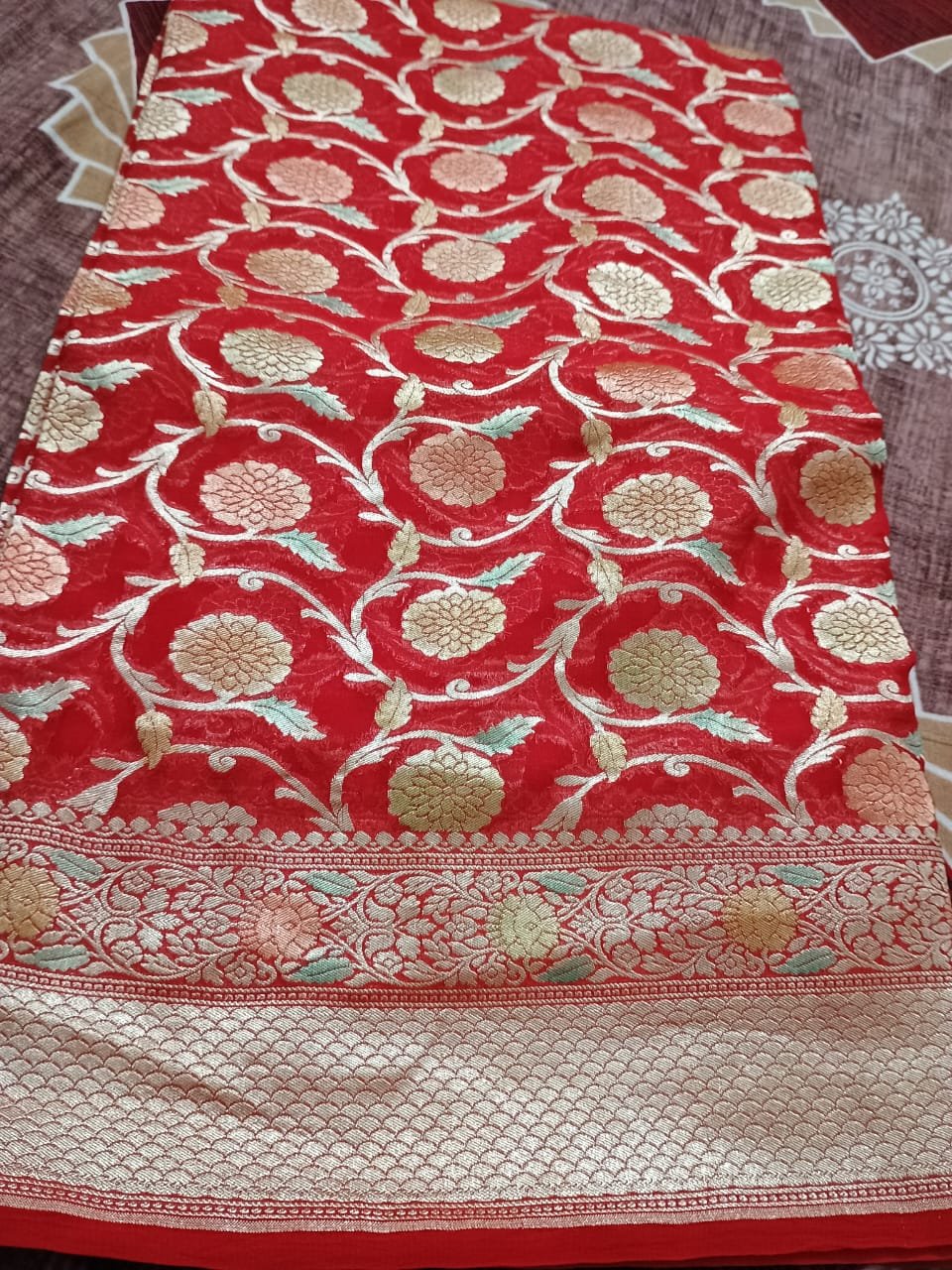
I am standing behind the counter at Nisa Silk Fab in Ahmedabad when a customer places a Banarasi-style saree on the table. The zari is heavy, the border thick, and the cloth carries its own weight. She smooths it with both hands and asks what blouse she should stitch with it.
I do not answer with a design first. I answer with the cloth. A saree with heavy zari pulls at the shoulder, the back, and the waist. The blouse is what keeps the drape from slipping or sagging. Stitch the wrong blouse and the pallu slides off the shoulder within minutes. Stitch the right one and the saree sits as though it was made for that body.
Over the years I have handled enough Banarasi-style sarees to know which cuts carry the weight and which fight it. For background on what makes a Banarasi weave different, see our guide here: How to Identify an Original Banarasi Saree: 9 Checks Before You Pay. For now, let us talk about the blouse.
The weight problem: why the blouse carries the saree
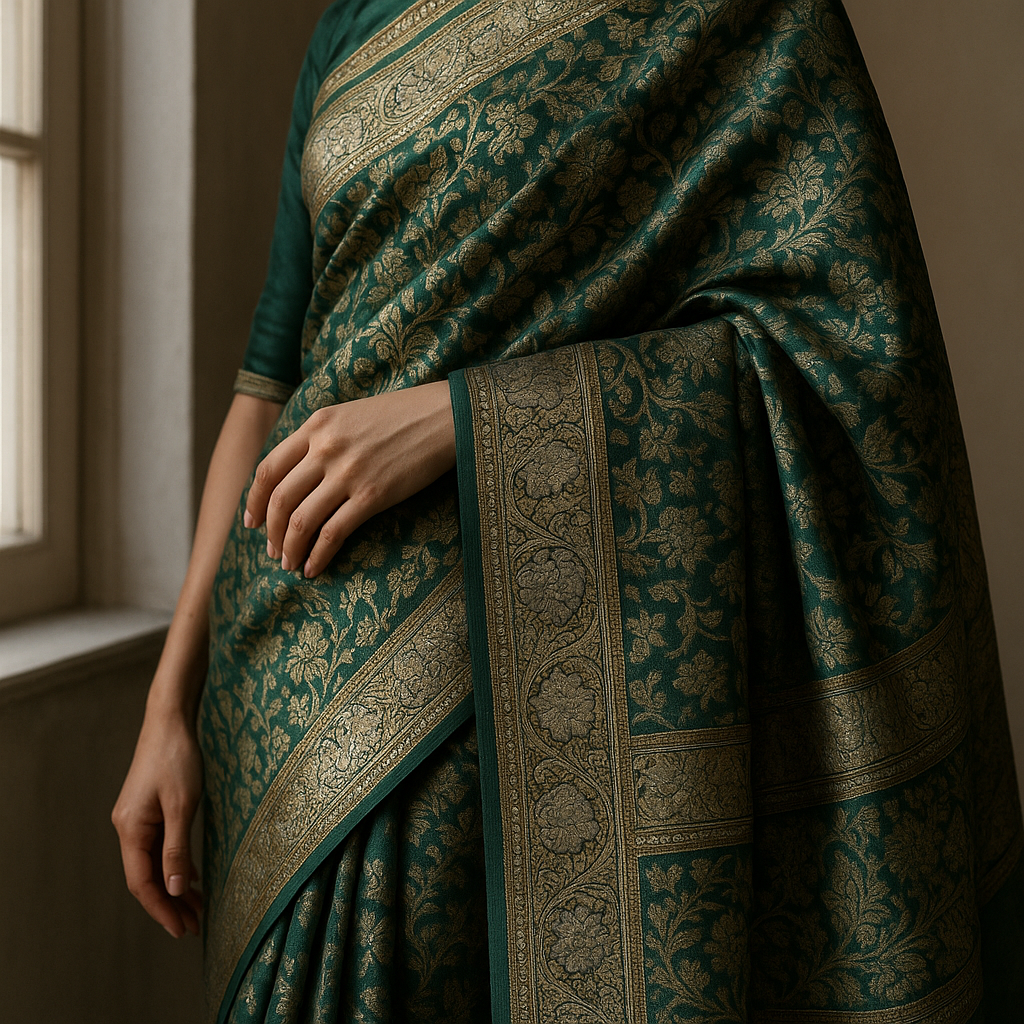
A heavy-zari Banarasi-style saree is not light cloth. The metallic threads add density, and the border adds a line of weight that wants to drag downward. The blouse is the only structured part of the drape. It anchors the saree at the shoulder and holds the pleats at the waist. If the blouse fabric is too soft or the cut too loose, the saree has nothing to rest on.
I have seen this happen in the shop. A customer brings in a saree with a thick zari border and pairs it with a thin, soft blouse. By the time she reaches the mirror, the border is slipping down her arm and the pleats are loosening at the waist. The blouse did not fail because it was ugly. It failed because it could not carry the load.
The shoulder seam matters most. On a heavy saree, it needs to sit flat and firm, and the back should not be cut so low that the weight of the pallu drags the saree off the shoulder. A well-cut blouse distributes the weight across the back and keeps the border where it belongs.
I have held a heavy-zari saree over my own shoulder to see how the border behaves. With a soft blouse underneath, the zari pulls the cloth down and the edge of the border slips toward the elbow. With a firm, well-cut blouse, the same border sits flat and the pallu stays put. That difference is not in the saree. It is in the blouse.
Necklines that work with a heavy border
The neckline is where the blouse meets the face and where the saree's border begins its journey across the body. With a heavy zari border, some necklines cooperate with the drape and others compete with it.
A boat neck is one of the safest choices. It runs horizontally across the collarbone and lets the border rest cleanly on the shoulder without fighting for attention. A square neck works similarly, giving the zari a clean frame and keeping the pallu from sliding. A modest V, not too deep, can lengthen the neck while still leaving enough fabric at the shoulder to carry the weight. For winter weddings, a high collar gives the blouse structure and keeps the saree close to the body.
Some necklines fight the pallu. A very deep V or a wide sweetheart neck removes too much support from the shoulder, and the heavy border tends to slip. An off-shoulder cut rarely stays put under zari. The pallu slides, the wearer keeps adjusting it, and the look falls apart.
Sleeve choices: length and the balance of weight
Sleeve length changes how a heavy saree feels on the body. Long sleeves add structure at the arm, which can help carry the weight of a thick border. Elbow sleeves are a good middle ground for most Banarasi-style sarees. They cover enough of the arm to give the shoulder support, but not so much that the blouse feels heavy in warm weather.
Three-quarter sleeves are my preference for evening wear. They end below the elbow and leave the wrist free, which keeps the silhouette balanced when the saree is heavily worked. Sleeveless blouses work for summer weddings, but only if the shoulder seam is firm. Without any sleeve to hold the fabric, the zari border has nothing to rest on, and it can slide down the arm.
I avoid cap sleeves on heavy zari sarees. They cut across the shoulder in a way that interrupts the drape, and the border often bunches up just above the sleeve line. If the customer wants sleeveless, I suggest a wide shoulder strap or a structured armhole so the weight does not rest on a narrow point.
Fabrics that hold: what to stitch the blouse in
Not every blouse fabric can carry a heavy-zari saree. The blouse needs body, or the saree will sag at the waist and pull at the shoulder.
Raw silk is one of the strongest options. It has a natural stiffness that supports the drape without looking rigid. Brocade works well when the customer wants the blouse to echo the saree's texture, though it can be heavy in summer. Cotton-silk is a practical middle ground. It is cooler in summer than brocade, yet it holds a shape better than a thin cotton or georgette.
A flimsy blouse fabric fails under a heavy drape because it has no spine. Thin georgette, soft chiffon, or a loosely woven cotton will stretch under the weight of the zari. After an hour or two, the shoulder seam starts to sag and the border slips. I have handled sarees where the blouse looked fine in the mirror but had lost its shape by the end of the event.
If you are unsure how a Banarasi-style saree compares to a lighter weave such as Chanderi, our comparison guide explains the difference in weight and drape: Banarasi vs Chanderi: Which Silk Suits a Wedding Guest?.
Matching versus contrast: taking a tone from the border
A blouse can either match the saree or contrast with it. Both work, but they serve different purposes.
Matching means picking a blouse in the same colour family as the saree or its border. This creates a continuous line and lets the zari dominate. It is a safe choice for a first-time wearer or for a function where the saree should be the focus. I often suggest matching when the border is particularly wide or ornate, because a contrasting blouse can break the line and make the drape look shorter.
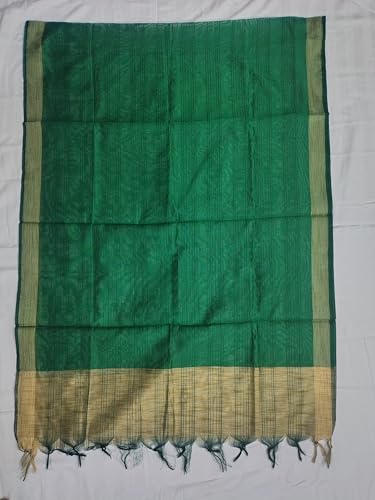
Contrast means choosing a colour that stands out from the saree. A deep maroon blouse with a cream Banarasi-style saree, or a bottle-green blouse with a gold border, can highlight the face. Contrast works best when the saree's body is relatively plain and the border provides the colour. The risk is competition. If both the blouse and the border are bold, they fight for attention and the drape looks busy.
My rule is to take one tone from the border and use it in the blouse, either as the main colour or in the piping. This links the two pieces without making them identical. The blouse should support the saree, not argue with it.
The blouse piece that comes with the saree
Many Banarasi-style sarees come with a blouse piece attached to the fall. It is meant to be stitched into a blouse, and it is usually in a colour that coordinates with the saree.
Use the blouse piece when you want a quick, harmonious look and when the fabric is substantial enough to carry the drape. It is convenient, and it guarantees that the colour will not clash.
Choose something else when the blouse piece is too thin for a heavy-zari saree, or when you want a different neckline or sleeve than the piece suggests. There is no rule that says you must use it. I have stitched blouses in contrasting brocade or cotton-silk because the saree needed more support than the piece could offer.
Think of the blouse piece as a starting point, not a requirement. If it holds the weight, use it. If it does not, set it aside and choose a fabric that will.
What to avoid with a heavy-zari saree
Some combinations look good on a hanger but fail on the body.
Sheer net is one. Net has no body, and under the weight of a thick zari border it stretches and tears. The pallu slides, the shoulder seam widens, and the saree loses its shape within an hour. Net works with light sarees, not with heavy Banarasi-style weaves.
A blouse cut too tight is another mistake. Tightness might seem like it would hold the saree in place, but it does the opposite. A tight blouse has no ease, so when the customer moves, the saree pulls at the seams and the border rides up. The blouse should be snug but not restrictive, with enough room at the back and shoulder to let the drape settle.
Sequins fight zari. Both catch the light, and when they sit side by side they create visual noise rather than sparkle. If the saree is heavily worked in zari, keep the blouse plain or minimally detailed. Let the zari be the light-catching element.
I also avoid heavy embroidery on the blouse sleeve when the saree border is broad. The two textures compete, and the sleeve often looks cluttered next to the saree.
Three combinations for three occasions
Here are three pairings I have seen work well in the shop.
For a day wedding: a cream or ivory Banarasi-style saree with a gold zari border, paired with a boat-neck blouse in raw silk in the same cream shade. Three-quarter sleeves keep it formal without being heavy. The look is clean, and the blouse carries the border without competing with it.
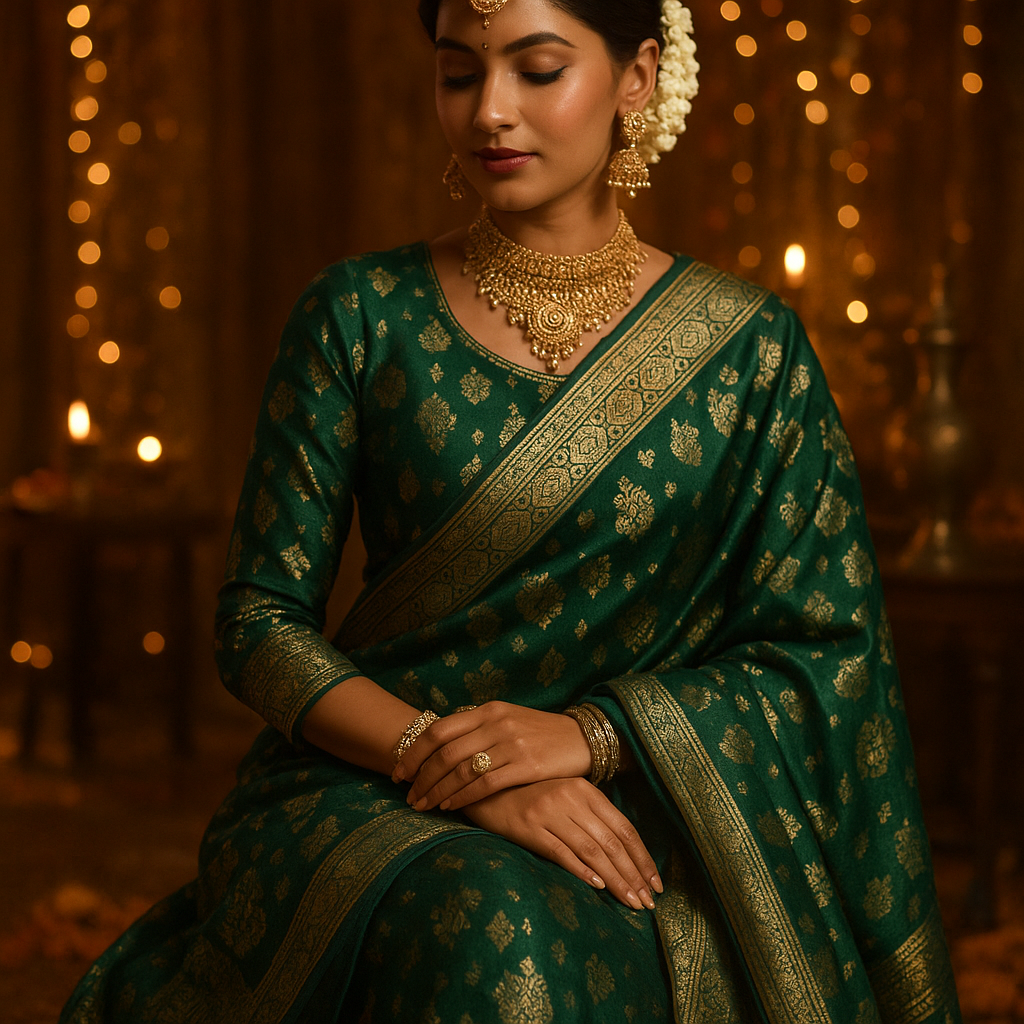
For an evening reception: a deep-coloured saree, say maroon or bottle green, with a heavy gold border, paired with a square-neck blouse in a contrasting gold or bronze brocade. Elbow sleeves add structure, and the contrast blouse picks up the tone of the border so the two pieces feel connected.
For a close family member at a wedding: a lighter saree, perhaps peach or pistachio, with a narrow zari border, paired with a modest V-neck blouse in cotton-silk in a shade slightly deeper than the saree. Sleeveless works here if the event is in summer, provided the shoulder seam is firm.
These are starting points, not rules. The right combination depends on the saree in your hand and the event you are attending.
FAQ
Can I wear a sleeveless blouse with a heavy-zari Banarasi-style saree?
Yes, but only if the shoulder seam is firm and wide enough to carry the weight. Without sleeve support, the zari border can slide down the arm. I recommend a structured armhole for sleeveless blouses with heavy sarees.
Should the blouse match the saree border?
Not always. Matching creates a continuous line and lets the zari lead. Contrast works when you want to highlight the face, as long as the blouse does not compete with the border. Taking one tone from the border for the blouse is a safe middle path.
Can I use the blouse piece that comes with the saree?
You can, if the fabric is strong enough to hold a heavy drape. If the piece is too thin or soft, it will not carry the zari and the saree will sag. In that case, choose a firmer fabric such as raw silk or cotton-silk.
Which neckline should I avoid with a heavy border?
Avoid very deep necklines and off-shoulder cuts. They remove support from the shoulder, and the heavy pallu tends to slip. Boat neck, square neck, and modest V-neck are safer choices.
How should I store a Banarasi-style saree after wearing it?
Fold it with muslin or cotton cloth and keep it in a cool, dry place. Avoid hanging it for long periods, as the weight of the zari can stretch the fabric. For more detail, see our wash and store guide: How to Wash and Store a Banarasi Saree So It Lasts for Decades.
Closing
The right blouse is the difference between wearing a Banarasi-style saree and carrying it. When the blouse holds the weight, the drape sits where it should and the border rests on the shoulder instead of sliding down the arm. When it does not, no amount of adjusting will make the saree look comfortable.
At Nisa Silk Fab in Ahmedabad, we stock Banarasi-style sarees and help customers choose blouses that suit the cloth and the occasion. You can browse the collection here: Banarasi sarees.
Standard delivery within India takes 7–14 business days. Shipping is a flat ₹100 across India. All sales are final, and we do not accept returns.
You can reach us at +91 9825985765 or +91 9978985765, or write to [email protected]. We are based in Ahmedabad.