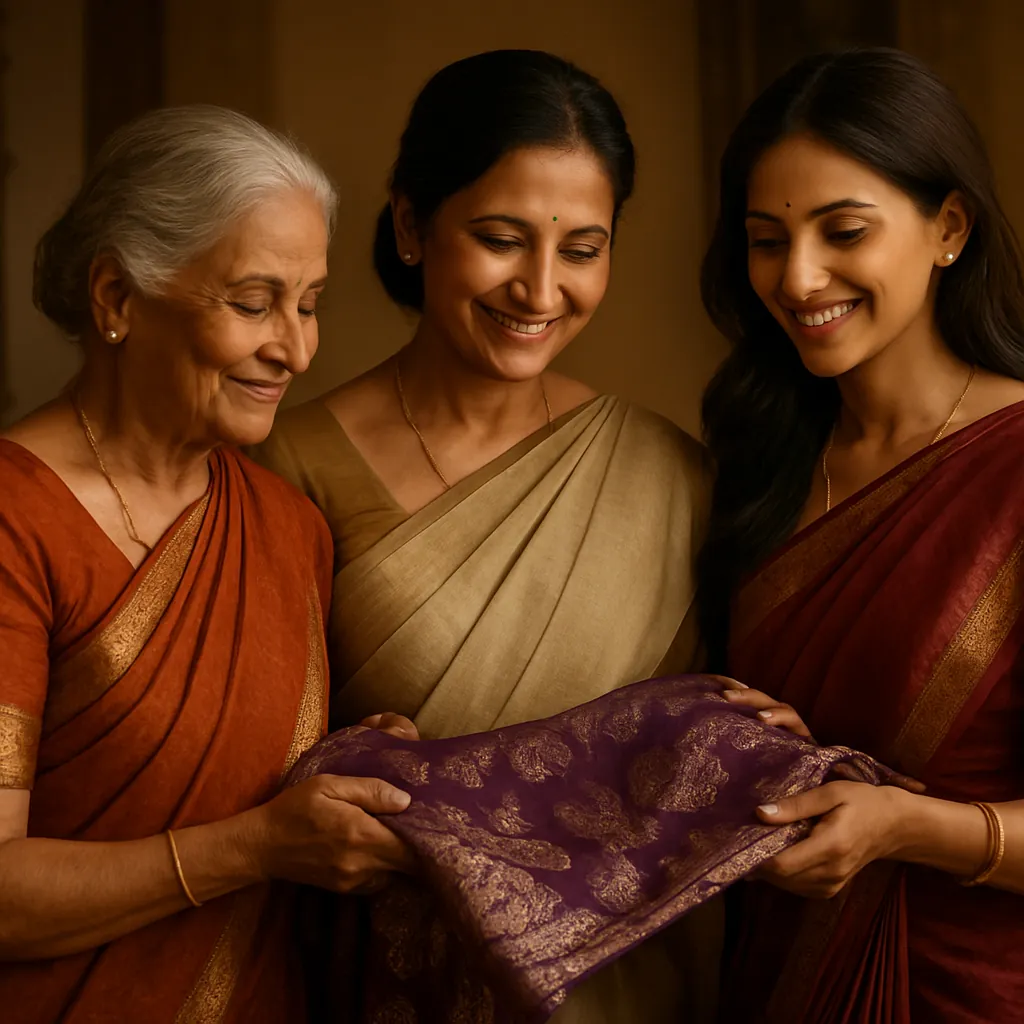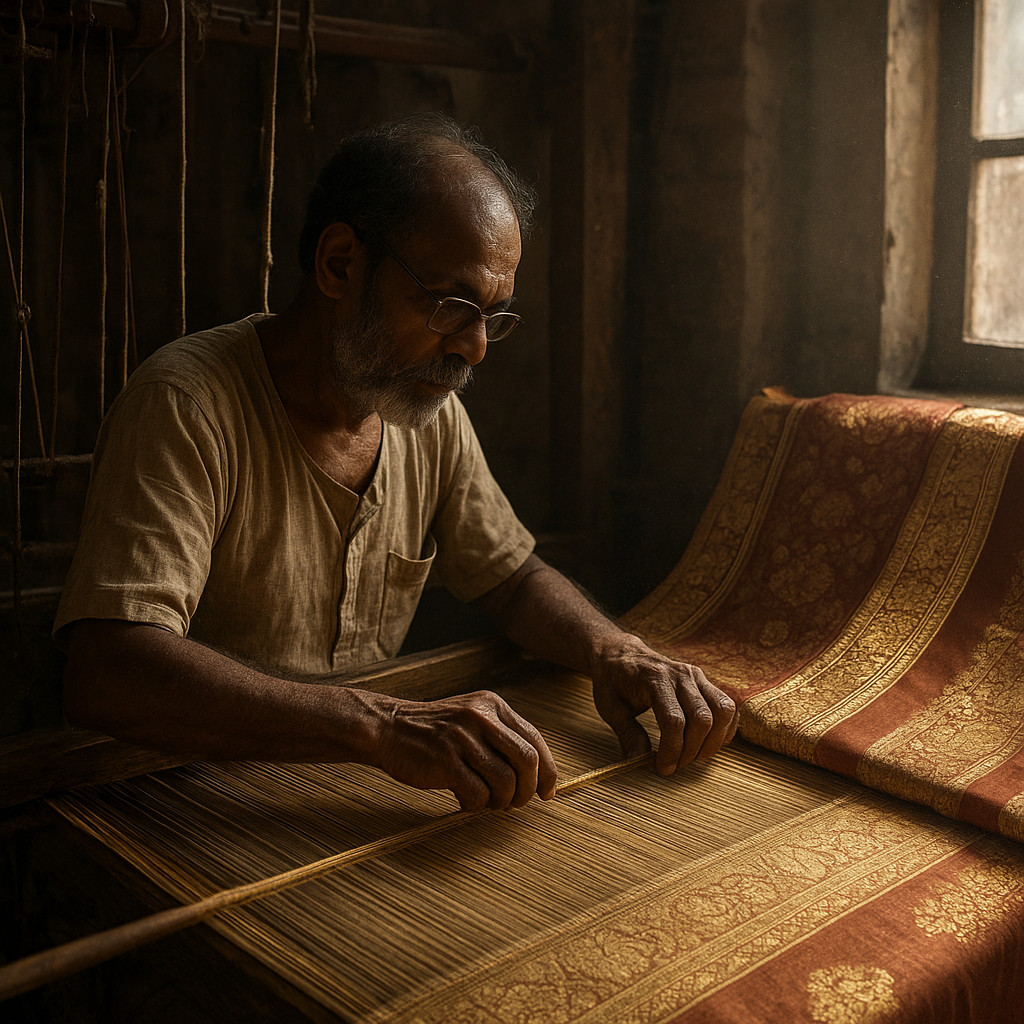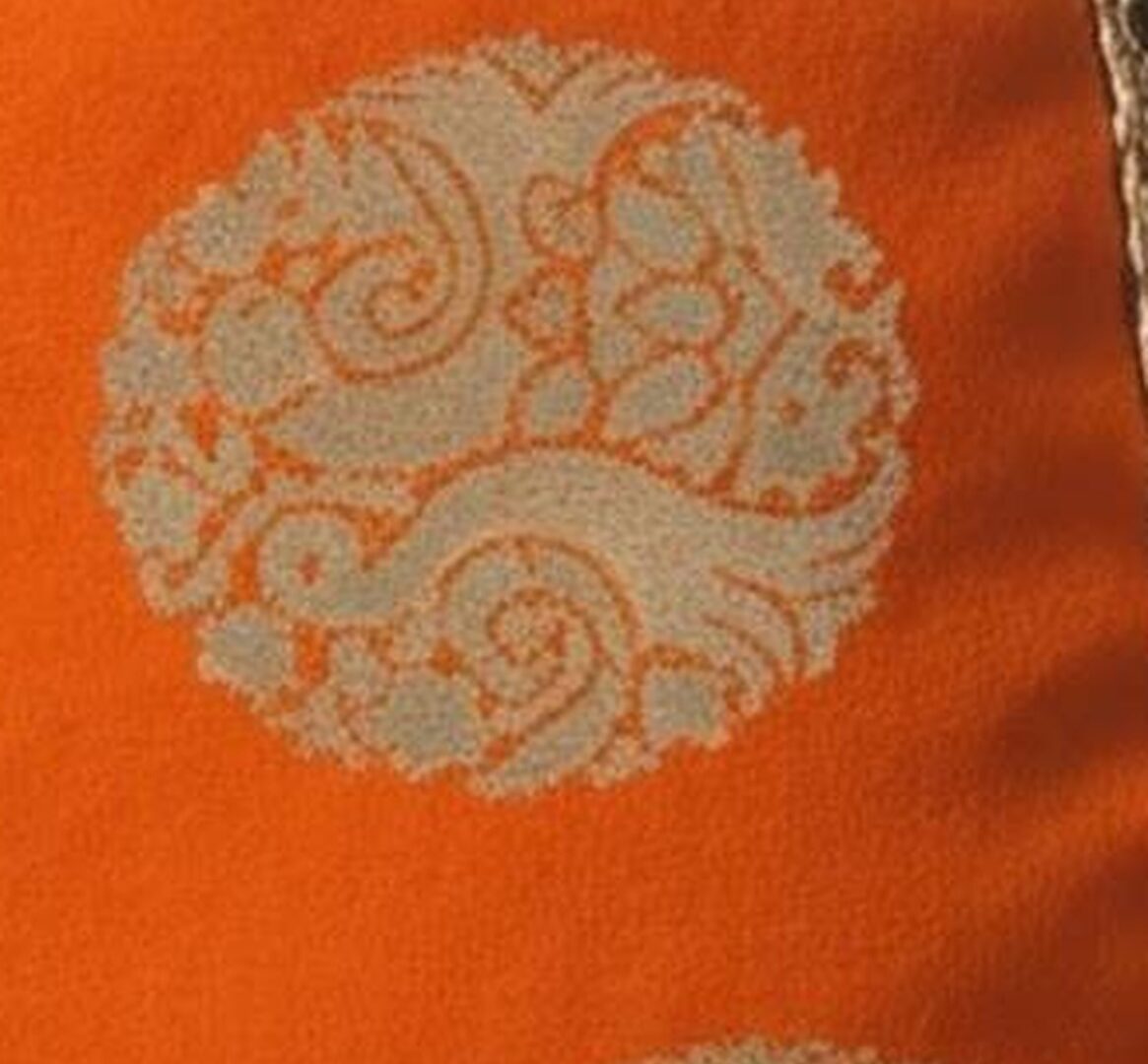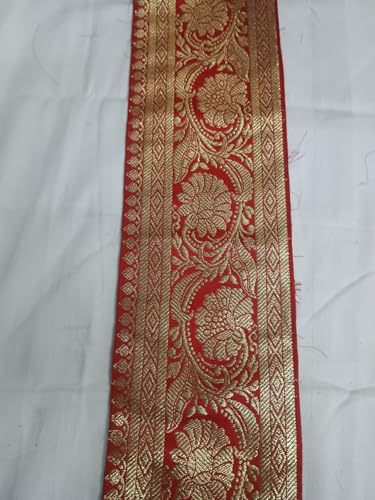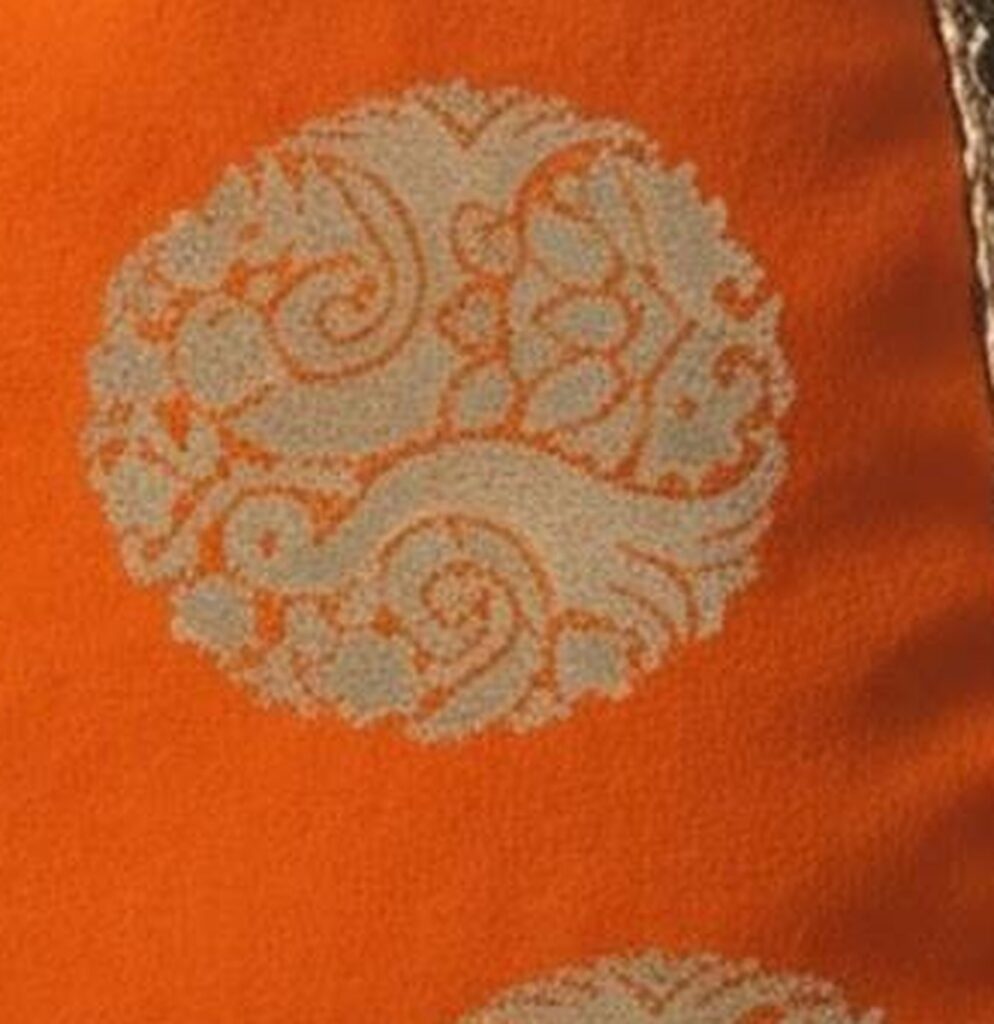
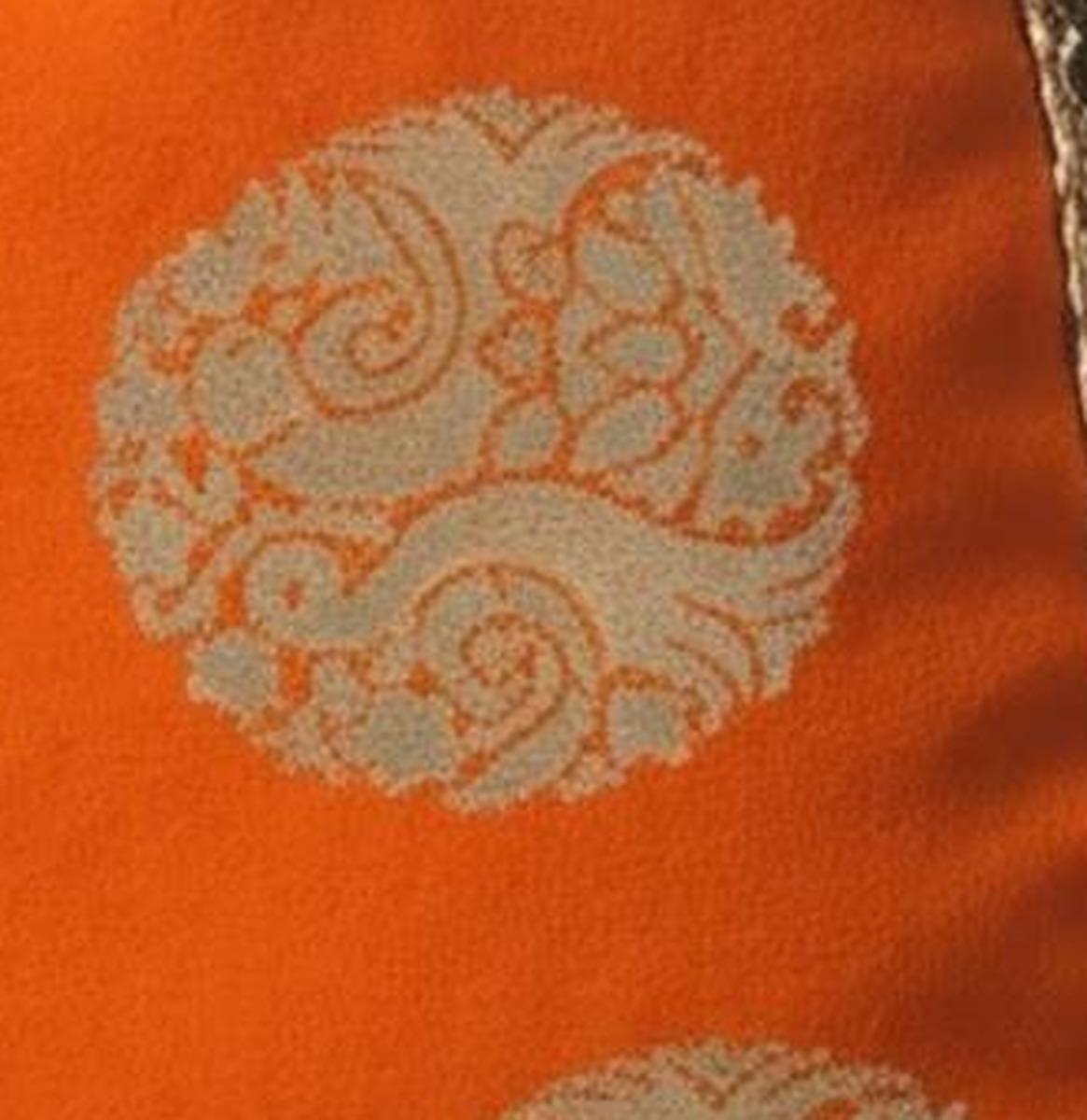
This month, a woman in Behala, Kolkata ordered a potli bag from us for a December wedding. Not a saree. Not a lehenga. A potli — orange jacquard, woven all over with large gold roundel medallions, edged in gold lattice braid, its handle strung with gold beads. Of everything she could have added to her wedding list, she chose the smallest thing on it.
I understood the order immediately. A Kolkata wedding is a long day built of small, necessary moments. The conch sounds, the bangles go on, the saree is pinned and re-pinned — and through all of it, a woman needs somewhere to keep her phone, her lipstick, a few safety pins, a little money folded small. A clutch looks borrowed from another occasion. A potli belongs. It hangs from the wrist, it softens against the pleats, and it carries the same design language as the saree itself.
This is the season I have spent thinking about how a potli works at a Bengal wedding — for the bride, for her sisters and friends standing beside her, and for the guest who has four functions to attend and one bag to do it with.
First, the Saree Decides
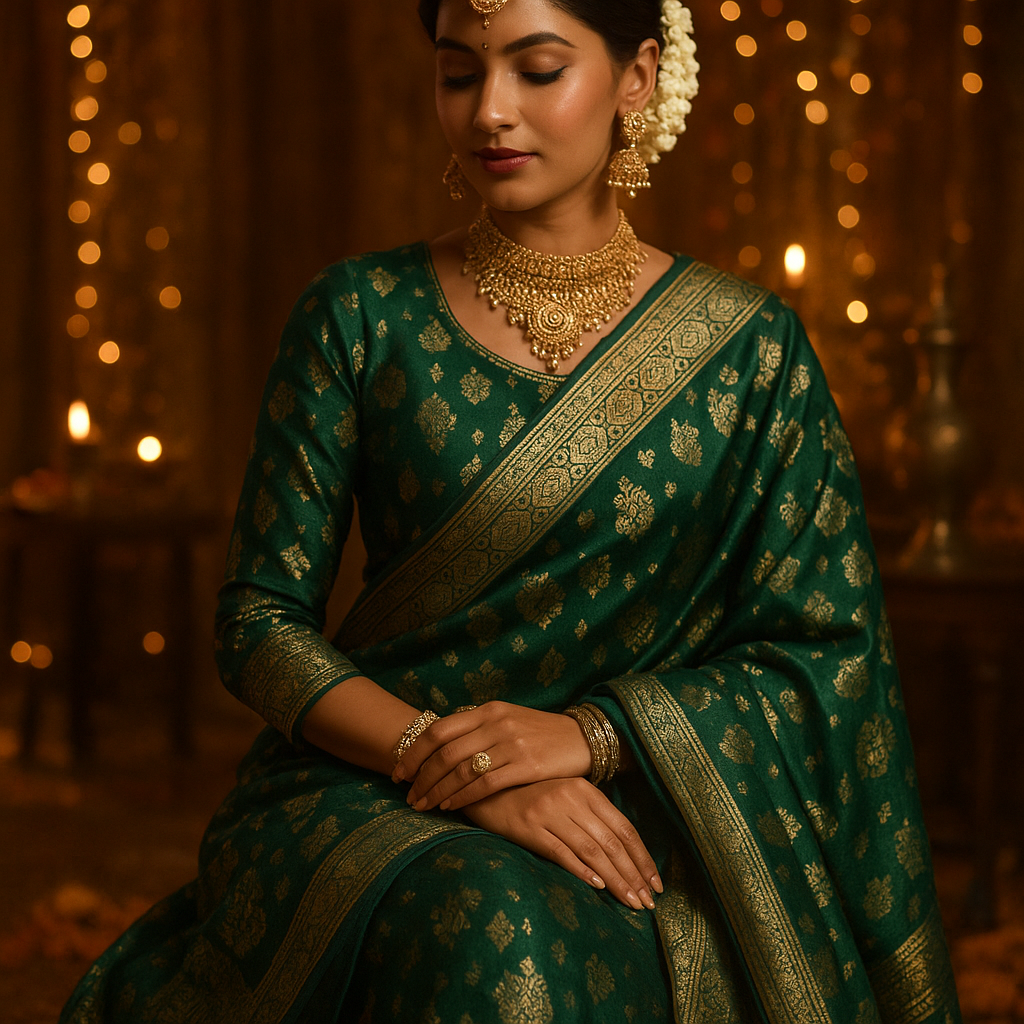
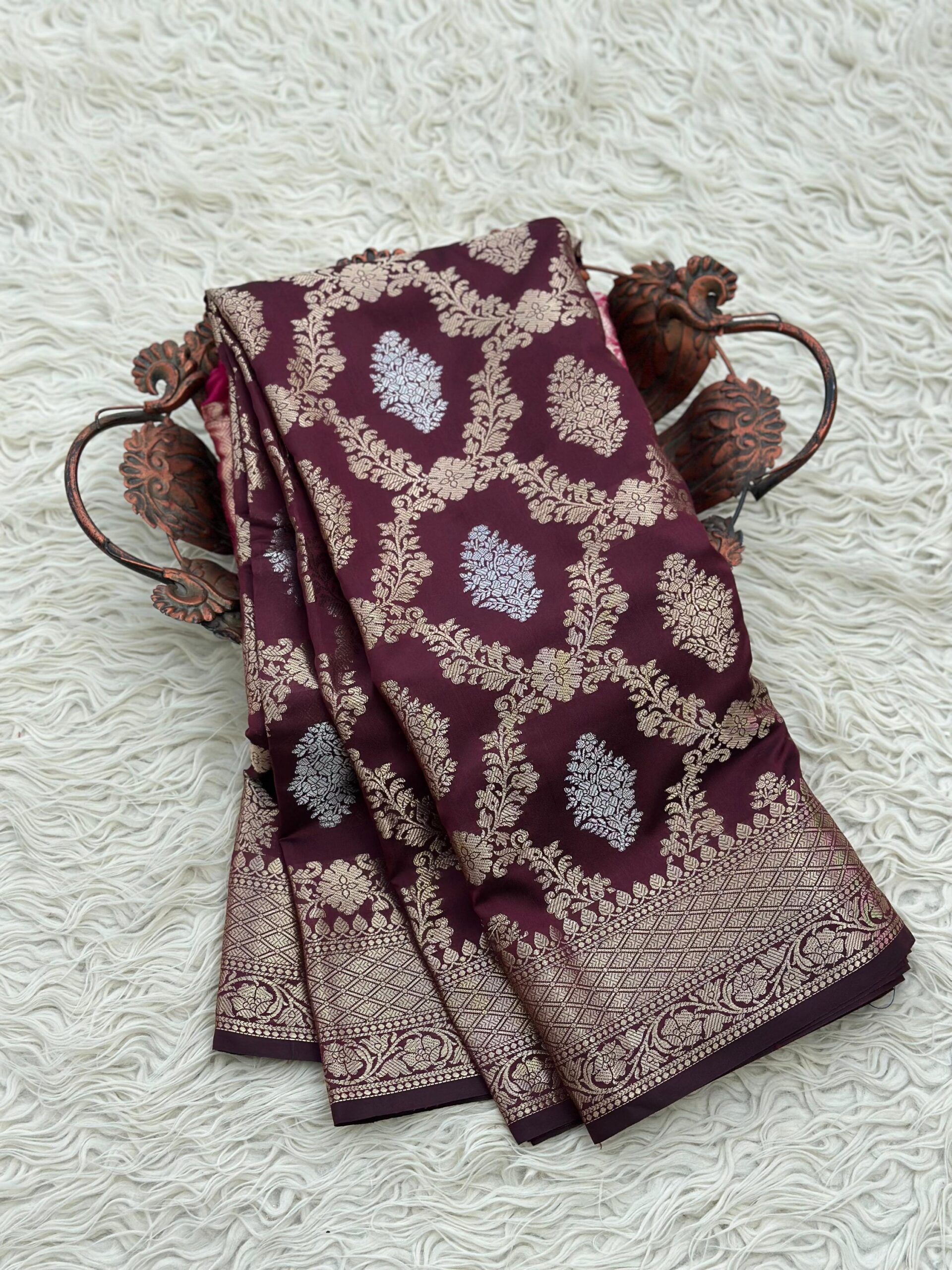
A bride in Kolkata chooses her saree first, and everything else follows. A red benarasi heavy with gold work, a deep maroon weave, a white saree with its red laal-paar border — the saree sets the register of the day, and the potli answers it.
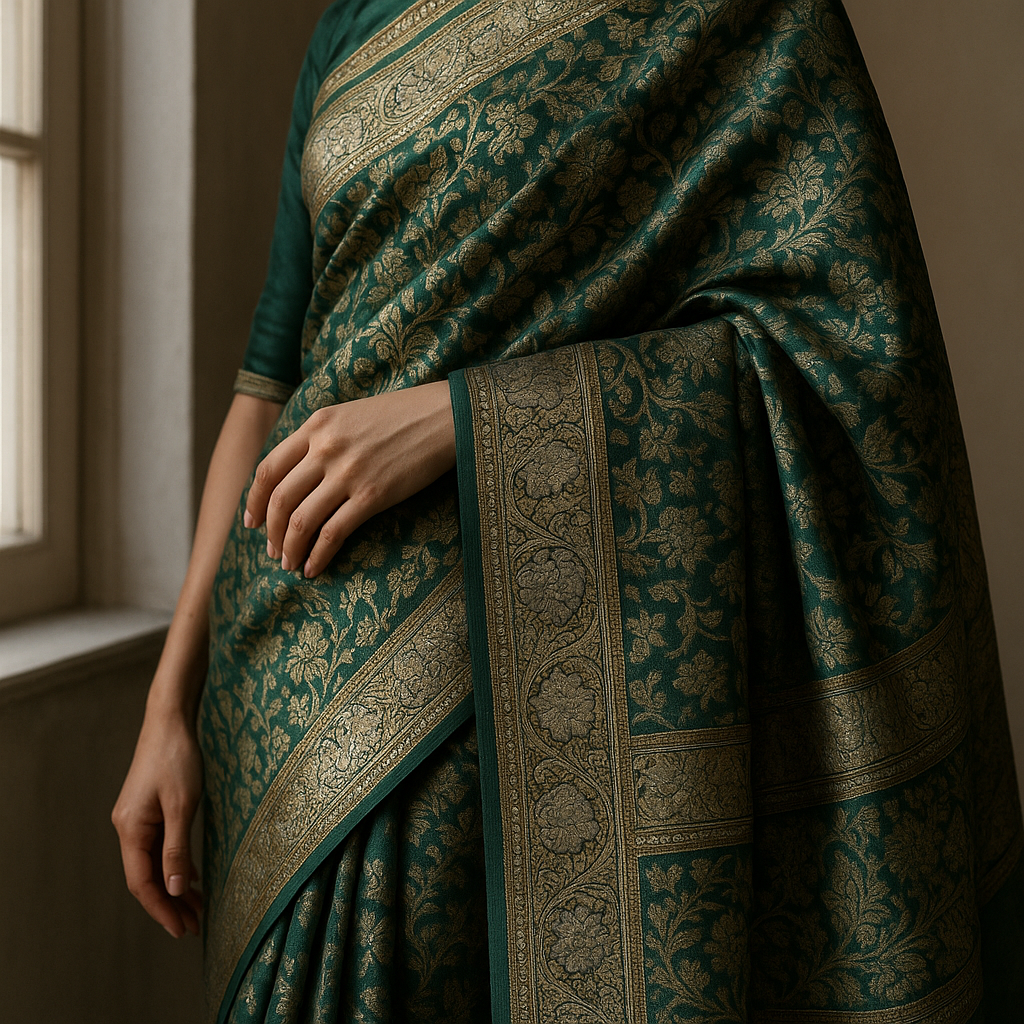
If the saree border is already elaborate, the potli should speak more quietly: a smooth brocade, a single woven band, gold that echoes the zari without trying to outshine it. If the saree is plain — and many Bengal sarees are beautifully plain, all body and no border to speak of — then the potli can carry the ornament: embroidery, sequins, braid, tassels. The rule I give every customer is simple. One of the two should lead. The other should accompany.
For the bride herself, the potli is a between-ceremonies object. It holds the compact for a touch-up before the biye, the small bottle of attar, the pins. It does not need to match the saree thread for thread. It needs to sit well in the hand and close cleanly over what is inside.
Bridesmaids have a different brief: coordinate, do not duplicate. One sister carries maroon, another beige, a third gold — the same family of colour, three different surfaces. In photographs, that reads as considered. Identical bags read as a uniform.
The Designs on Our Table
Our potli pouches are about ten by nine inches — large enough for the day's essentials, small enough to disappear against a drape. Within that one size, the designs divide by surface.
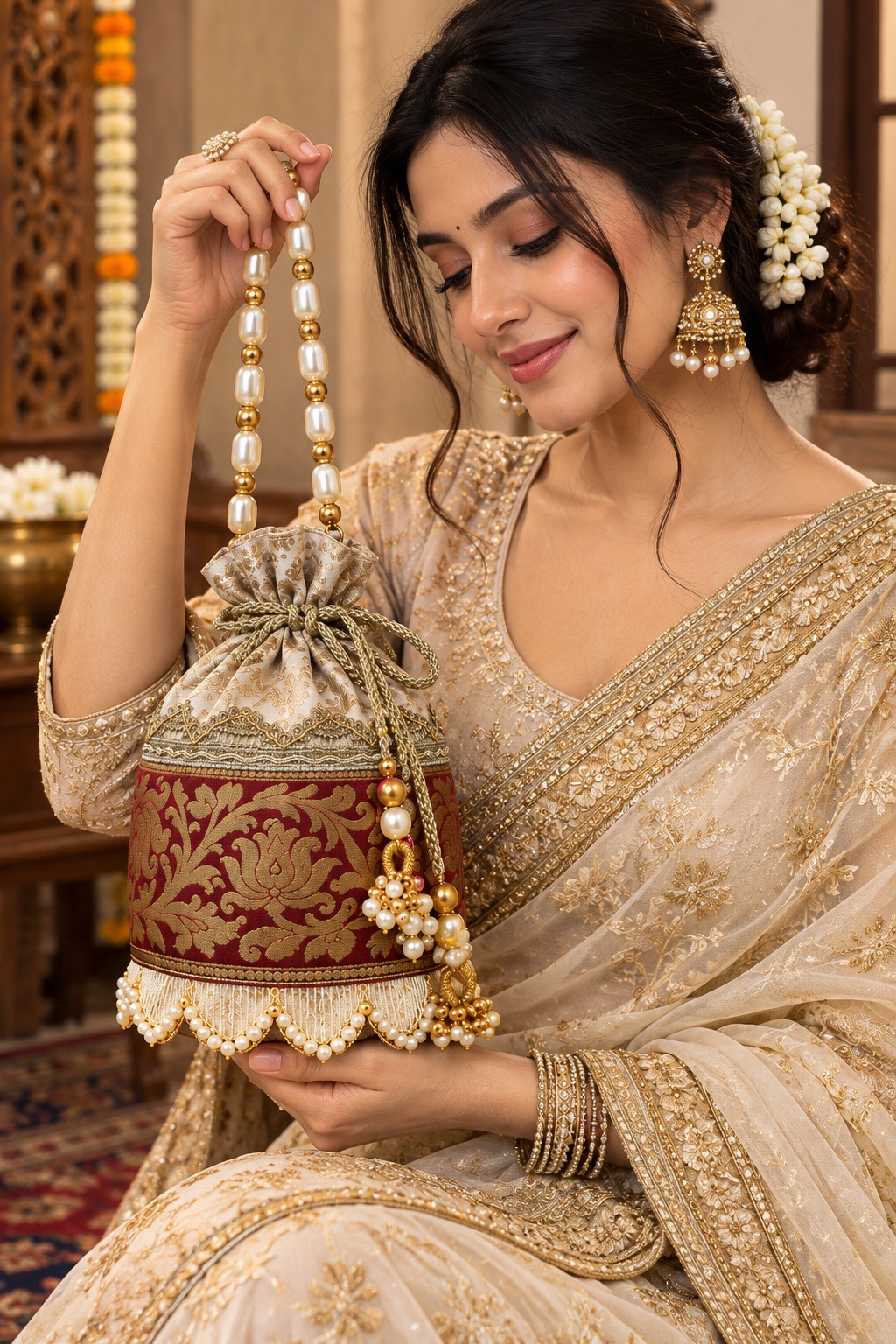
Brocade and matka. The Maroon Lorex Matka Potli is woven with a gold floral brocade on a deep maroon ground, finished with a cream upper yoke, a scalloped trim, a braided drawstring and pearl tassels at its base. It is the most traditional shape we make — the rounded matka, gathered at the neck. Beside it sits the gold silk matka, its woven floral band and braided trim catching light every time the hand moves. These are the potlis for the main ceremony, for the saree with the heavy border, for the evening.
Jacquard. The Orange Jacquard Silk Potli Bag that went to Behala is woven rather than surface-decorated: the roundel medallions are in the cloth itself, large and confident, and the gold lattice braid at the edge frames them. Its lined interior fits a phone and a wallet. Jacquard carries colour boldly — orange against a cream or deep green saree is a deliberate, joyful contrast, very much in the spirit of a Bengal winter wedding.
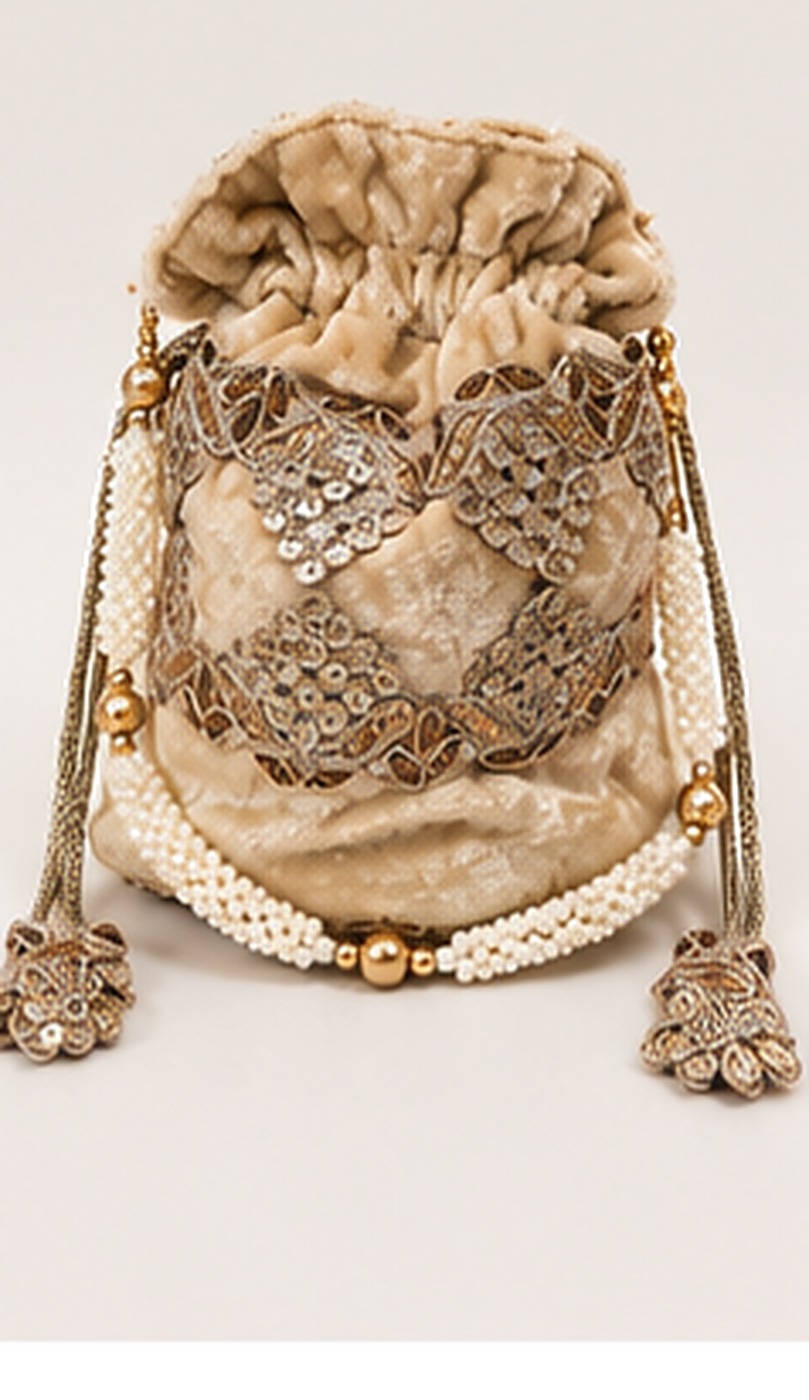
Velvet. The beige velvet matka potli is embroidered with gold thread and finished with a pearl-beaded handle; at roughly 24 × 13 × 25 cm it is our most generous shape, lined to fit a phone, wallet and keys. Velvet drinks the light instead of reflecting it, which makes it the calmest partner for a very bright saree — and the kindest texture for a mother of the bride who wants richness without glitter.
Embroidery. The grey-beige silk-blend potli is covered in a cream floral vine embroidery with sequin flowers, framed by a red-and-green scalloped ribbon border. The rani pink embroidered potli carries all-over gold buti work with a beaded handle and cone tassels. Embroidery sits between brocade and plain — it has texture at conversational distance and softness in the hand.
You can see the full range in our potli bags and pouches collection.
Colour, the Bengal Way
The November-to-February palette in Bengal is one of the great colour stories of Indian weddings: the white and red of laal-paar, sindoor red, maroon, rani pink, gold, ivory, bottle green. Choosing a potli colour is mostly a matter of deciding where you want the eye to rest.
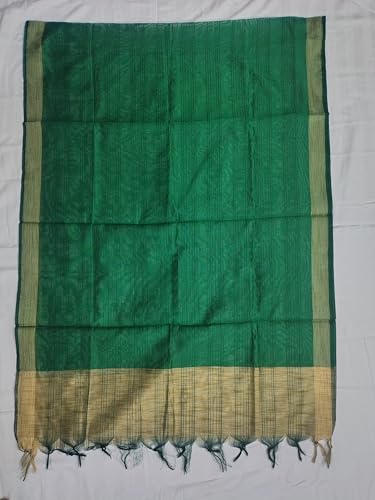
Against a white-and-red saree, choose gold or ivory. Gold picks up the warmth of the border without echoing the red too literally, and it will serve you again at every function after. Against maroon, you can go tonal — the maroon matka disappears into the drape in the most elegant way — or lift it with beige velvet, which lightens the whole shoulder line.
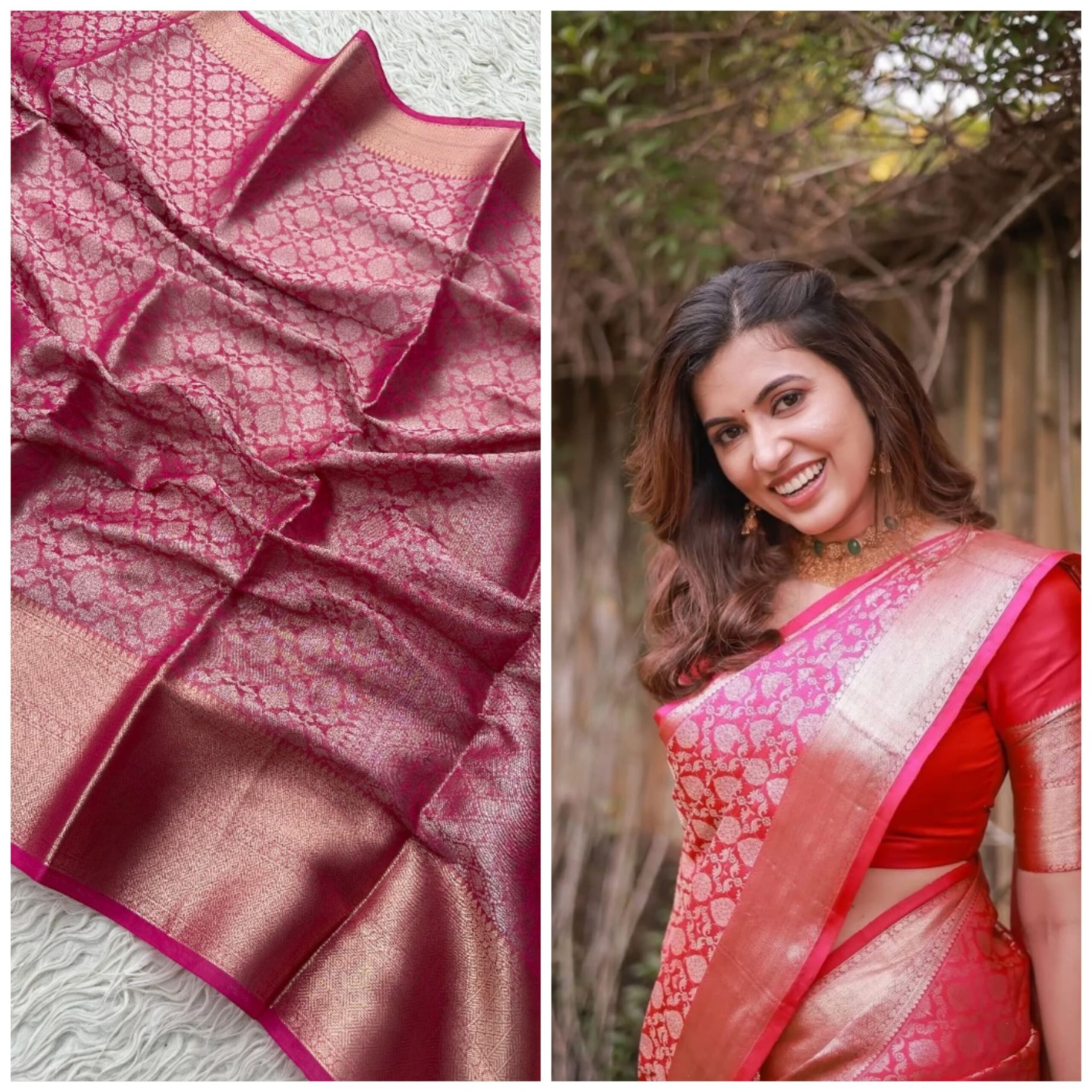
Rani pink asks for confidence. The rani pink brocade potli, with its bold gold floral vine and cone tassels, is tonal harmony if your saree is rani too; against ivory or bottle green it becomes the single bright note of the outfit, and that is often exactly right for a reception. Magenta, like our patola-style potli with its gold woven motifs and golden tassels, belongs to the same fearless family.
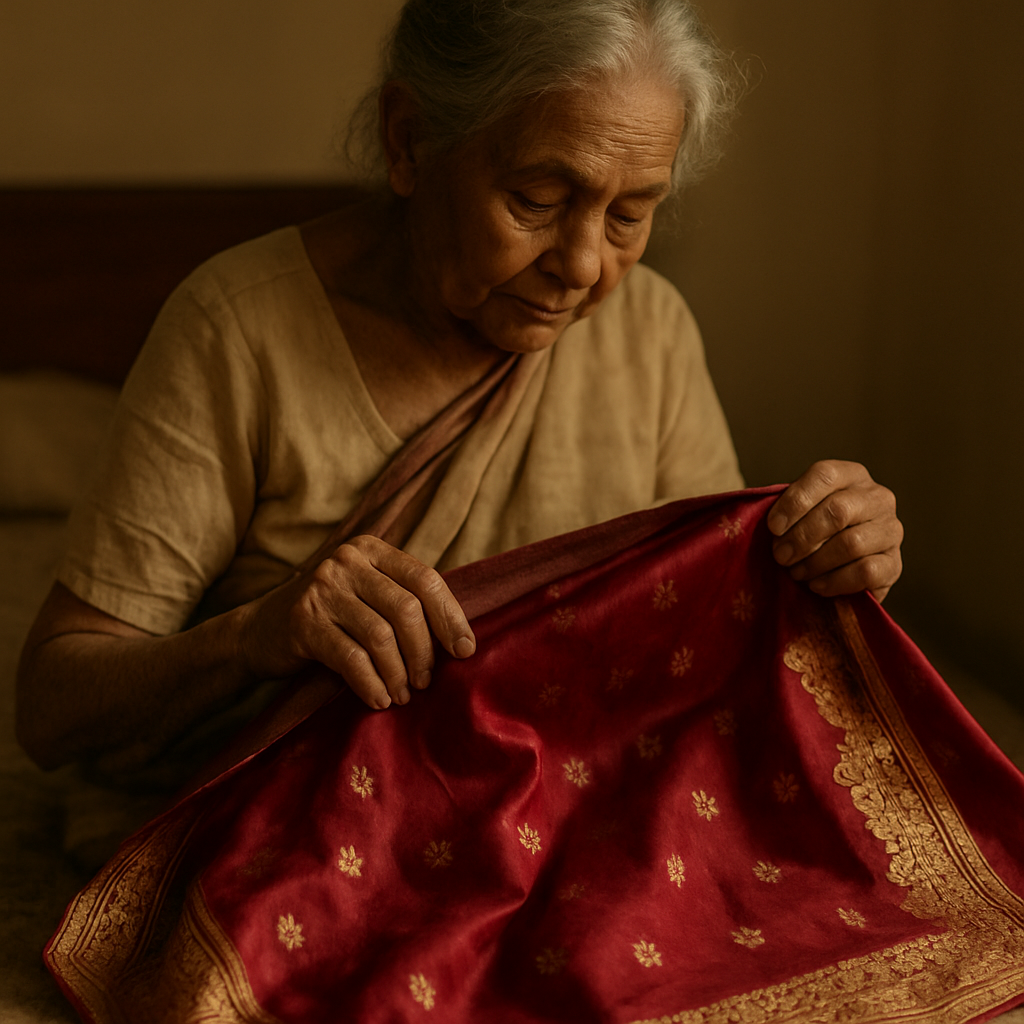
And when the saree is the heirloom — your mother's, with its own colours settled by decades — let the potli be neutral. Beige, grey-beige, gold. The saree has already made its statement.
What Fits Inside
A wedding potli is not a handbag, and treating it like one is the only real mistake I see. Ours is a ten-by-nine-inch pouch. Into it goes: a phone, a small wallet or a fold of cash, keys, a lipstick, a compact, blotting tissues, two safety pins, a small attar bottle. That is the list. Everything on it has a job during a ten-hour day.
What stays out matters as much. A full-size wallet, a foundation bottle, a power bank with its cable — these stretch the lining, strain the drawstring, and turn an elegant gather into a bulge. Keep a larger bag with a relative or in the car for the heavy things. The potli is for what must stay on your person.
A note on closures: a drawstring closes cleanly only when the bag is not overfilled. If you are forcing the neck shut, something has to come out. Choose the lipstick over the second compact. You will not miss it.
Choosing in Order: Fabric, Colour, Handle, Size
When customers write to me unsure between three designs, I walk them through the same order I use myself.
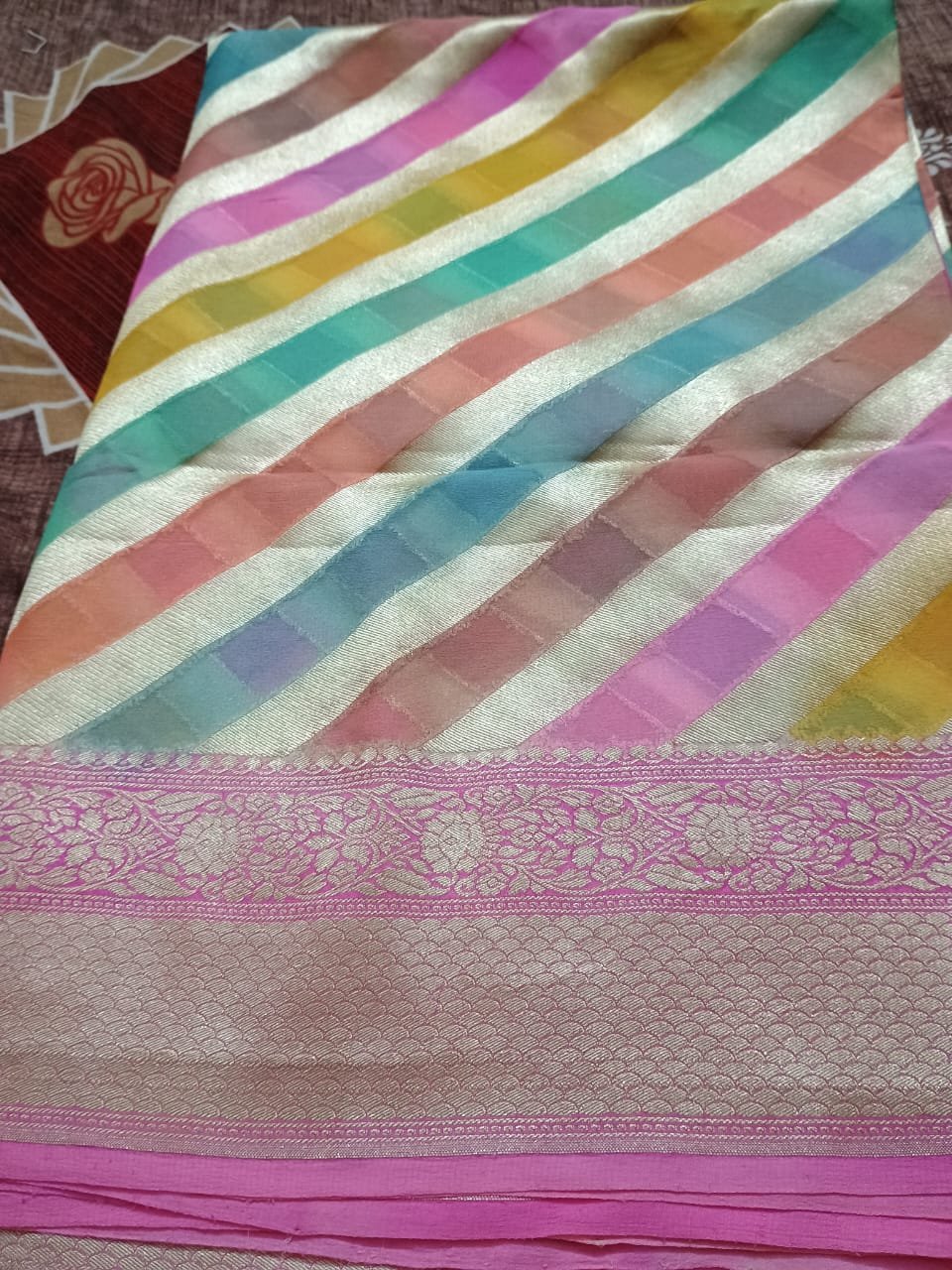
Fabric of the saree first. A heavy brocade saree pairs with a structured potli — a matka shape holds its own beside weight. A light georgette or chiffon saree wants a softer companion: velvet, or the embroidered silk blend.
Colour second, by the palette logic above — match the metal (gold with gold zari), then decide between tonal and contrast.
Handle third. A beaded handle is carried in the hand; it changes the posture of the arm and shows the bag off. A drawstring looped over the wrist leaves both hands free — for the bride's sister who will spend the day adjusting, carrying, fetching, that freedom is worth more than display.
Size last, because within our range the differences are of shape, not capacity. The rounded matka reads festive; the straighter pouch reads composed. Both hold the same small essentials.
After the Wedding: Care
A potli outlives its wedding if it is stored properly. Spot clean with a dry cloth; never soak beadwork, brocade or embroidery. Store it flat, in a cool, dry place, with the tassels untangled and the drawstring loosened. Keep it away from moisture, and spray perfume on your skin — letting it dry fully — before you pick the bag up. Perfume spots zari and dulls beads quietly, and you will not see the damage until the next season.
FAQ
Can one potli work across all the functions of a Kolkata wedding?
Yes. Choose a colour that repeats across your sarees — gold, beige or maroon will travel from gaye holud to biye to bou bhat to the reception without looking borrowed from any single outfit. Our guide to styling a Banarasi saree shows how one accessory set can be reworked across drapes.
What is the difference between a matka potli and a regular pouch?
The matka takes its name and shape from the earthen pot — rounded at the base, gathered at the neck. It sits fuller and reads more festive. A straighter pouch is slimmer against the body. Both close with a drawstring; the difference is silhouette, not use.
How do I pair a potli with a laal-paar saree?
Keep the potli in gold or ivory so the red border stays the focus, or choose deep maroon for a tonal, traditional register. Avoid a second strong red — two reds rarely match, and a near-miss is more distracting than a contrast.
Do you deliver to Kolkata, and how long does it take?
We ship across India at a flat ₹100. Standard delivery takes 7–14 business days, so for a fixed wedding date, order at least two weeks ahead.
Can I return a potli if the colour does not suit my saree?
All sales are final — we do not accept returns. If you are choosing between two colours, write to us before ordering with a photograph of your saree, and I will tell you honestly which one I would carry. If you are buying a potli as a gift, our wedding-season gift guide may help you choose.
From My Table to Your Wedding
I began this season with one orange potli travelling to Behala. I will end it thinking about all the dressing-table moments these small bags attend — the last check in the mirror, the phone slipped in beside the lipstick, the wrist looped through a drawstring as the conch sounds. A potli is a minor object with a major attendance record.
Browse the potli bags and pouches in our collection, or begin where our Kolkata customer began, with the orange jacquard potli. We ship across India for a flat ₹100, with standard delivery in 7–14 business days. All sales are final. If you are deciding between two designs, call us at +91 9825985765 — choosing is the part of this work I like best.