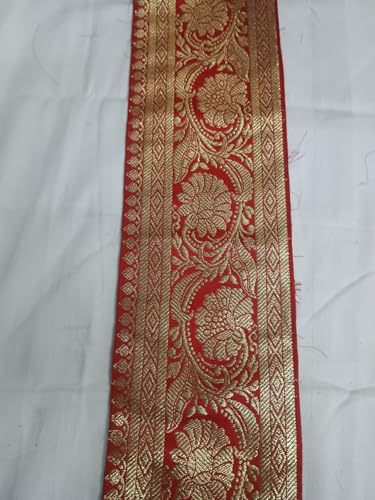
Twice this season, the same order came to us from Ballygunge, Kolkata. Not a saree. A border — red, with gold zari woven through it, nine metres long and ten centimetres wide. Two separate customers, one neighbourhood, the identical red edge.
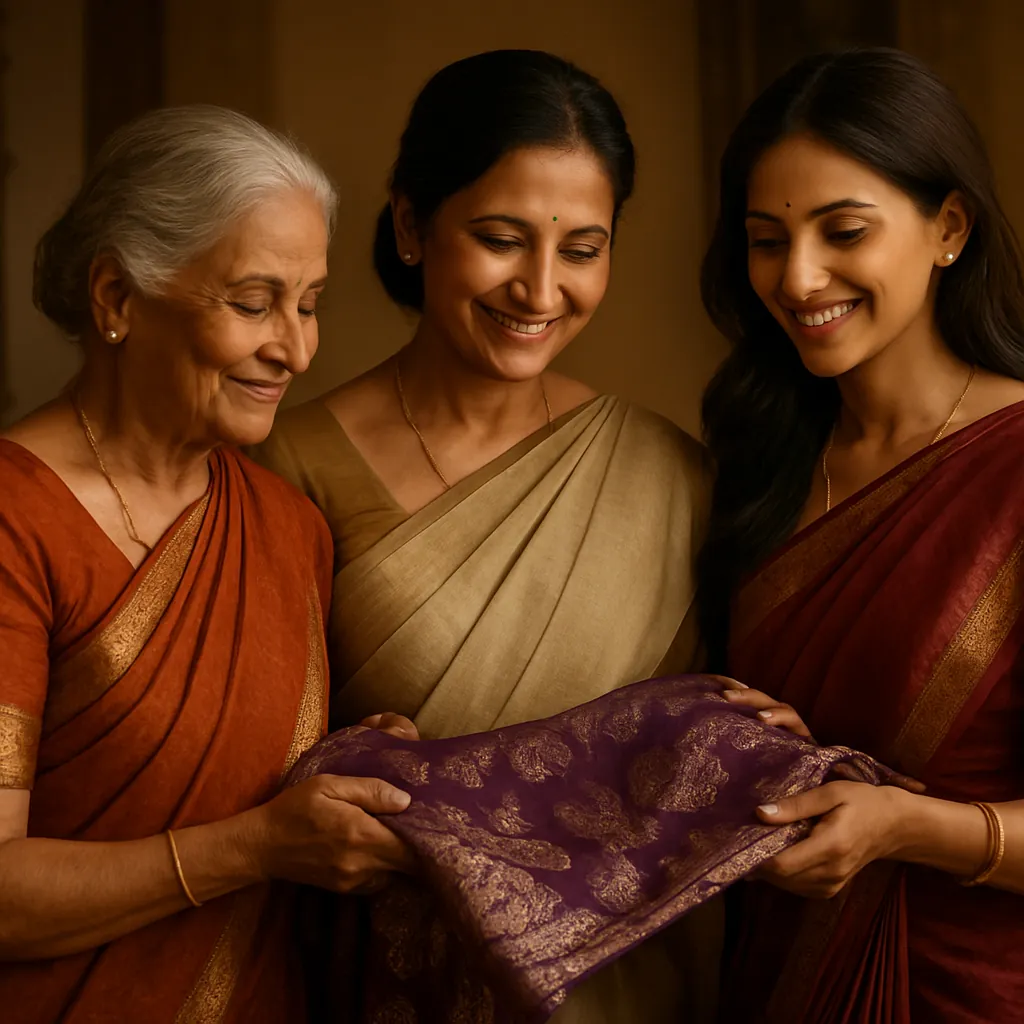
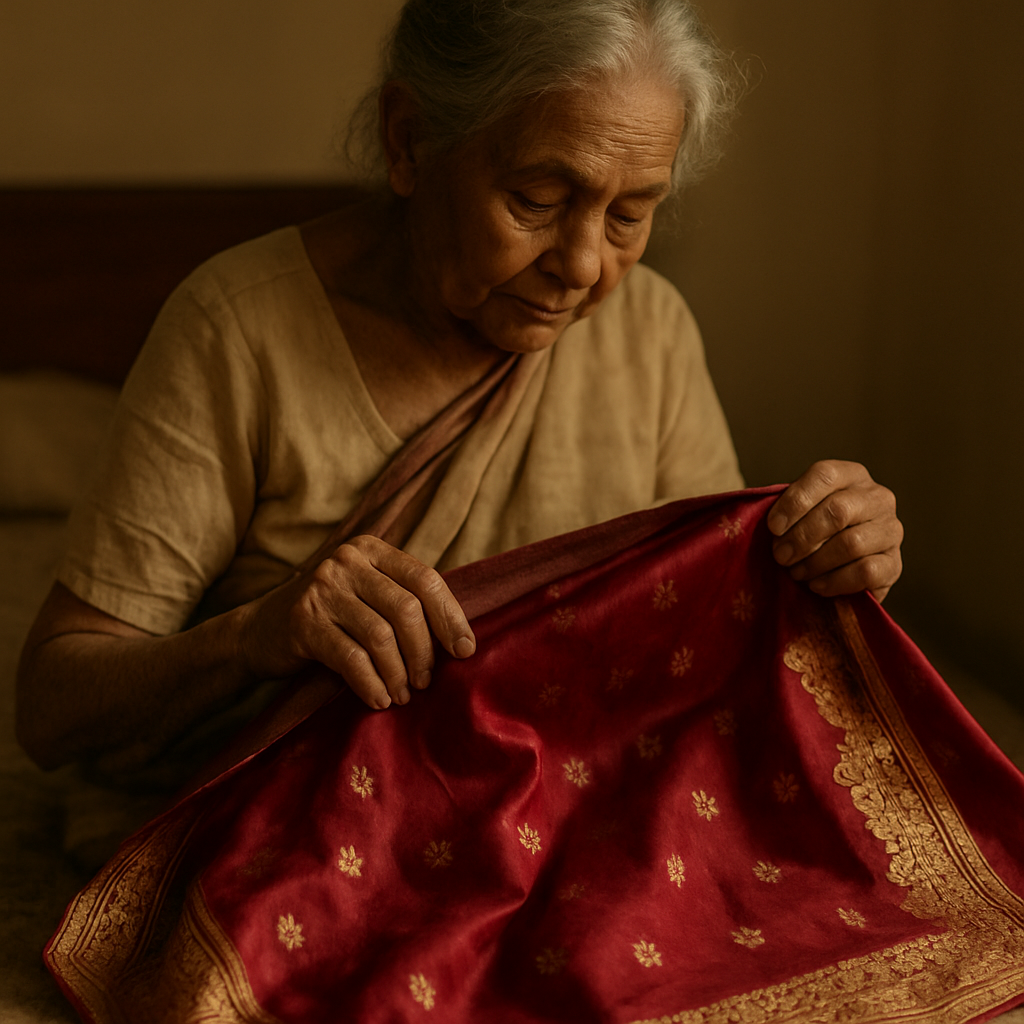
I have thought about those two parcels more than any others this winter, because they explain something about how Kolkata dresses that no trend report will tell you. Kolkata does not only buy new sarees for wedding season. Kolkata renews. Somewhere in Ballygunge this month there are steel almirahs opening on sarees that have been folded away since last season — a mother's taant, a grandmother's silk — their bodies still sound, their borders frayed, faded, or simply too plain for a wedding. A new border is how such a saree comes back into the room.
This post is about that renewal: how Kolkata wears Banarasi, what a border can and cannot do, and how to give an heirloom saree its wedding face again.
In Kolkata, the Bridal Saree Has a Name
Ask a Kolkata bride what she will wear and she will not describe it. She will name it: a benarasi. In Bengal, the word and the bridal saree are the same thing — red, gold-worked, heavy with occasion. It is one of the few garments in India that carries its city of design in its everyday name, and Kolkata has made it entirely its own.
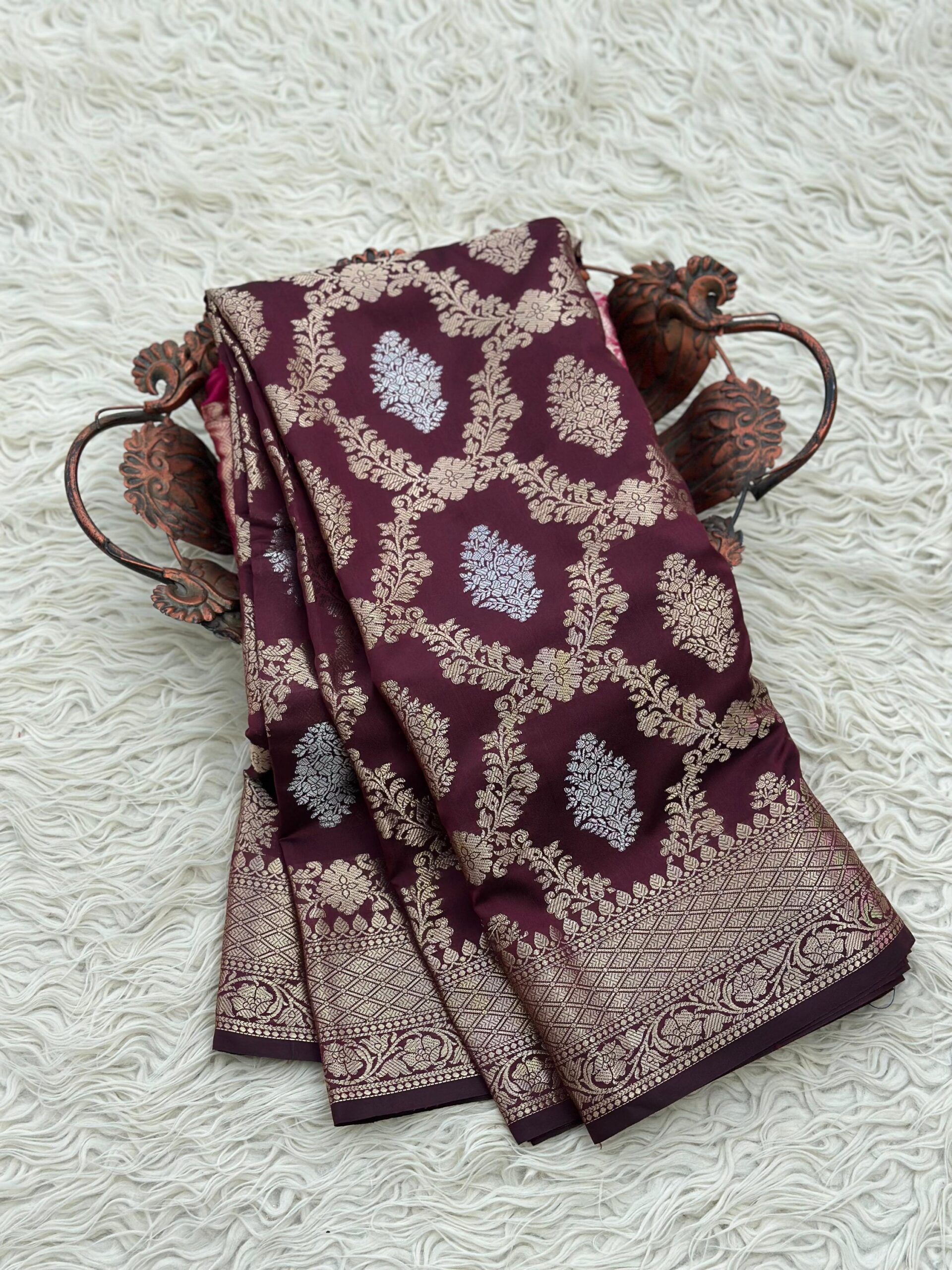
Yet a Kolkata wardrobe is never one tradition deep. The same almirah holds jamdani with its floating motifs, taant crisp from the loom, a baluchari that tells stories along its pallu, and the white gorod with its red laal-paar border, kept for ritual mornings. Bengal's own weaves are everyday and ceremonial both; the Banarasi design language — the buti spray, the bel vine, the diamond jaal, the scalloped edge — enters that wardrobe as the language of celebration.
That is precisely why a border travels so well between the two traditions. It does not ask a taant to become something else. It lends the taant a Banarasi frame for one season of weddings, and the saree remains itself.
The Saree That Still Has a Body
A border refresh begins with the saree, not the border. Before anything is stitched, I ask customers to check three things.
Soundness. Lay the saree out in natural light and run your hand slowly over the body. Feel for thin places near the pallu and the pleats, where folds have stressed the cloth for years. Hold it to the light. If the weave is firm and the threads hold, the saree can carry a new edge. If the body itself is going tender, no border will save it — that saree's remaining life is in gentle, occasional wear.
Colour. A faded body is not a disqualification; it is a design brief. A washed, softened colour often takes a strong border better than a new-looking saree does, because the contrast reads as intention. But check colour fastness: rub a damp white cloth against an inconspicuous corner. If dye transfers freely, settle the washing question before any stitching happens.
The old border. If the existing border is fraying, it comes off — a good tailor will unpick it without tearing the body. If it is sound but plain, the new border can be set over the edge line. Either way, what you are keeping is the body: the cloth with the history in it.
Ten Centimetres of Red and Gold
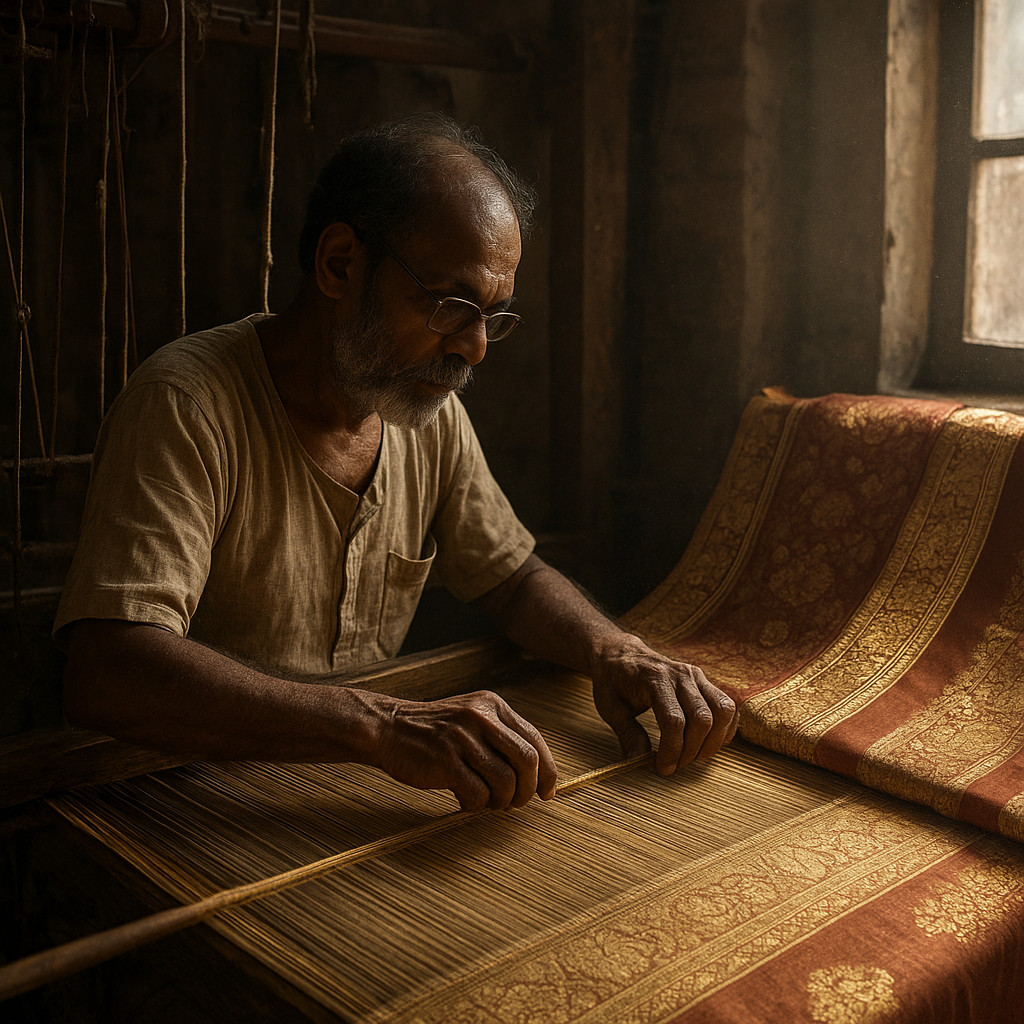
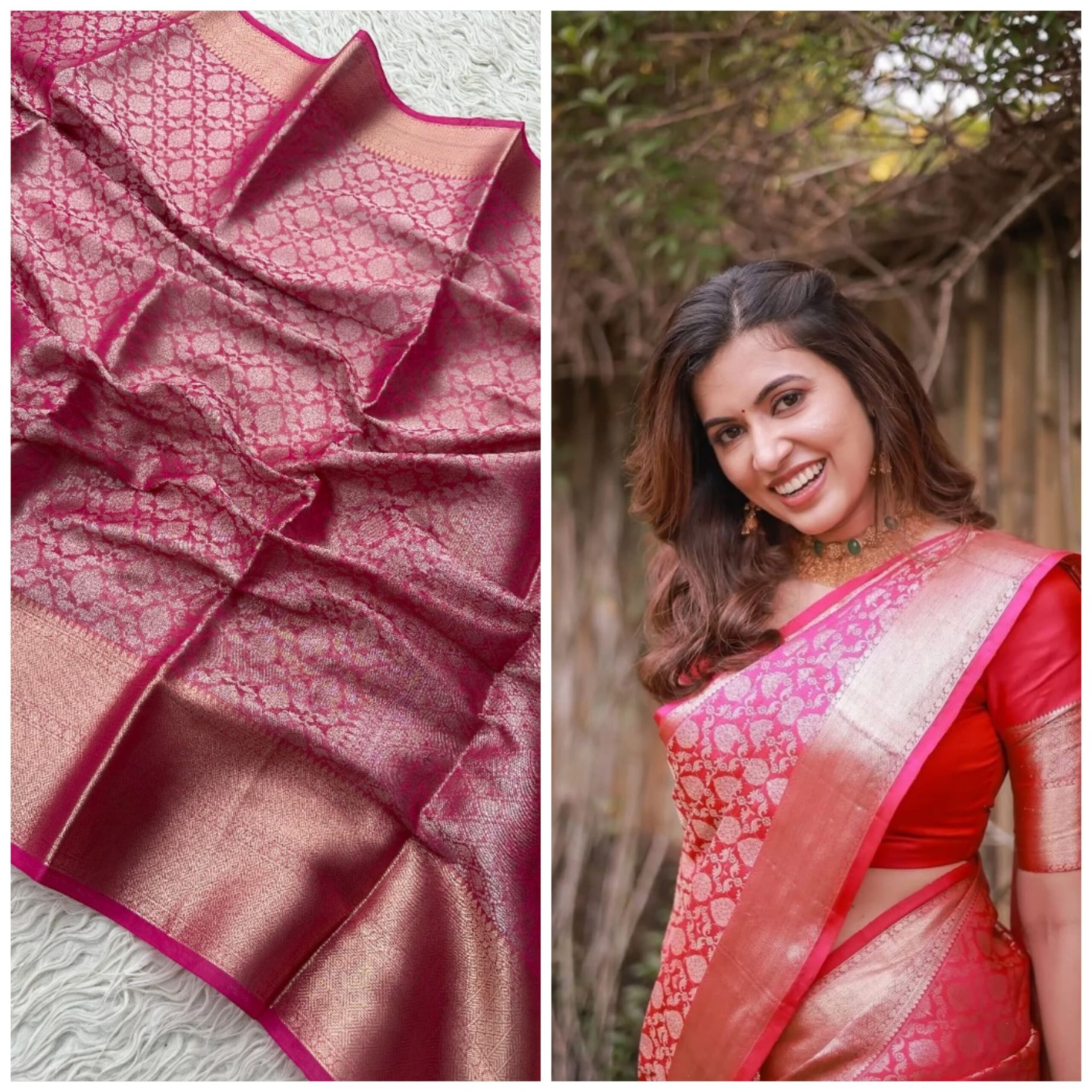
The border our Ballygunge customers ordered is a silk blend on a satin base — I want to be plain about what it is. It is a Banarasi-style border: red, with gold zari woven in a geometric repeat of alternating diamond shapes, scalloped edges and striped bands, in the traditional Banarasi motif language. It is nine metres long and ten centimetres wide. You can see it in full in our saree borders collection, and the red Banarasi satin zari border itself is here.
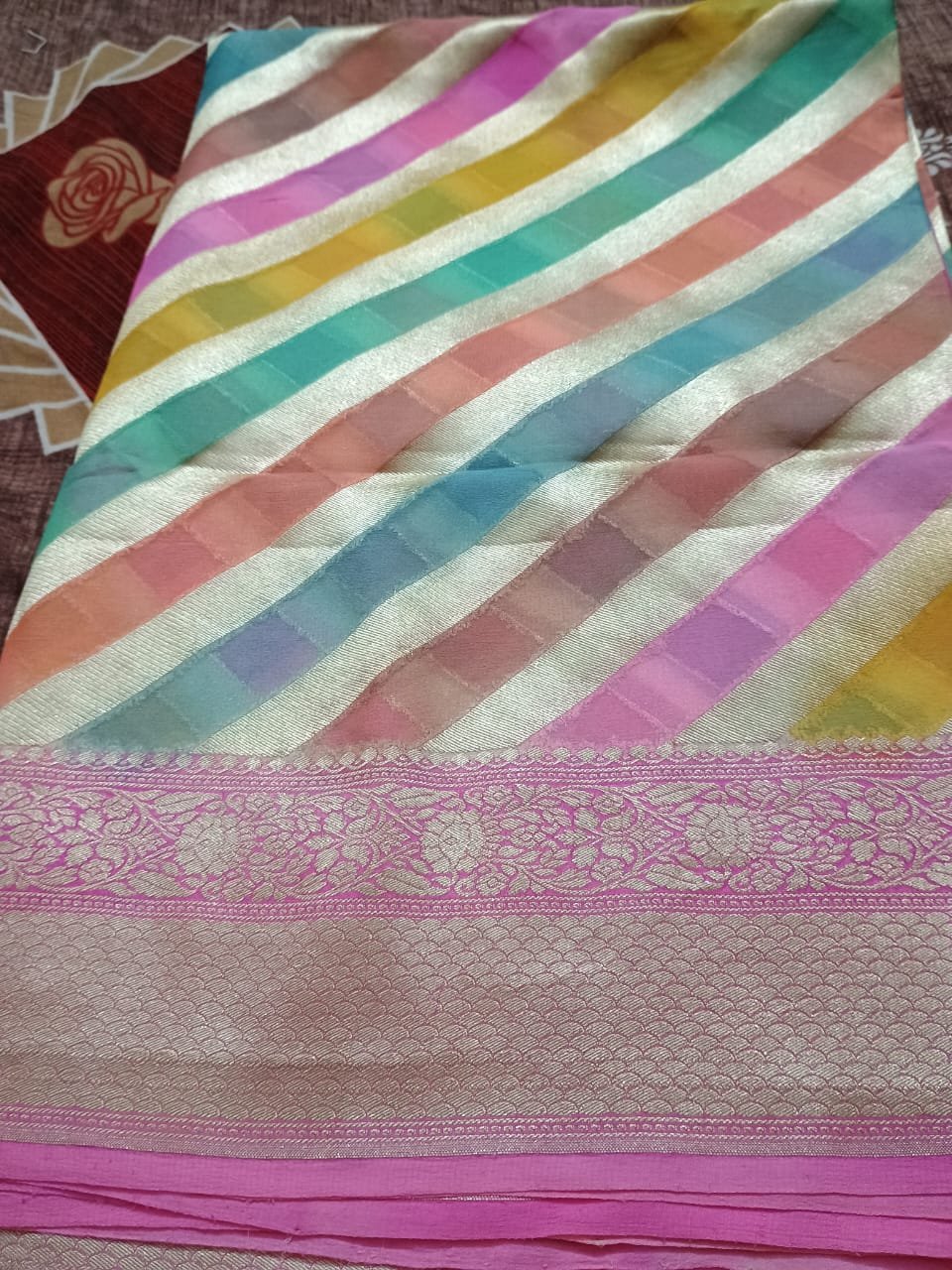
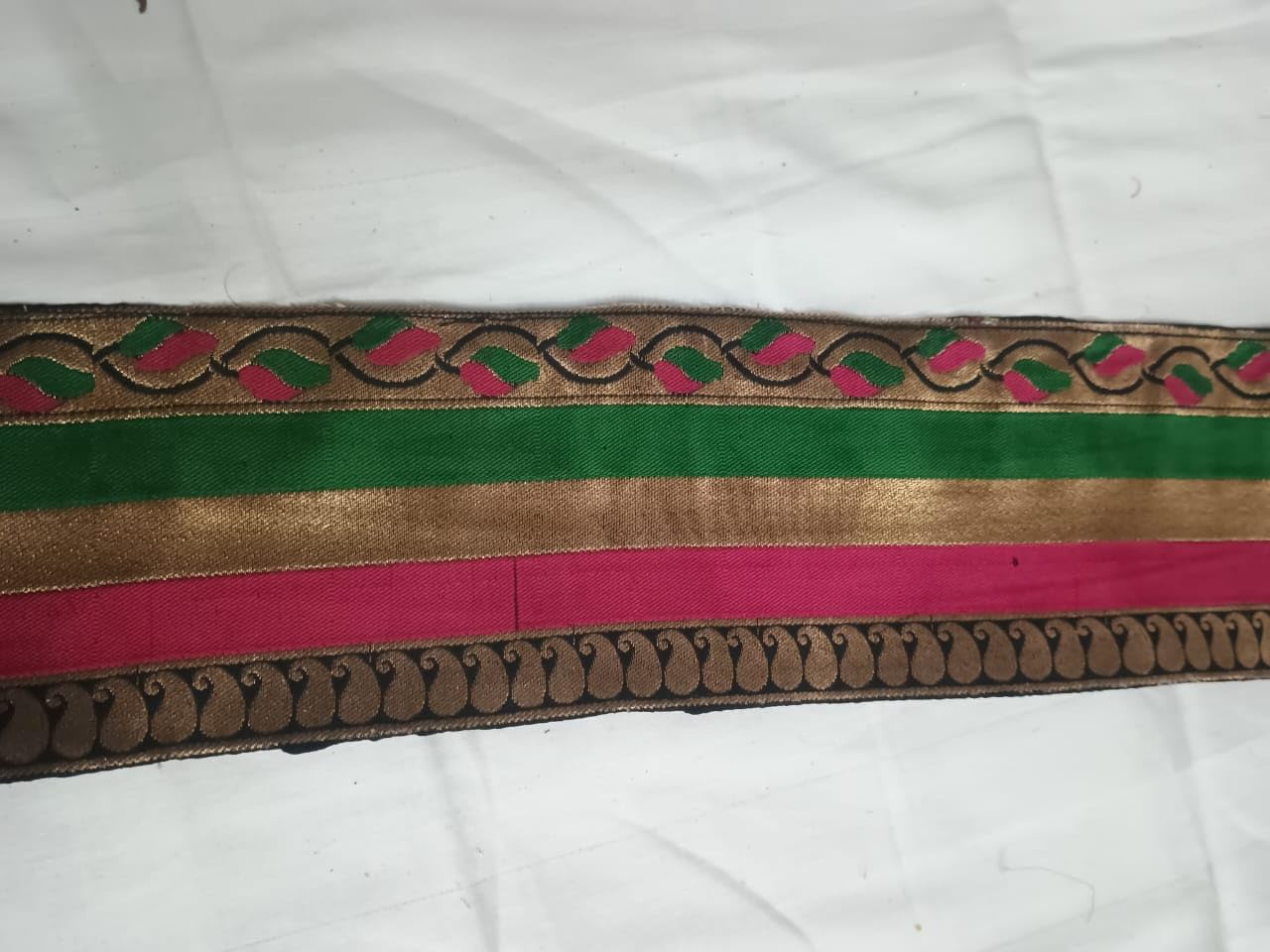
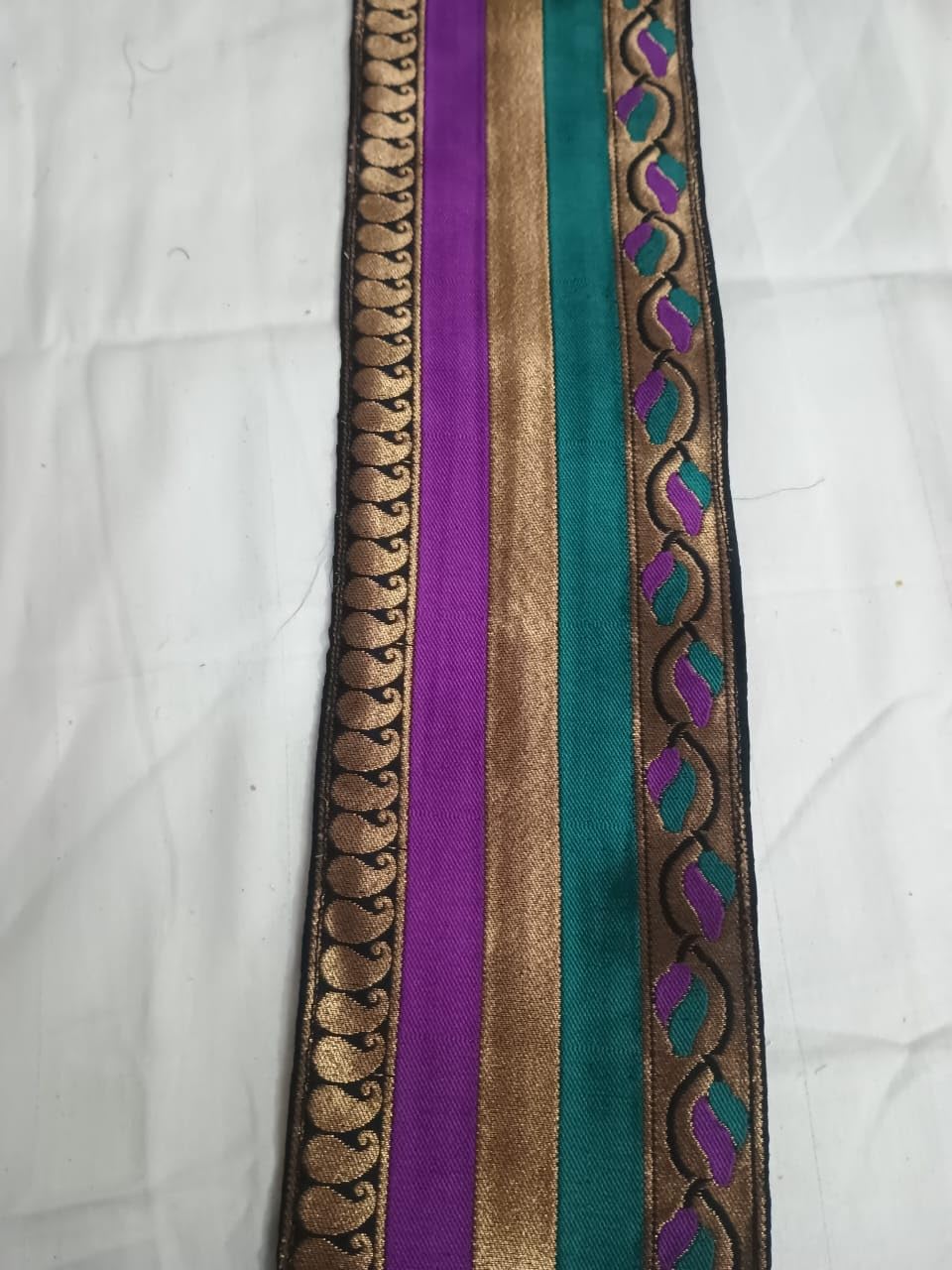
Ten centimetres is a statement width, and it behaves differently on different cloth. On a light taant, it transforms: a daytime weave becomes a saree that can stand beside a bride without apology. On a heavier silk, it frames — the body keeps its dignity and the border announces the occasion. If ten centimetres feels like too much voice for your saree, a narrower edge changes the register; our multicolour Banarasi border runs at nine centimetres with the colour distributed through the pattern instead of concentrated in one red field.
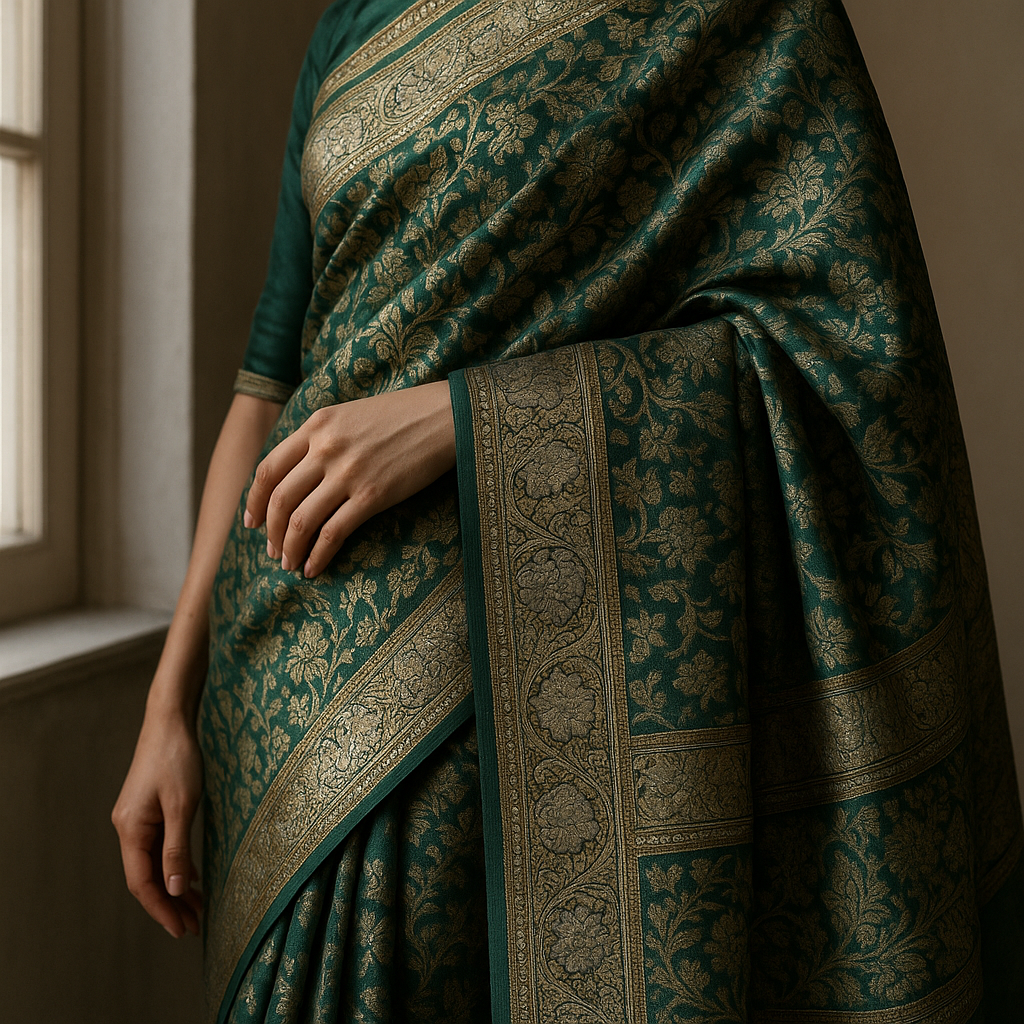
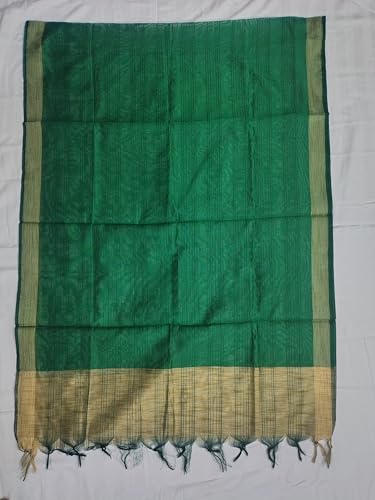
Colour, then. Red and gold on white or ivory gives you the laal-paar register — the ritual look of Bengal, quiet and exact. On deep green or maroon, the same border turns evening: the gold holds lamplight, the red deepens. On a plain saree worn by the bride's mother, it gives presence without echoing the bridal benarasi too closely. The border speaks; the body stays composed.
Nine Metres and a Tailor's Needle
A saree runs five and a half to six and a half metres. Nine metres of border therefore does the full drape — along the lower edge and up the pallu — with length to spare: enough for a matching finish on a blouse edge or a dupatta, and enough margin that your tailor is not piecing scraps at the final pleat.
The practical points I give every customer:
- Take it to a tailor who works with sarees. A saree border must move with the body — with the walk, with the gathering and release of the pallu. It is not a ribbon on a dress.
- Ask for stitching, never glue. Glue stiffens the drape and ages badly, leaving a hard line exactly where the cloth should fall soft.
- Fall and pico come after. The border changes the weight of the edge; the fall should be cut to the new line, not the old one.
- Press on the reverse, with a clean cotton cloth between the iron and the zari. A satin base marks under direct heat, and zari does not forgive a hot iron.
- Turn the corners with care. Ask the tailor to ease the border around the pallu corner so the diamond repeat does not break awkwardly mid-motif.
Done well, the result is not a new saree. It is the same saree, returned to itself — which is the entire point.
Wearing It Through the Season
For a morning ritual, wear the red-gold border on white or ivory and let it speak the laal-paar language in a slightly different accent. For an evening reception, put it on deep green or maroon and let the gold work under lamplight. For the bride's mother, a plain silk renewed this way is the wisest garment in the house: dignified, personal, and quietly connected to the bride without competing with her.
One more Kolkata truth: a renewed heirloom carries a story into the wedding that no new purchase can. When someone asks about the saree — and someone will — the answer begins with your mother, or your grandmother. The border is simply what lets the story be worn again.
Keeping It Safe
Zari and moisture do not get on. Store a bordered saree folded with the zari facing inward, or rolled around a muslin-covered tube, away from damp walls. Spot clean; do not wash the border. Before the season, air your heirloom sarees in a shaded room — never in direct sun, which weakens old cloth — and re-fold them along different lines so the creases do not settle into weak points. Our guide on how to wash and store a Banarasi saree covers the full routine, fold by fold.
And if you are buying Banarasi this season — saree or border — buy it with your eyes open. Our nine checks for identifying an original Banarasi saree explain what to look for and what questions to ask any seller, including us.
FAQ
Will this border work on a cotton taant saree?
Yes, if the body of the taant is still sound. Ten centimetres is a wide border for cotton and it will change the drape noticeably — the saree becomes occasion wear. Choose a taant you keep for celebrations rather than daily wear.
Is this border pure silk or handloom?
No — and we would rather tell you plainly. It is a silk blend on a satin base with gold zari weaving, made in the Banarasi style. We do not describe it as pure silk or handloom, and its beauty does not need either claim.
Can I stitch the border myself?
If you sew confidently, yes — but a tailor who works with sarees is the safer pair of hands for an heirloom. Either way: stitch, do not glue, and finish the fall and pico after the border is on.
How much border does one saree need?
A saree runs about five and a half to six and a half metres. Our nine-metre length covers the full edging and leaves enough for a blouse finish or a dupatta edge, with a tailor's margin to spare.
Do you deliver to Kolkata, and can I return the border if the red is wrong for my saree?
We ship across India at a flat ₹100, with standard delivery in 7–14 business days. All sales are final, so if you are matching a particular saree, write to us with a photograph of it first — I will tell you honestly whether this red will sit well on it.
The Almirah, Opened
I keep returning to those two Ballygunge orders because they carry the whole philosophy of a Kolkata wardrobe: keep what has meaning, renew what has worn, and let one strong new element — ten centimetres of red and gold — bring the rest back into the light.
If there is a saree in your almirah waiting for its edge, begin with the red Banarasi satin zari border, or browse the full saree borders collection. We ship across India for a flat ₹100, with standard delivery in 7–14 business days. All sales are final. And if you would like a second eye before you commit an heirloom to the needle, call us at +91 9825985765.