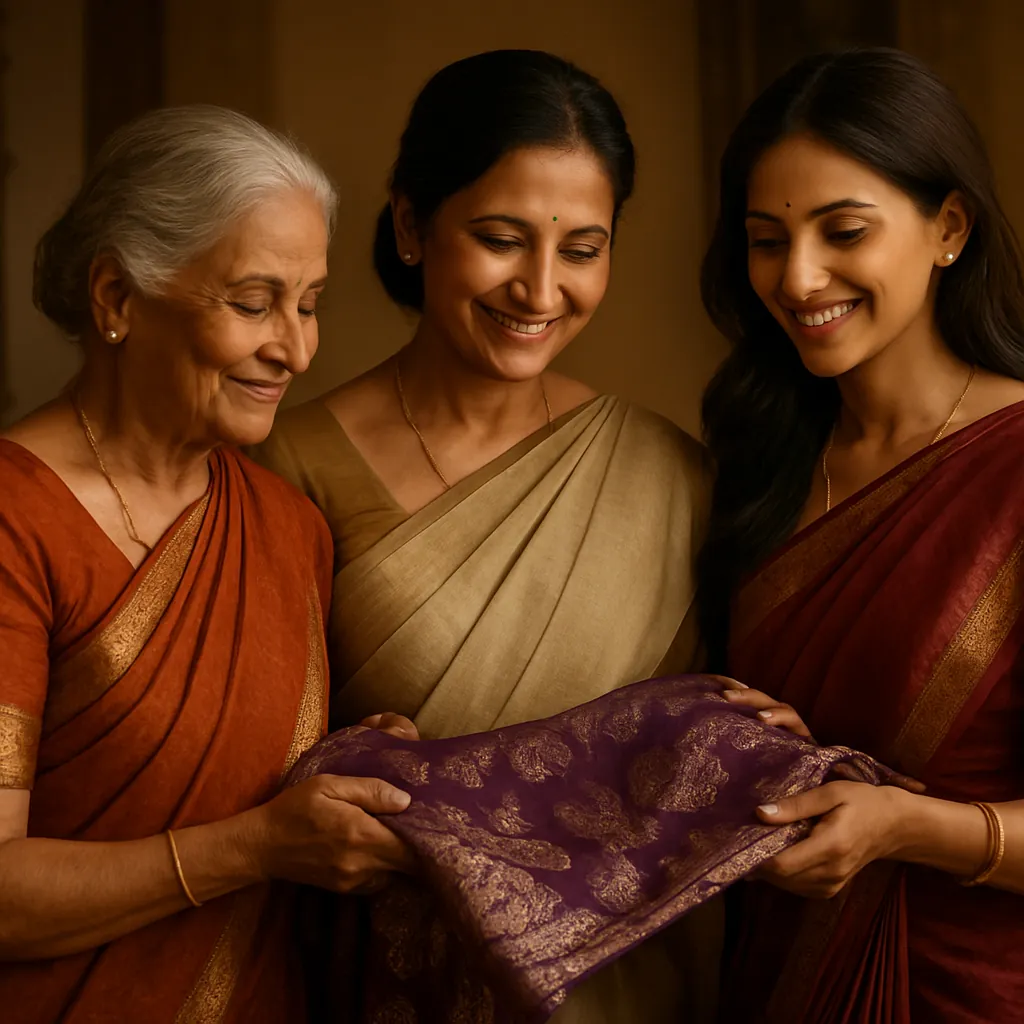
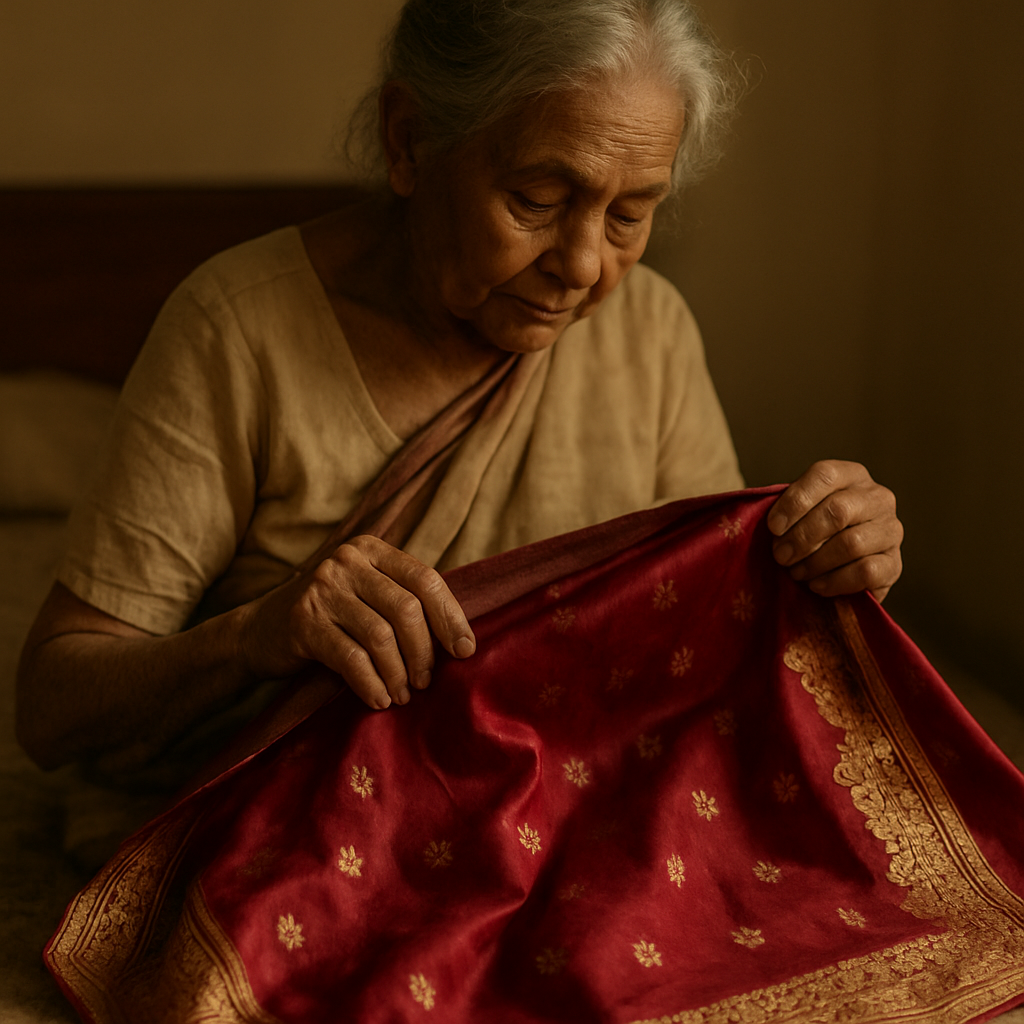
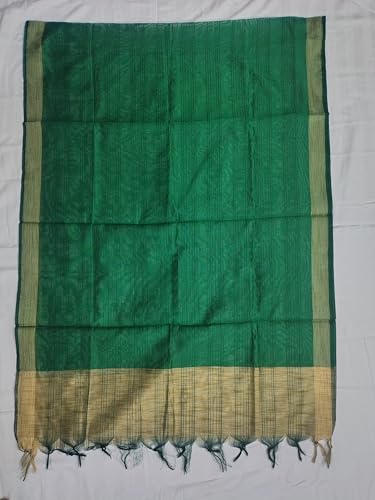
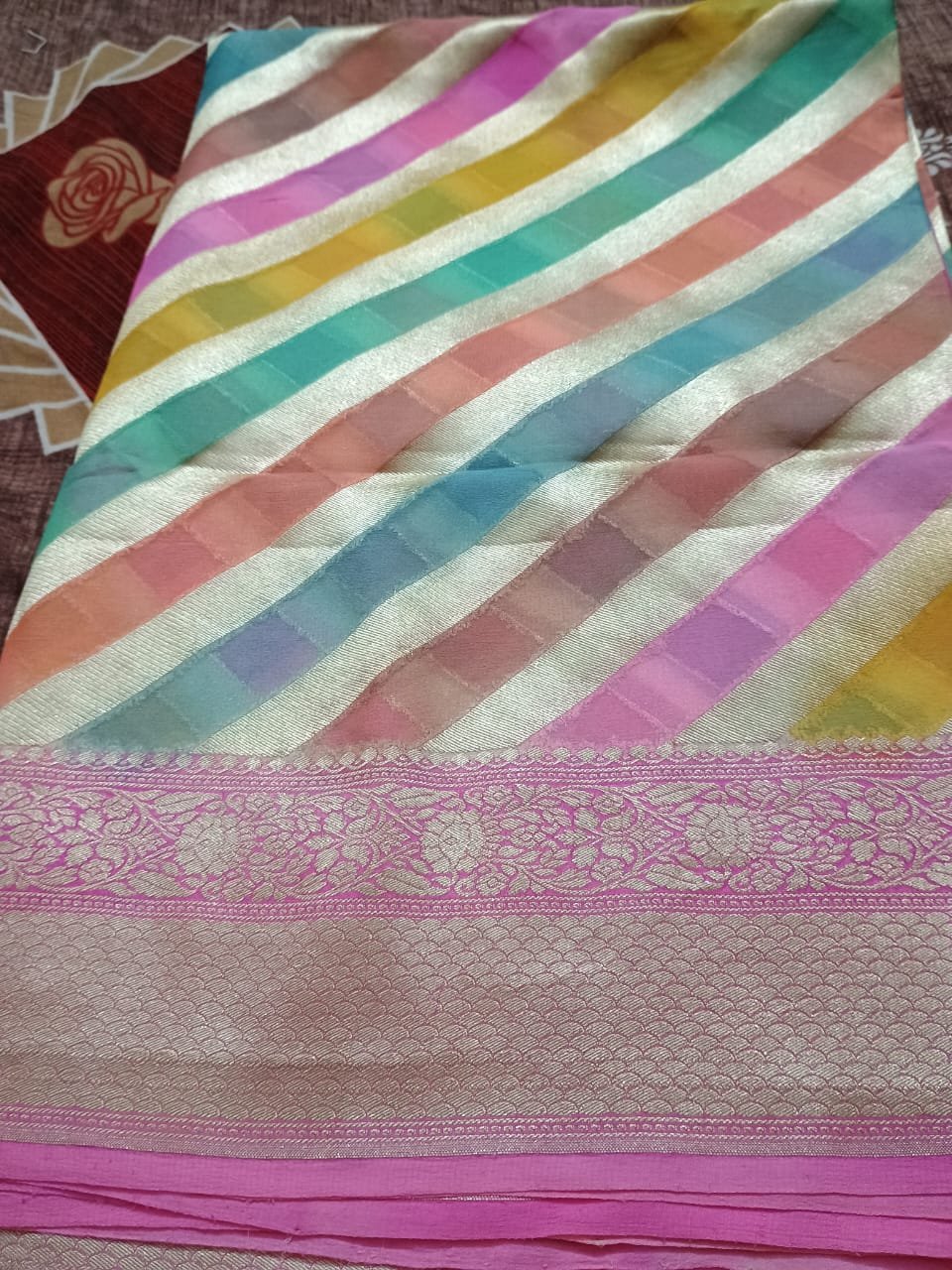
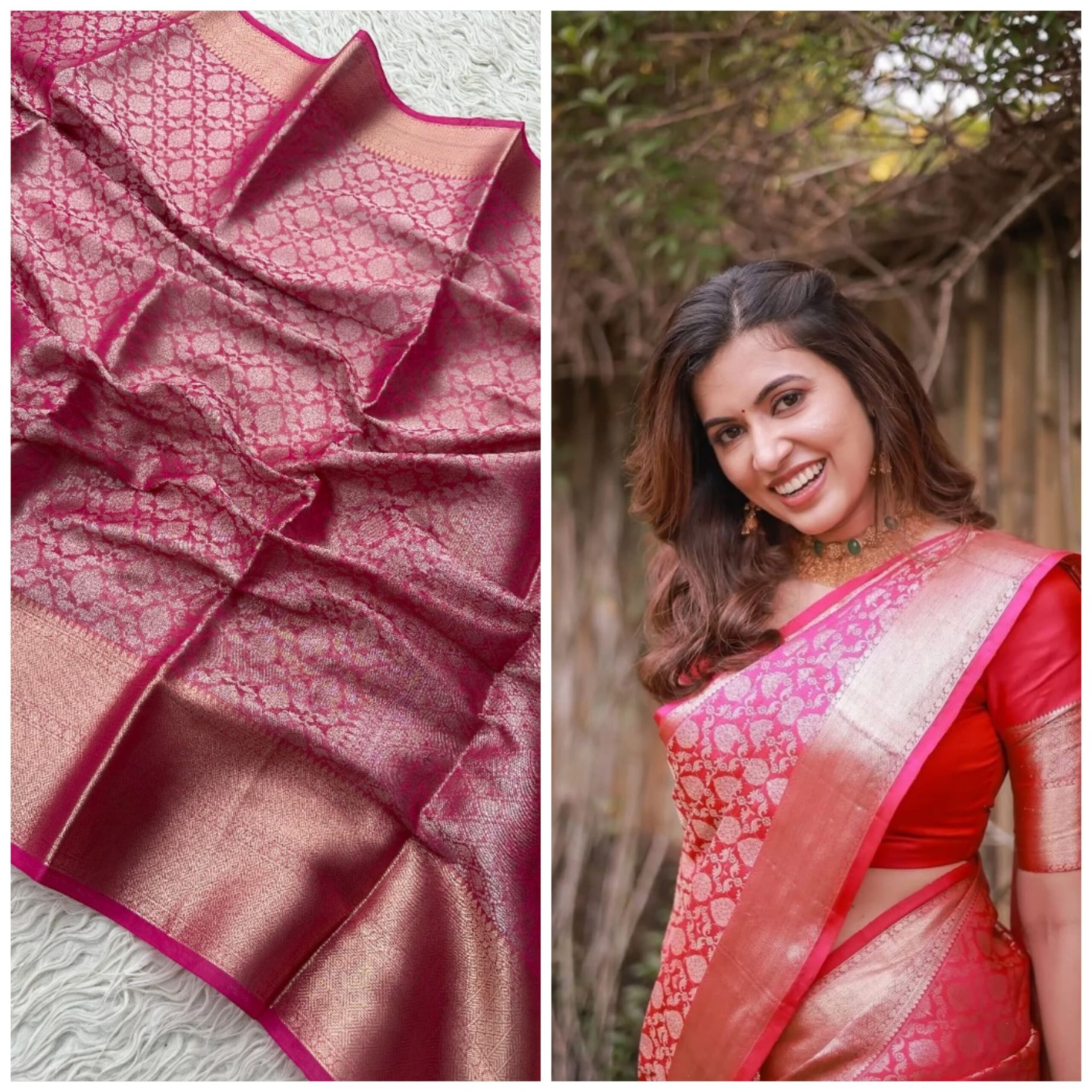
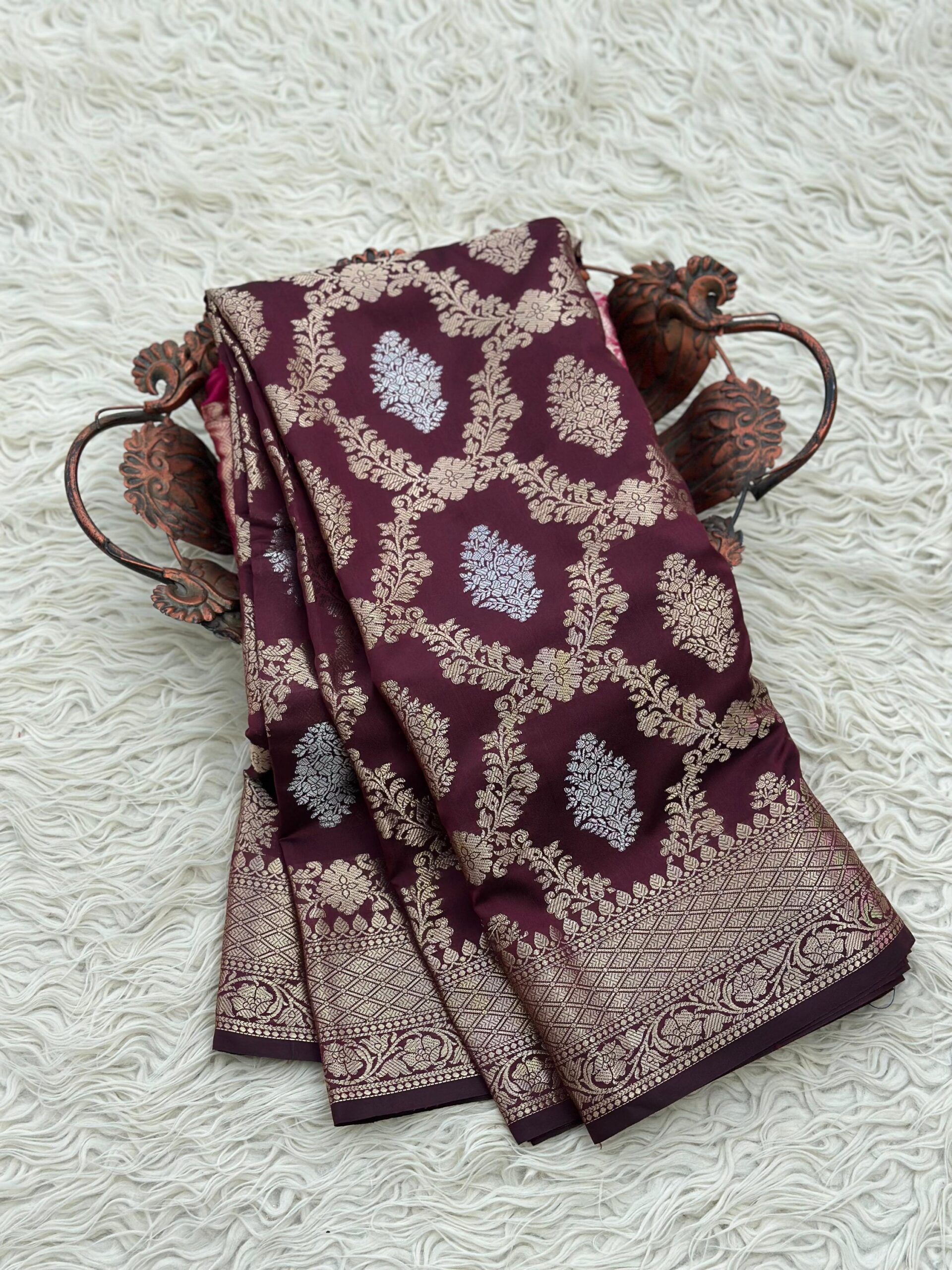
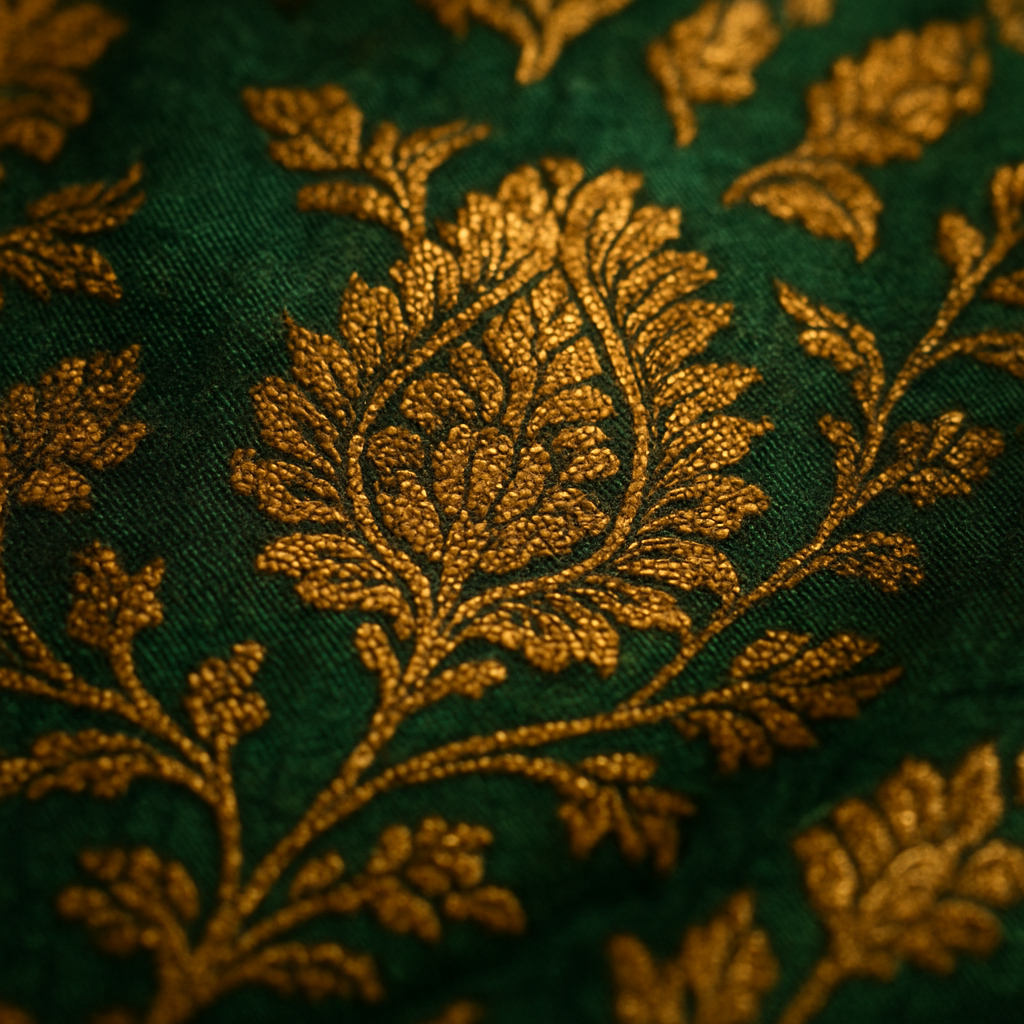
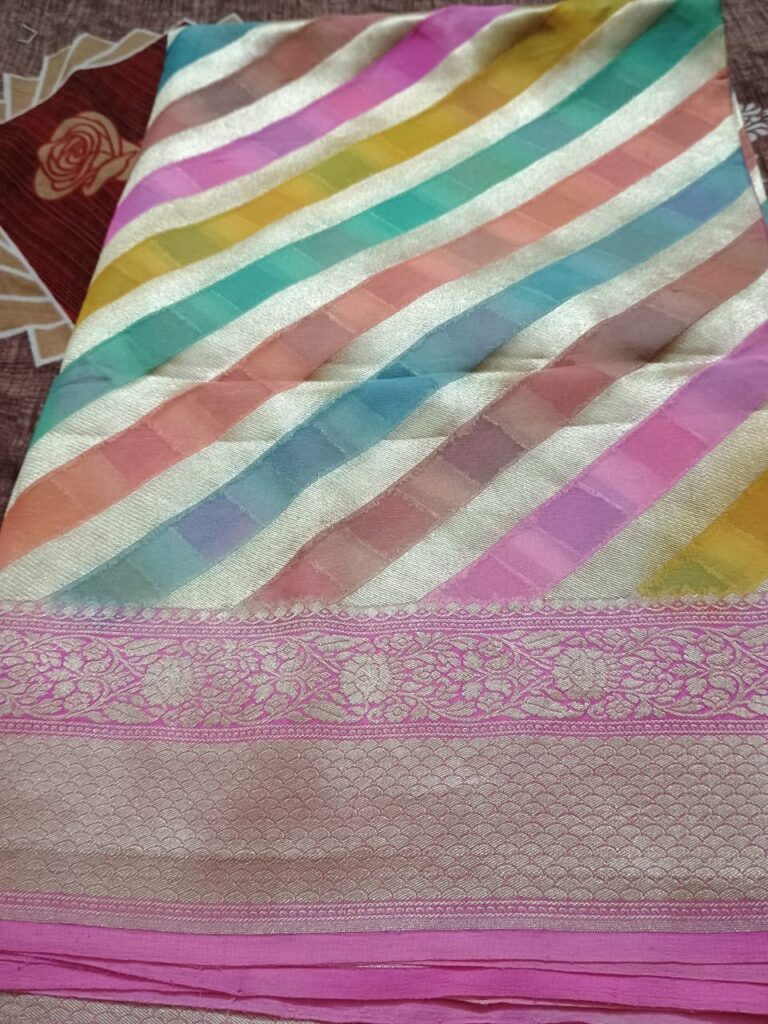
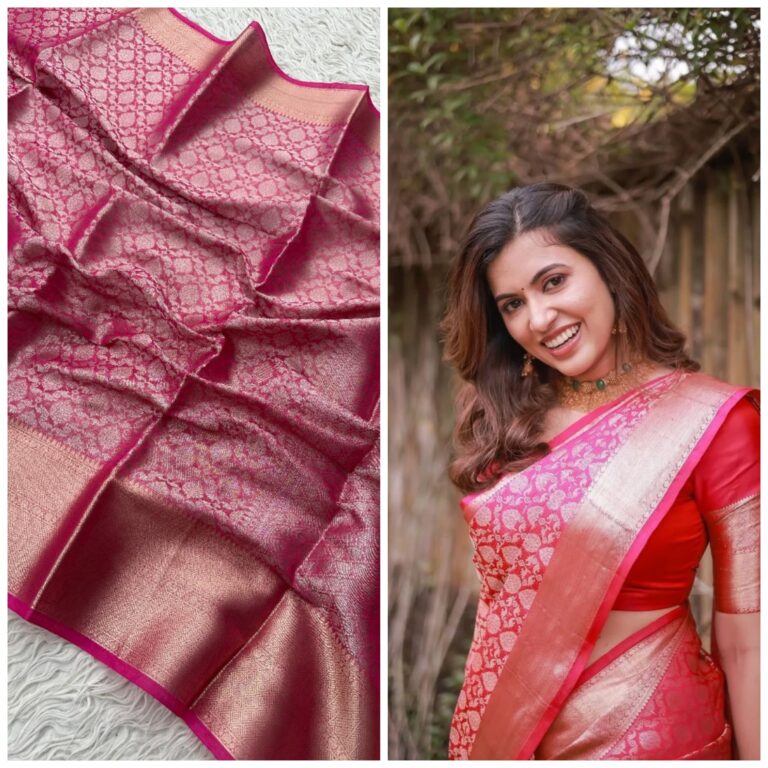
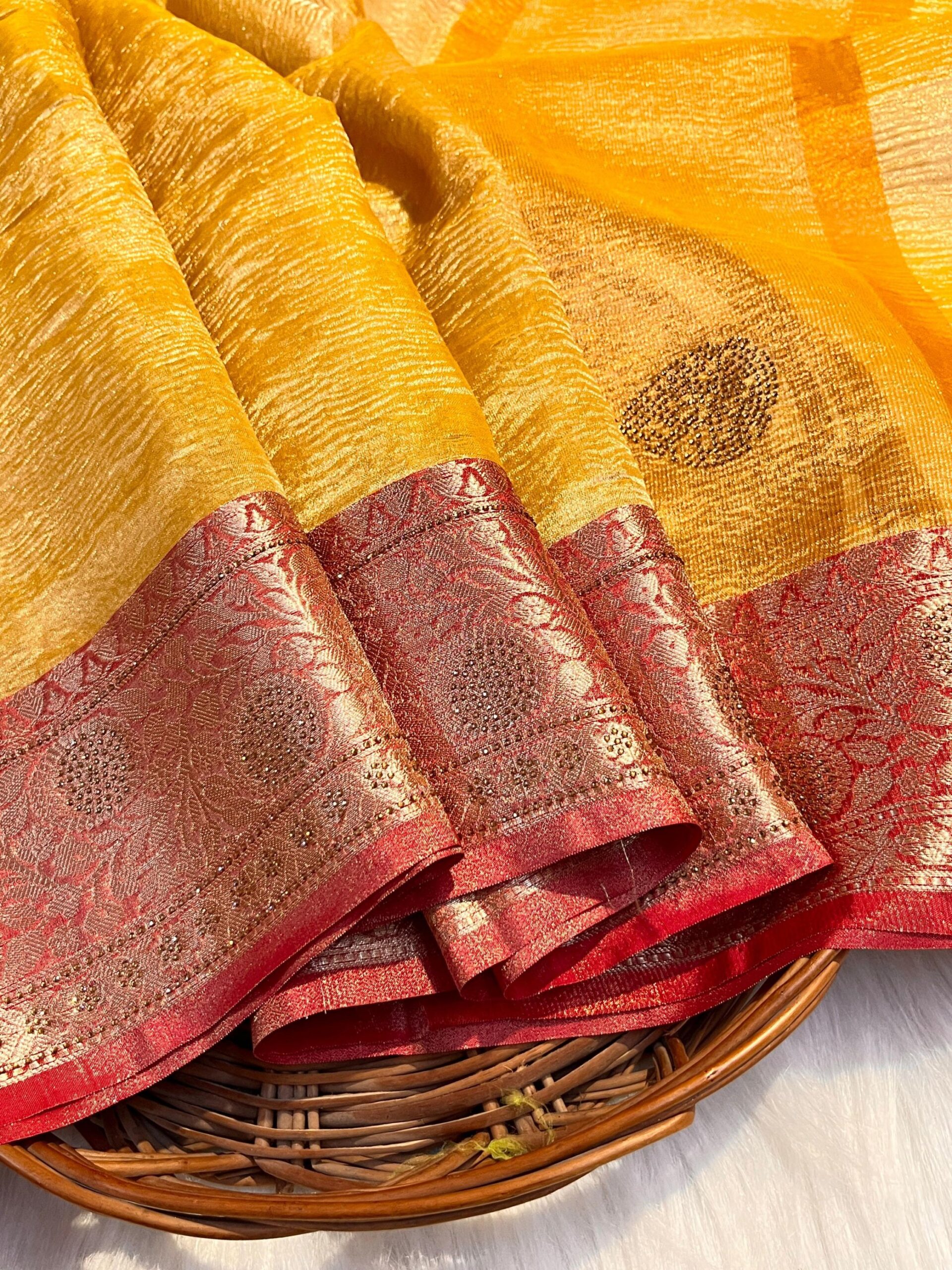
The question I hear most often during wedding season is a simple one: Banarasi or Chanderi? I have handled both weaves for years, and the answer is in the hand before it is in the eye. Pick up a Banarasi-style saree from our own stock and it has body to it. The zari catches the light in thick, raised lines, and the fabric holds its shape when you lift it. Pick up a Chanderi and it is almost weightless, sheer enough to see the counter through it, folding into a soft pile in the palm. The difference is immediate, and it decides the question before any talk of colour or price begins: which one should a guest wear? The answer depends on the time of day, the weather, and how long she plans to stand on her feet.
Origin and Heritage
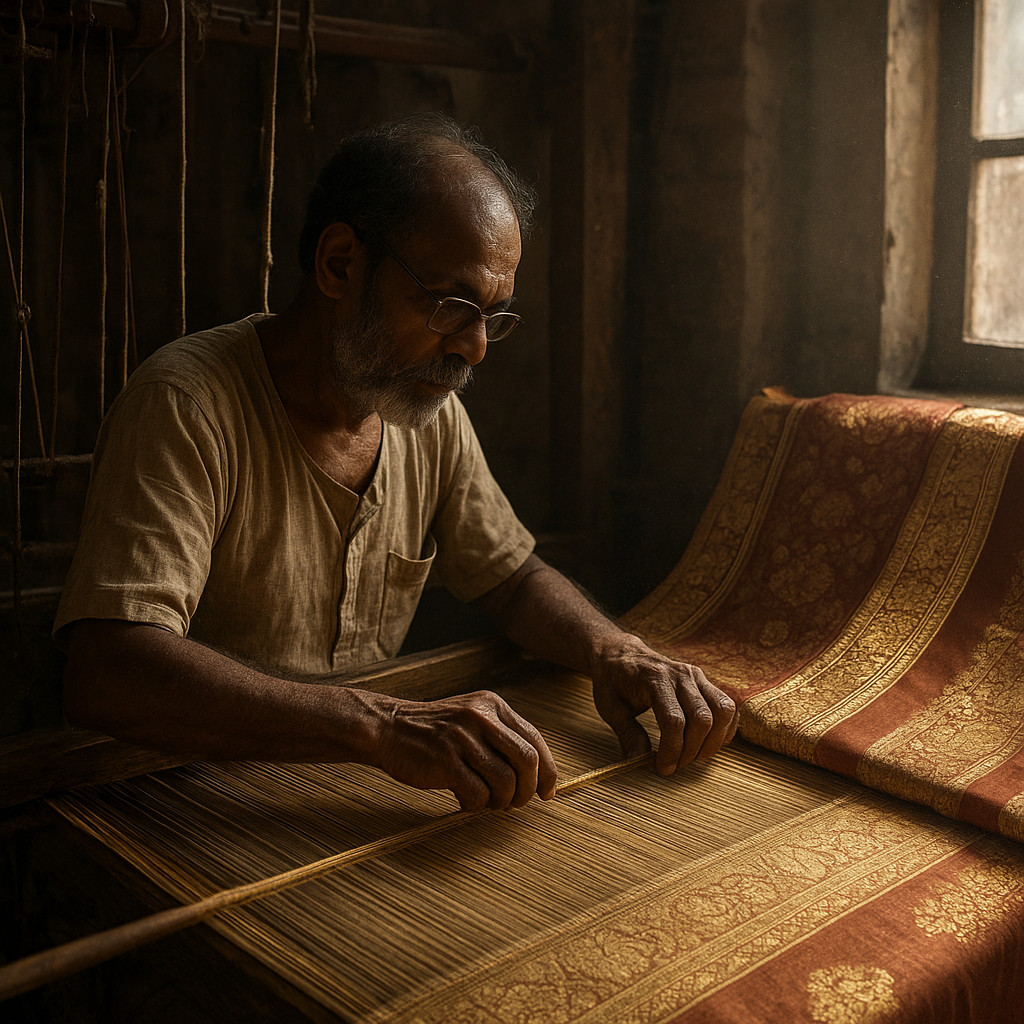
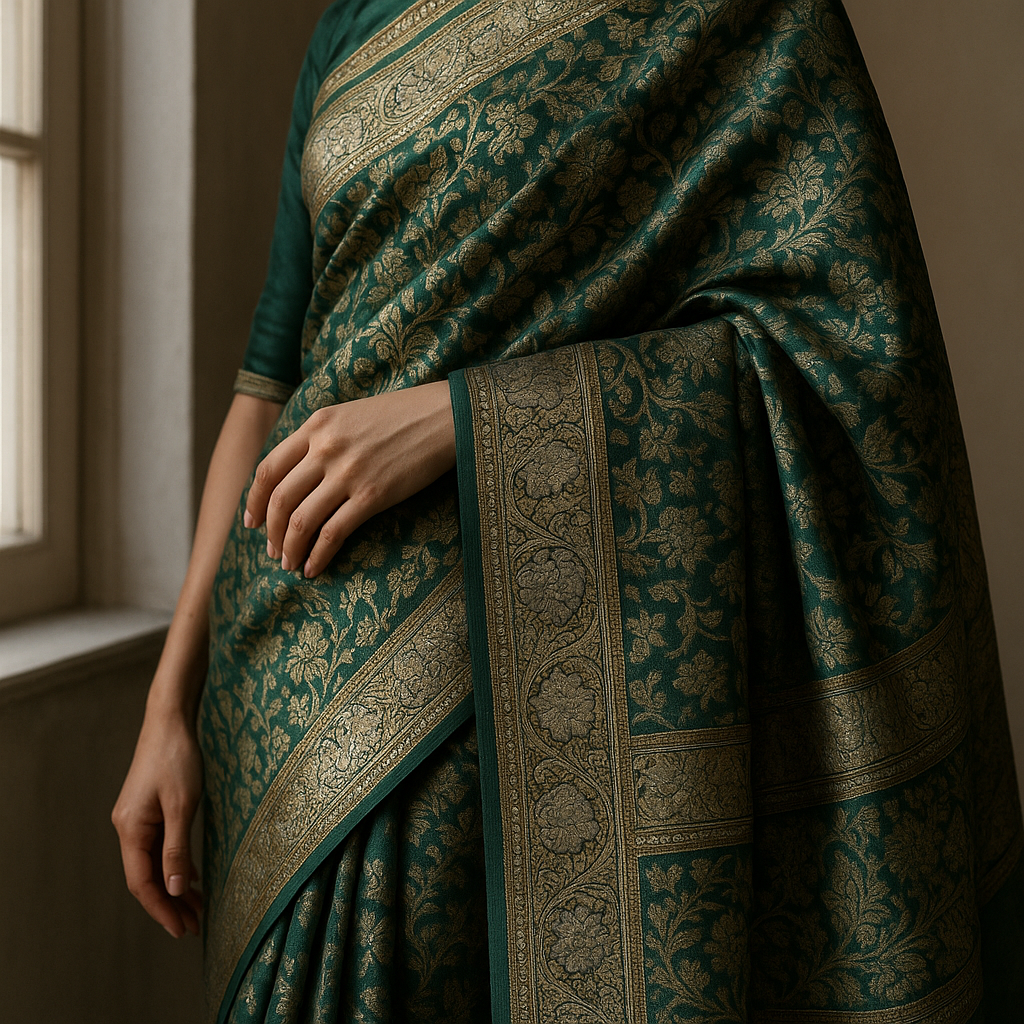
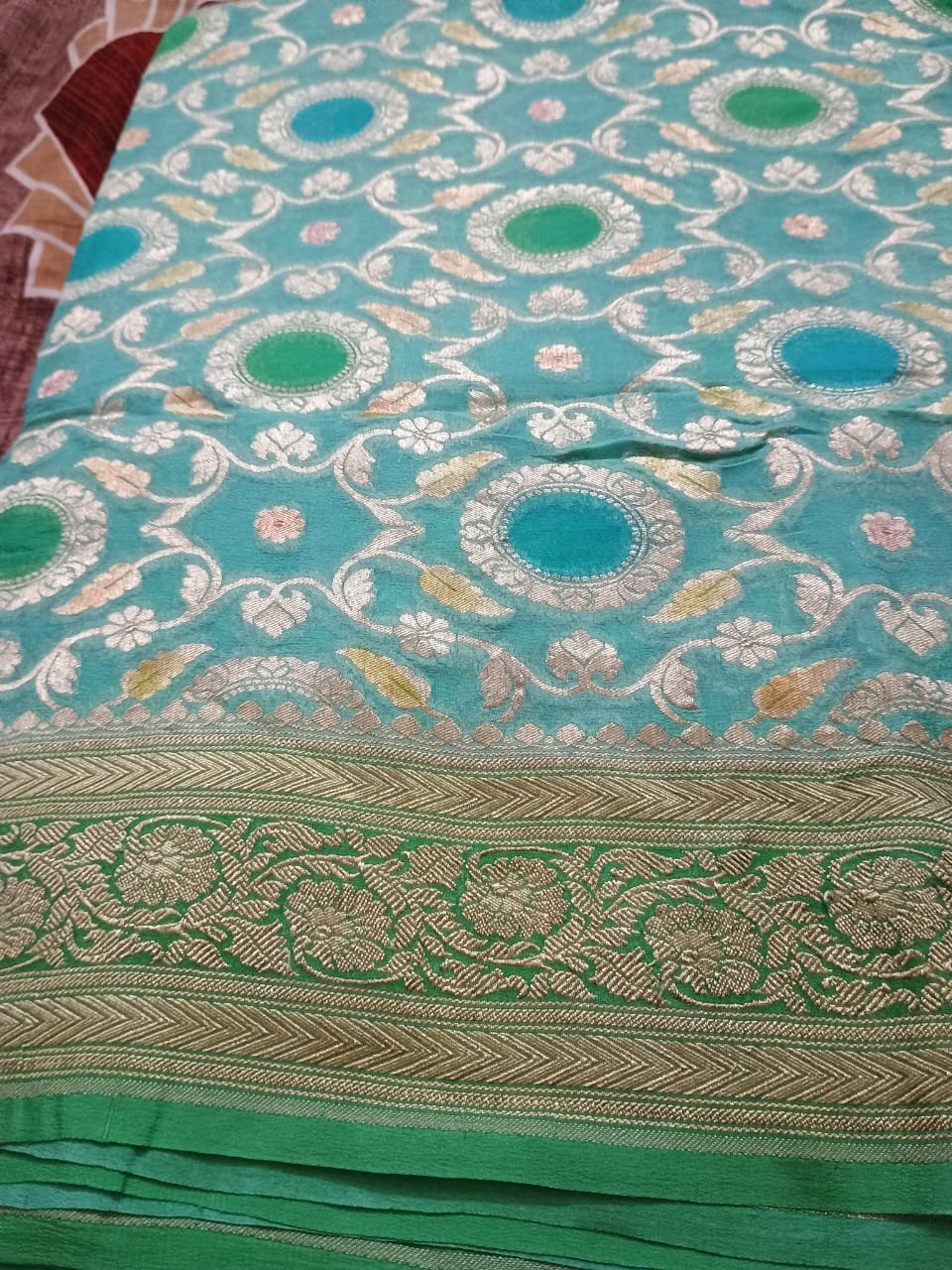
Banarasi sarees come from Varanasi, also called Banaras, in Uttar Pradesh. The weaving tradition there is known for brocade, where patterns are created using extra-weft threads that sit on the surface of the fabric rather than being part of the base weave. The motifs show Mughal influence. You will see bel, which are creeping vines, jangla, which resembles dense foliage, kalka, the paisley shape, and small butis scattered across the body. The colour palette tends to be deep—reds, maroons, greens, golds—because the fabric is built to catch and hold light.
Chanderi comes from the town of Chanderi in Madhya Pradesh. Its tradition is different. The fabric is known for a sheer, lightweight texture, often made with silk and cotton or with silk blends. The zari work is finer and more restrained, usually concentrated in the borders and as small buti motifs rather than all-over brocade. The overall look is softer and more translucent, suited to daylight.
Both names are protected by geographical indication tags, which tie the name to the place of origin. That means a saree sold as Banarasi should come from the Banaras region, and a Chanderi should come from the Chanderi region. Read our guide to identifying an original Banarasi saree.
Fabric and Feel
Banarasi fabric is generally heavier and more structured. A pure-silk Banarasi brocade feels substantial, almost jewel-like, because the extra-weft zari adds thickness and weight. It holds its shape well, which is why it drapes with a firm silhouette. When you pleat it, the pleats stay in place.
Chanderi is famously light. Traditional Chanderi is woven from silk, cotton, or a blend of both, and the result is a breathable fabric that feels cool against the skin. It is sheer, so it needs a well-chosen petticoat and, often, a lining in the blouse, or the drape loses its line. That sheerness is part of the appeal in daylight — the fabric seems to float rather than sit — but it is worth planning for. A guest who turns up with the wrong petticoat will spend the ceremony adjusting. For a guest attending a daytime ceremony in summer, that lightness matters. The fabric does not cling, and it allows air to move, which makes a difference in a crowded hall.
For more on Banarasi fabrics, read our Katan vs Organza guide.
Zari and Threadwork
In Banarasi weaving, real zari is made by wrapping a silver thread, gold-plated, around a silk core. This thread is woven into the fabric as extra weft, which creates the raised, metallic patterns that Banarasi sarees are known for. The work can cover the entire saree or be concentrated in the pallu and borders. Because the zari sits on top of the weave, it has a noticeable texture under the finger.
Chanderi zari is finer. It is used sparingly, mostly in the border and as small butis across the body. It does not create the same heavy, all-over brocade effect. The shine is subtle, and the fabric remains light because the zari is not piled on in thick layers. If you run your hand over a Chanderi border, you feel a smooth line rather than a raised ridge.
Drape, Weight and Comfort
Banarasi holds shape. The weight of the fabric means it stays where you pleat it, and the bold work does not get lost in folds. For an evening reception, that structure works well. The trade-off is that it can feel warm after several hours, especially in a crowded hall or under bright lights. A guest who is not used to heavy sarees may find the weight on her shoulders by the end of the night.
Chanderi falls soft and close to the body. It does not hold a stiff pleat the way Banarasi does, but it moves easily and breathes. A guest can wear it through a long daytime ceremony without feeling weighed down. In Ahmedabad heat, that comfort is hard to beat. The fabric travels well too, because it folds into a small bundle without creasing badly.
Look and Occasion
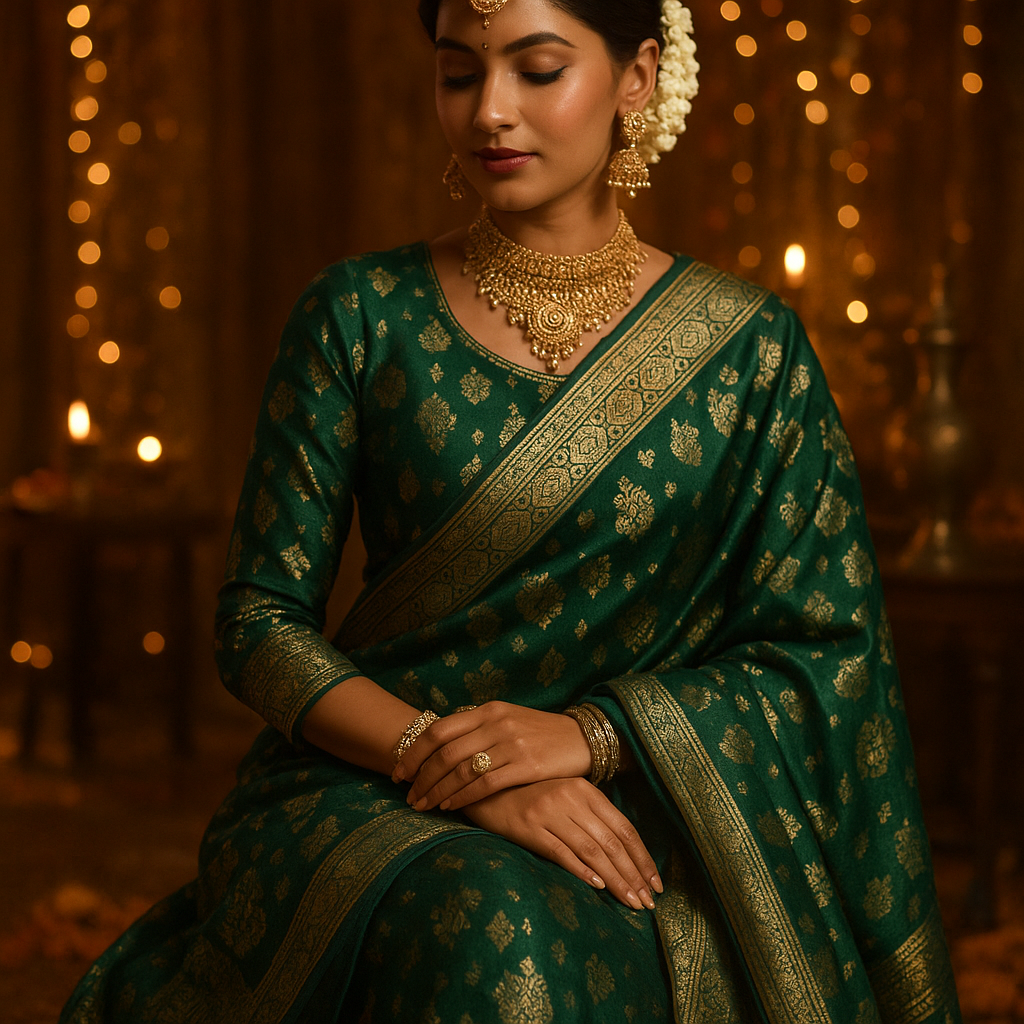
Banarasi suits evenings. The deep colours and heavy zari make it a natural choice for a wedding reception, or for the mother of the bride or groom. It reads as formal and celebratory, and the fabric photographs well under artificial light. A guest who wants to be noticed at a night function usually reaches for Banarasi.
Chanderi suits daytime events. A haldi, a mehndi, or a morning wedding ceremony calls for something elegant but not heavy. The sheer texture and pastel shades common in Chanderi work well in daylight. A guest who wants to look dressed up without carrying weight through a long function often chooses Chanderi. It is also easier to move in, which matters if the ceremony involves sitting on the floor or walking between venues.
Blouse, Jewellery and the Rest of the Look
The saree is only part of the outfit, and each weave asks for a different finish. A Banarasi-style saree pairs well with a fitted silk or raw-silk blouse in a tone taken from the border, and with jewellery that can hold its own against the zari — temple gold, polki, or a solid kundan set. The blouse should be cut close enough to carry the weight of the drape without pulling.
A Chanderi asks for a lighter hand. A simple elbow-sleeve blouse in cotton-silk or a soft solid colour lets the sheer fabric do the work, and smaller jewellery — a thin gold chain, small jhumkas, a single bangle stack — suits it better than a heavy set. The point in both cases is balance: the blouse and jewellery should finish the saree, not compete with it. If you are buying the saree for a specific ceremony, choose the blouse fabric at the same time, while you can still hold the two together in daylight.
How to Check Authenticity
If you are buying a pure-silk saree in the general market, there are a few markers worth knowing. Silk Mark certifies pure silk, though it does not certify that a saree is handloom. A GI tag ties a Banarasi or Chanderi saree to its place of origin. Turning the saree over to look at the reverse side can show how cleanly the weave is finished. And price sanity matters: a genuine handloom pure-silk saree cannot cost a few hundred rupees. If the price looks too low for pure silk and zari, it usually is.
Read our Banarasi saree price guide.
Editor’s Observation: Handling Them Side by Side
I have handled both weaves over the years, and the difference is in the hand before it is in the eye. The Banarasi-style saree has a noticeable heft. When I lift it by one corner, the rest of the fabric follows in a firm fold, and the zari throws back light in broad, metallic flashes. The Chanderi behaves differently. It slips through my fingers, almost like air held in cloth form. The light on its zari is a thin glint rather than a glow, and when I drape it over my hand, it collapses into soft folds instead of holding a shape. That difference in weight and light is what a guest feels the moment she tries them on. One fabric announces itself; the other whispers.
Comparison Summary Table
Here is a quick summary of the main differences.
| Feature | Banarasi | Chanderi |
|---|---|---|
| Origin | Varanasi, Uttar Pradesh | Chanderi, Madhya Pradesh |
| Main texture | Heavy brocade, structured | Light, sheer, breathable |
| Zari style | Extra-weft, can be all-over | Fine, borders and small butis |
| Weight | Heavier | Lighter |
| Best suited to | Evening receptions | Daytime ceremonies |
| Comfort in heat | Can feel warm | Cool and easy to carry |
Which One Should You Choose?
Choose Banarasi if the event is in the evening. A reception or a night ceremony calls for the structure and shine of Banarasi work. It is also the safer choice if you are a close relative of the couple and want to look formal. The fabric holds its presence through photographs and under stage lighting.
Choose Chanderi if the event is during the day. A daytime wedding, a haldi, or a mehndi in summer is easier in a light, sheer saree. You can move, sit, and stand for hours without the fabric dragging on your shoulders. It is also a good choice if you are not used to wearing sarees and want something that does not require constant adjusting.
If you are attending both a daytime ceremony and an evening reception, some guests carry a Chanderi for the day and change into a Banarasi for the night. That is the most practical answer when the schedule demands two different looks. There is no rule that says one silk fits every moment of a wedding.
FAQ
Is Chanderi lighter than Banarasi?
Yes. Chanderi is known for its sheer, lightweight weave, while Banarasi is generally heavier and more structured because of the brocade work.
Can I wear a Banarasi saree to a daytime wedding?
You can, but it may feel warm and heavy through a long daytime function. Chanderi is usually more comfortable for daytime events in hot weather.
What is the difference between Banarasi and Chanderi zari?
Banarasi zari is often thicker and woven as extra weft across the fabric. Chanderi zari is finer and used mainly in borders and small butis.
Does Silk Mark mean a saree is handloom?
No. Silk Mark certifies that the silk is pure, but it does not certify that the saree is handloom or handwoven.
Does Nisa Silk Fab sell Chanderi sarees?
No. Nisa Silk Fab sells Banarasi-style sarees in tissue, silk-blend and other fabrics. We do not sell Chanderi sarees.
Closing
If you are leaning towards Banarasi for a wedding reception, you can browse our collection of Banarasi-style sarees. We stock tissue, silk-blend and other fabrics. We do not sell Chanderi sarees, and none of our current stock is pure silk.
Standard delivery within India takes 7 to 14 business days. Shipping is a flat ₹100 across India. All sales are final, and we do not accept returns.
You can reach us at +91 9825985765 or +91 9978985765, or write to [email protected]. We are based in Ahmedabad.